


ATP11C-EQ-mCherry
(Plasmid
#255862)
-
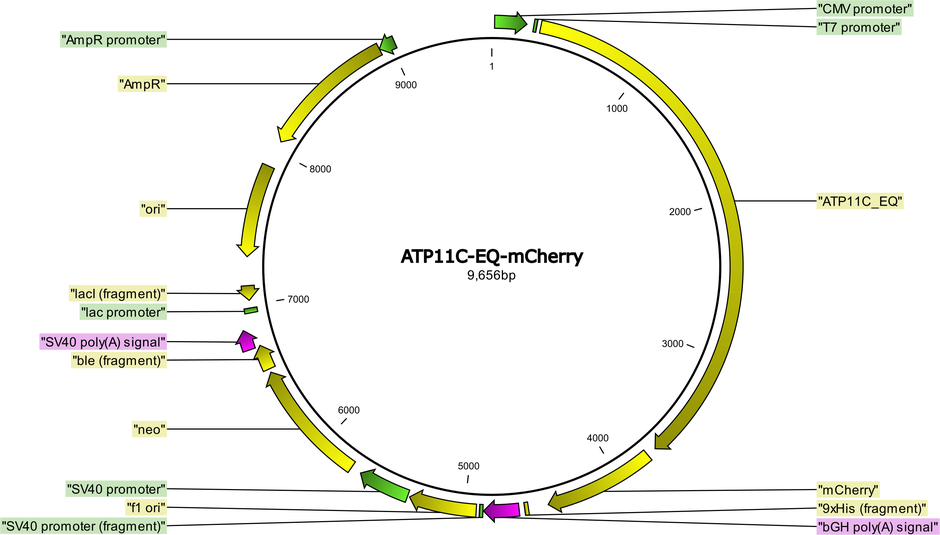
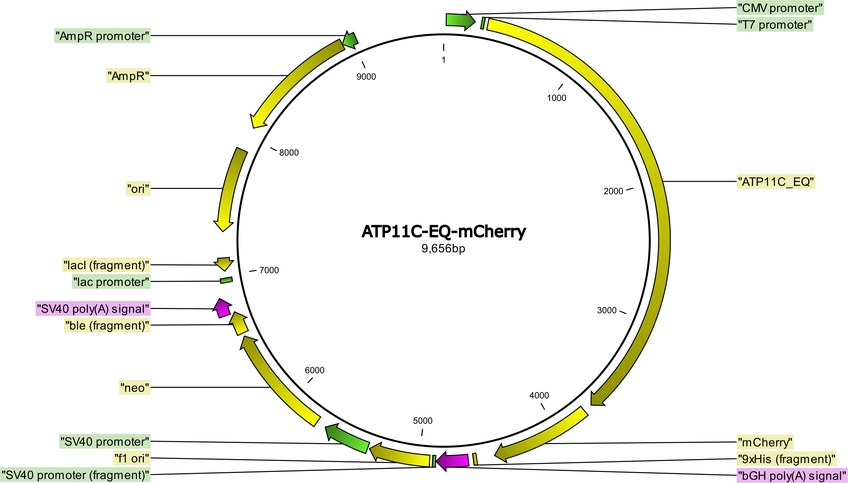
PurposeExpression of human ATP11C E184Q mutant, in mammalian cells, C-terminally tagged with mCherry
-
Depositing Lab
-
Depositing OrganizationAarhus University
Located in Denmark -
Publication
-
Sequence Information


Ordering
This material is available to academics and nonprofits only.
| Item | Catalog # | Description | Quantity | Price (USD) | |
|---|---|---|---|---|---|
| Plasmid | 255862 | Standard format: Plasmid sent in bacteria as agar stab | 1 | $94 | |
Backbone
-
Vector backbonepcDNA3.1
- Backbone size w/o insert (bp) 5345
- Total vector size (bp) 9656
-
Vector typeMammalian Expression
Growth in Bacteria
-
Bacterial Resistance(s)Ampicillin, 100 μg/mL
-
Growth Temperature37°C
-
Growth Strain(s)DH5alpha
-
Copy numberHigh Copy
Gene/Insert
-
Gene/Insert nameATP11C
-
SpeciesH. sapiens (human)
-
Insert Size (bp)3396
-
Mutationchanged Glutamate 184 to Glutamine
-
Entrez GeneATP11C (a.k.a. ATPIG, ATPIQ, HACXL)
- Promoter CMV
-
Tags
/ Fusion Proteins
- mCherry with 3C cleavage site (C terminal on insert)
- Twin-Strep-tag (C terminal on backbone)
- 8xHis (C terminal on backbone)
Cloning Information
- Cloning method Gibson Cloning
- 5′ sequencing primer TAATACGACTCACTATAGGG
- (Common Sequencing Primers)
Resource Information
-
A portion of this plasmid was derived from a plasmid made byThe sequence of ATP11C-EQ is a gift from Hye-Won Shin and originates from Addgene plasmid #209251.
Terms and Licenses
-
Academic/Nonprofit Terms
-
Industry Terms
- Not Available to Industry
Trademarks:
- Zeocin® is an InvivoGen trademark.
How to cite this plasmid
( Back to top)
These plasmids were created by your colleagues. Please acknowledge the Principal Investigator, cite the article in which the plasmids were described, and include Addgene in the Materials and Methods of your future publications.
-
For your Materials & Methods section:
ATP11C-EQ-mCherry was a gift from Joseph Lyons (Addgene plasmid # 255862 ; http://n2t.net/addgene:255862 ; RRID:Addgene_255862) -
For your References section:
Fluorescence-Gated Flow Cytometry Approach for Measuring Lipid Flippase Activity in Mammalian Cells. Scholtissek KT, Van den Haute C, Pamula FK, Lyons JA. J Membrane Biol 259, 32 (2026) 10.1007/s00232-026-00392-5
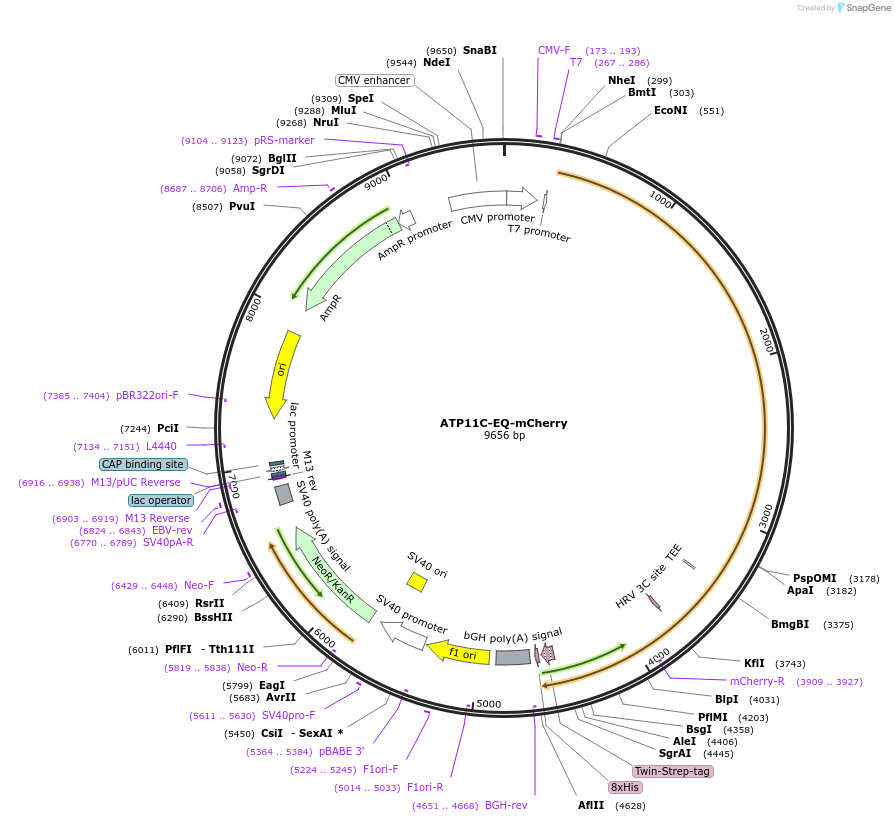
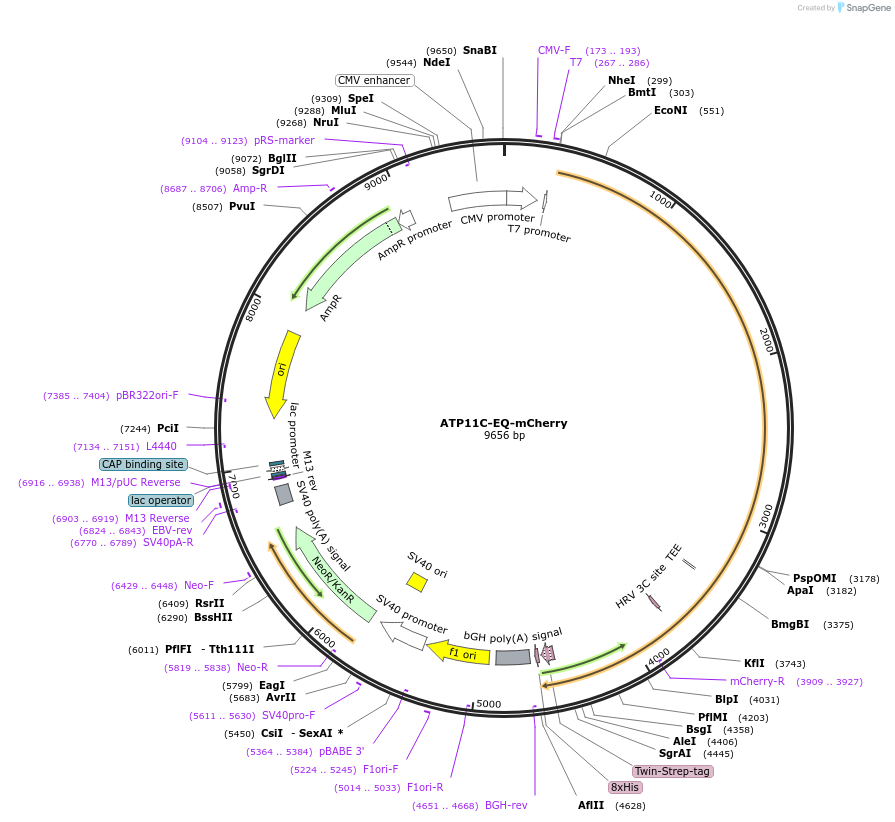
Map uploaded by the depositor.