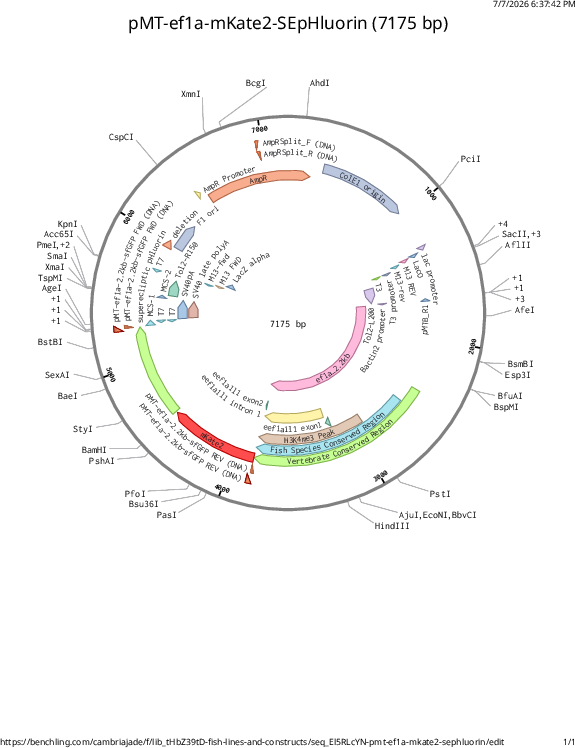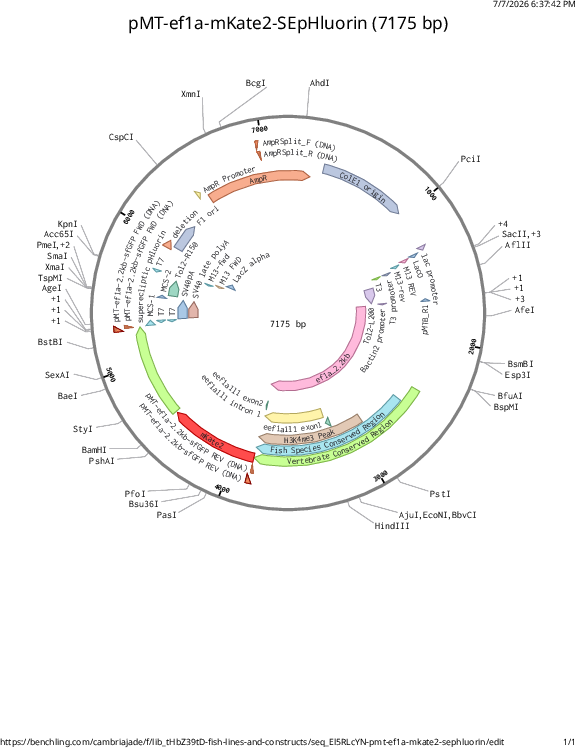



pMT-ef1α-mKate2-SEpHluorin
(Plasmid
#260147)
-
PurposeTol2 vector for ubiquitous expression of pHi biosensor mKate2-SEpHluorin in zebrafish
-
Depositing Lab
-
Depositing OrganizationUniversity of California, San Francisco (UCSF)
Located in the United States of America -
Sequence Information

Ordering
This material is available to academics and nonprofits only.
| Item | Catalog # | Description | Quantity | Price (USD) | |
|---|---|---|---|---|---|
| Plasmid | 260147 | Standard format: Plasmid sent in bacteria as agar stab | 1 | $94 | |
Backbone
-
Vector backbonepMTB
- Backbone size w/o insert (bp) 5755
- Total vector size (bp) 7175
-
Vector typeZebrafish Transgenesis
Growth in Bacteria
-
Bacterial Resistance(s)Ampicillin, 100 μg/mL
-
Growth Temperature37°C
-
Growth Strain(s)DH5alpha
-
Copy numberHigh Copy
Gene/Insert
-
Gene/Insert namemKate2-SEpHluorin
-
Insert Size (bp)1420
- Promoter ef1a
Cloning Information
- Cloning method Gibson Cloning
- 5′ sequencing primer cttggtccgcagaaacttatcaatcATGGTGAGCGAGCTGATTAAG
- 3′ sequencing primer agtccggatacgtatgaattcTTATTTGTATAGTTCATCCATGCCATGTG
- (Common Sequencing Primers)
Resource Information
-
A portion of this plasmid was derived from a plasmid made bymKate2 sequence from Addgene #31869; SEpHluorin sequence from Addgene #32001; pMTB vector backbone see Wagner et al., Science, (2018)
Terms and Licenses
-
Academic/Nonprofit Terms
-
Industry Terms
- Not Available to Industry
Trademarks:
- Zeocin® is an InvivoGen trademark.
How to cite this plasmid
( Back to top)
These plasmids were created by your colleagues. Please acknowledge the Principal Investigator, cite the article in which the plasmids were described, and include Addgene in the Materials and Methods of your future publications.
-
For your Materials & Methods section:
pMT-ef1α-mKate2-SEpHluorin was a gift from Diane Barber (Addgene plasmid # 260147 ; http://n2t.net/addgene:260147 ; RRID:Addgene_260147) -
For your References section:
Intracellular pH dynamics promotes zebrafish larval tail regeneration. Chou-Freed C, Prinz CK, Margaryan A, Theriot JA, Wagner DE, Barber DL. bioRxiv [Preprint]. 2026 May 15:2026.05.14.724960. doi: 10.64898/2026.05.14.724960. 10.64898/2026.05.14.724960 PubMed 42182211
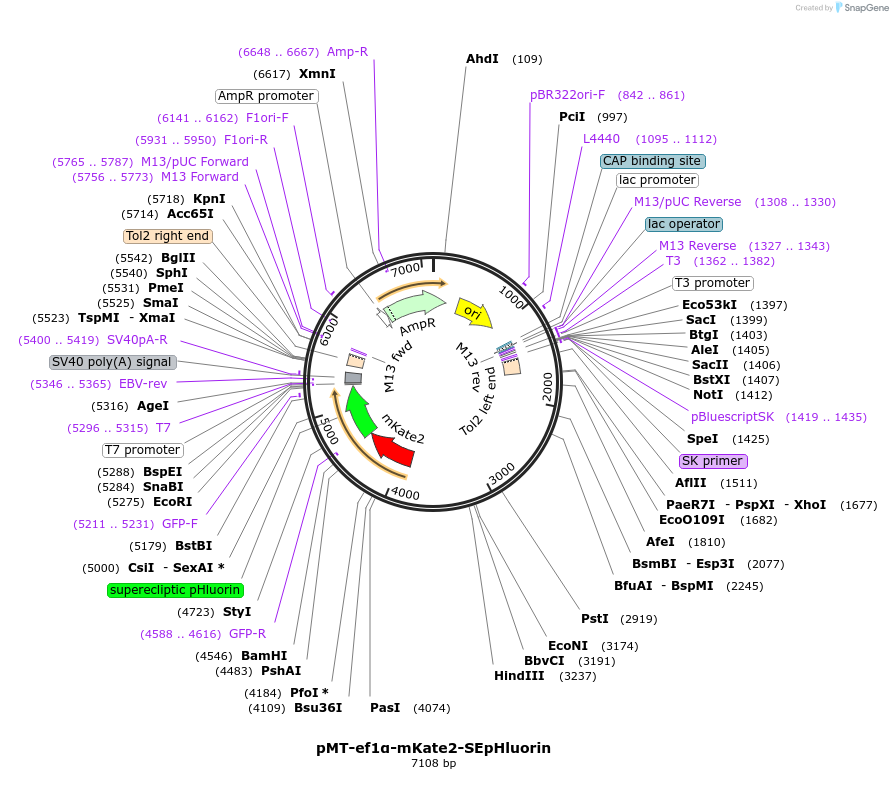
Map uploaded by the depositor.