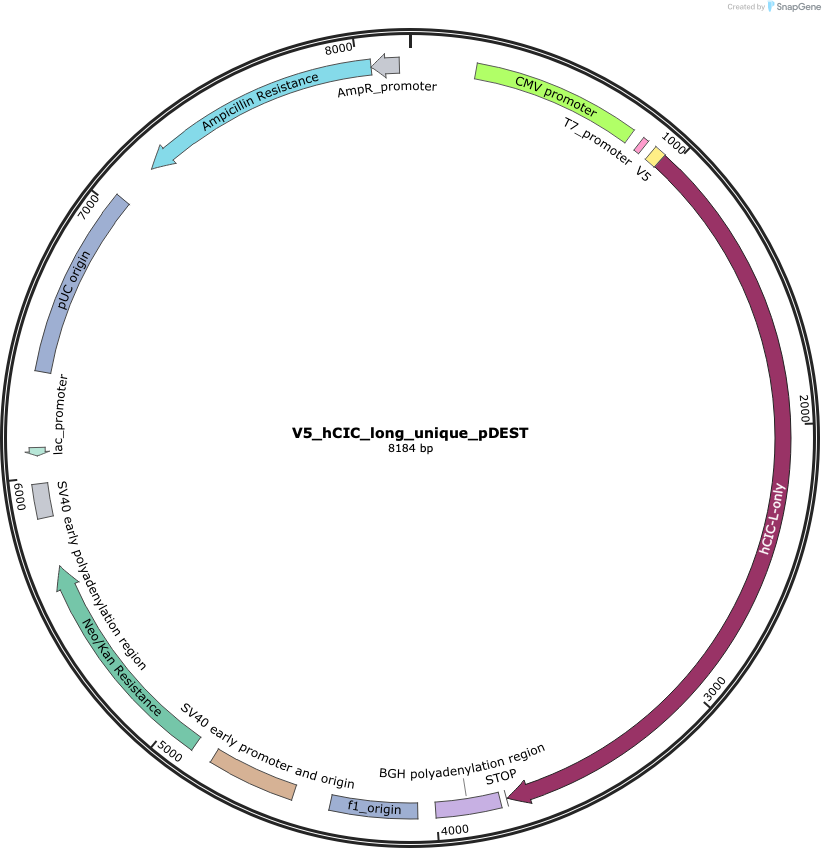



pcDNA3.1-DEST-V5-hCIC-L-unique
(Plasmid
#262261)
-
PurposeExpresses CIC-L isoform unique N-terminal region in mammalian cells
-
Depositing Lab
-
Depositing OrganizationBaylor College of Medicine
Located in the United States of America -
Sequence Information


Ordering
This material is available to academics and nonprofits only.
| Item | Catalog # | Description | Quantity | Price (USD) | |
|---|---|---|---|---|---|
| Plasmid | 262261 | Standard format: Plasmid sent in bacteria as agar stab | 1 | $94 | |
Backbone
-
Vector backbonepcDNA3.1-DEST
- Total vector size (bp) 8184
-
Modifications to backboneDerived from pcDNA3.1-3xFLAG-DEST, with stop codons upstream of the 3xFLAG to prevent FLAG expression.
-
Vector typeMammalian Expression
-
Selectable markersNeomycin (select with G418)
Growth in Bacteria
-
Bacterial Resistance(s)Ampicillin, 100 μg/mL
-
Growth Temperature37°C
-
Growth Strain(s)DH5alpha
-
Copy numberHigh Copy
Gene/Insert
-
Gene/Insert nameCapicua-Long isoform unique N-terminal
-
Alt nameCIC-L (unique N-terminal)
-
SpeciesH. sapiens (human)
-
Insert Size (bp)2844
-
MutationCIC-L unique N-terminal sequence (aa 1–931)
-
GenBank IDNM_001304815.2
-
Entrez GeneCIC (a.k.a. MRD45)
- Promoter CMV
-
Tag
/ Fusion Protein
- V5 (N terminal on insert)
Cloning Information
- Cloning method Gateway Cloning
- 5′ sequencing primer CMV-F
- (Common Sequencing Primers)
Terms and Licenses
-
Academic/Nonprofit Terms
-
Industry Terms
- Not Available to Industry
Trademarks:
- Zeocin® is an InvivoGen trademark.
How to cite this plasmid
( Back to top)
These plasmids were created by your colleagues. Please acknowledge the Principal Investigator, cite the article in which the plasmids were described, and include Addgene in the Materials and Methods of your future publications.
-
For your Materials & Methods section:
pcDNA3.1-DEST-V5-hCIC-L-unique was a gift from Huda Zoghbi (Addgene plasmid # 262261 ; http://n2t.net/addgene:262261 ; RRID:Addgene_262261) -
For your References section:
Functional divergence of Capicua isoforms explains differential tissue vulnerability in neurological disease. Lee H, Gonzalez EV, Rivera EM, Durham MA, Richman R, Chu EH, Xia K, Chen H, Liu Z, Veeraragavan S, Shivanna B, Zoghbi HY. Genes Dev. 2026 Aug 3;40(15-16):1267-1282. doi: 10.1101/gad.353596.125. 10.1101/gad.353596.125 PubMed 42476817
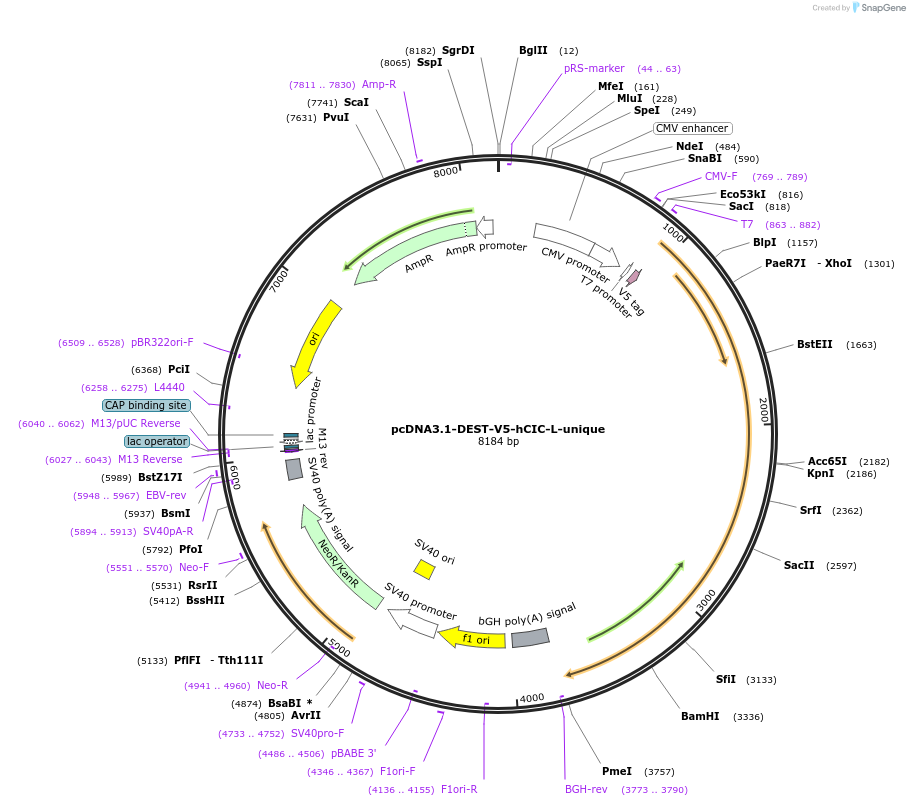
Map uploaded by the depositor.