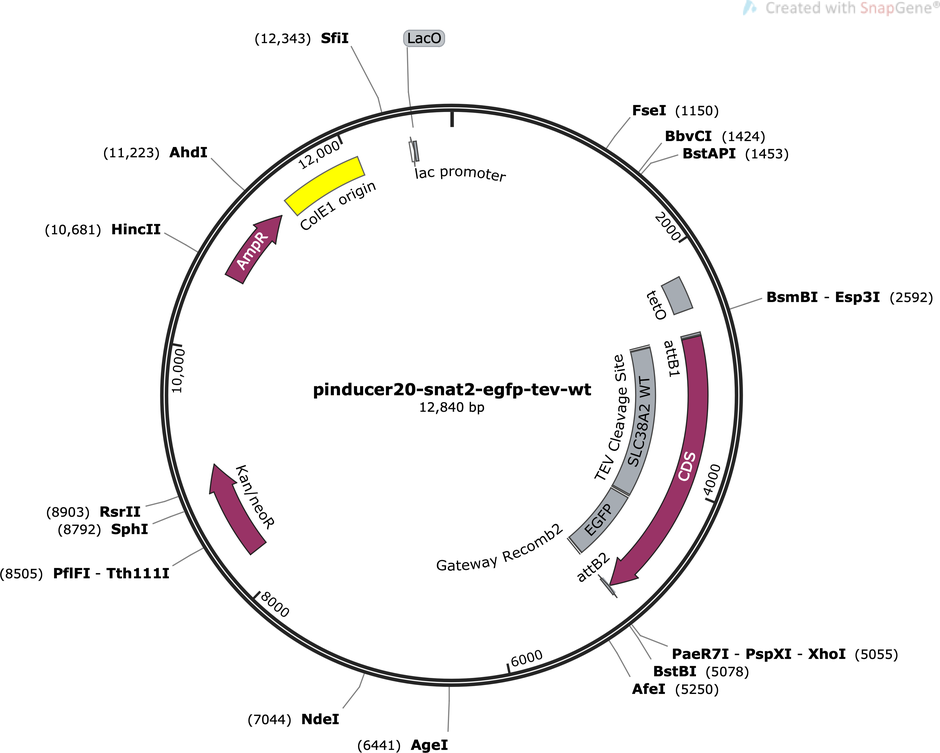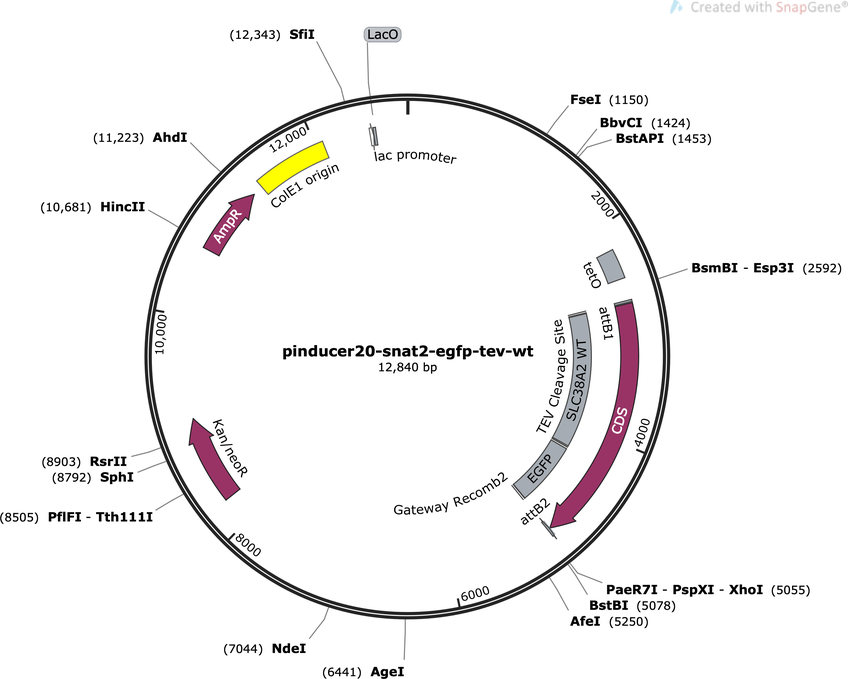



pInducer20 SNAT2-eGFP WT (wildtype)
(Plasmid
#237228)
-
PurposeLentiviral vector expressing dox-inducible sgRNA-resistant wildtype SNAT2 (SLC38A2) cDNA containing C-terminal eGFP.
-
Depositing Lab
-
Depositing OrganizationUniversity of British Columbia
Located in Canada -
Sequence Information


Ordering
This material is available to academics and nonprofits only.
| Item | Catalog # | Description | Quantity | Price (USD) | |
|---|---|---|---|---|---|
| Plasmid | 237228 | Standard format: Plasmid sent in bacteria as agar stab | 1 | $94 | |
Backbone
-
Vector backbonepInducer20-Blast
-
Backbone manufacturerJean Cook (Addgene plasmid #109334)
- Backbone size w/o insert (bp) 12215
- Total vector size (bp) 12840
-
Vector typeMammalian Expression, Lentiviral
-
Selectable markersBlasticidin
Growth in Bacteria
-
Bacterial Resistance(s)Ampicillin, 100 μg/mL
-
Growth Temperature37°C
-
Growth Strain(s)NEB Stable
-
Copy numberHigh Copy
Gene/Insert
-
Gene/Insert nameSLC38A2
-
SpeciesH. sapiens (human)
-
Insert Size (bp)2274
-
MutationSilent mutations to prevent targeting by sgRNA sequence: TAATCTGAGCAATGCGATTG
-
Entrez GeneSLC38A2 (a.k.a. ATA2, PRO1068, SAT2, SNAT2)
- Promoter TRE
-
Tag
/ Fusion Protein
- eGFP
Cloning Information
- Cloning method Gateway Cloning
- 5′ sequencing primer LNCX
- (Common Sequencing Primers)
Resource Information
Terms and Licenses
-
Academic/Nonprofit Terms
-
Industry Terms
- Not Available to Industry
Trademarks:
- Zeocin® is an InvivoGen trademark.
How to cite this plasmid
( Back to top)
These plasmids were created by your colleagues. Please acknowledge the Principal Investigator, cite the article in which the plasmids were described, and include Addgene in the Materials and Methods of your future publications.
-
For your Materials & Methods section:
pInducer20 SNAT2-eGFP WT (wildtype) was a gift from Seth Parker (Addgene plasmid # 237228 ; http://n2t.net/addgene:237228 ; RRID:Addgene_237228) -
For your References section:
N-linked glycosylation regulates SNAT2 trafficking and stability in pancreatic ductal adenocarcinoma cells. Koe JC, Pashaoskooie K, Johal D, Zhong YC, Wu C, Parker SJ. Am J Physiol Cell Physiol. 2026 Jun 29. doi: 10.1152/ajpcell.00060.2026. 10.1152/ajpcell.00060.2026 PubMed 42370970
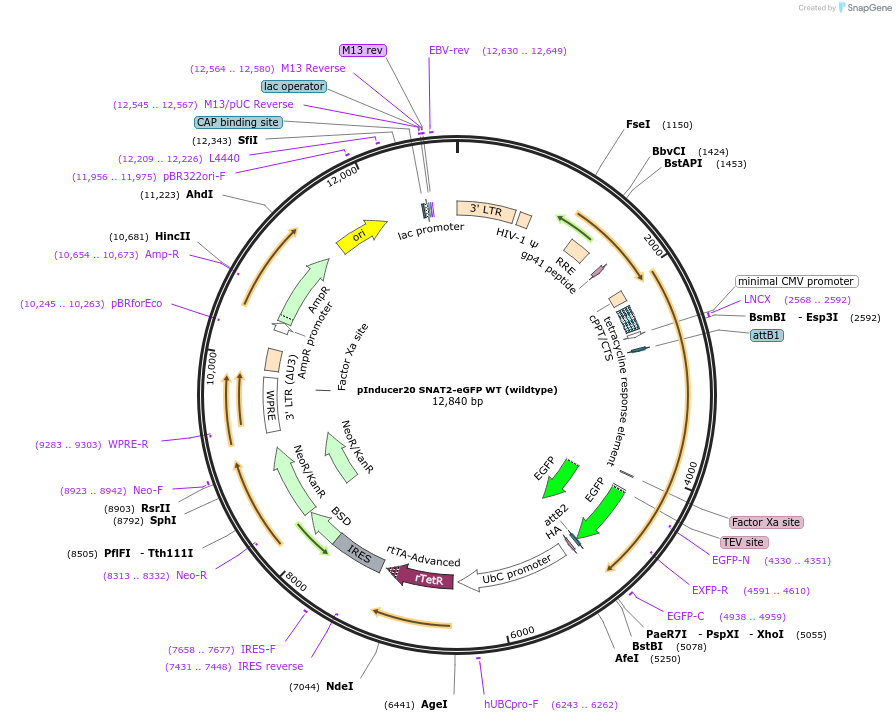
Map uploaded by the depositor.