We narrowed to 78 results for: FreeGenes
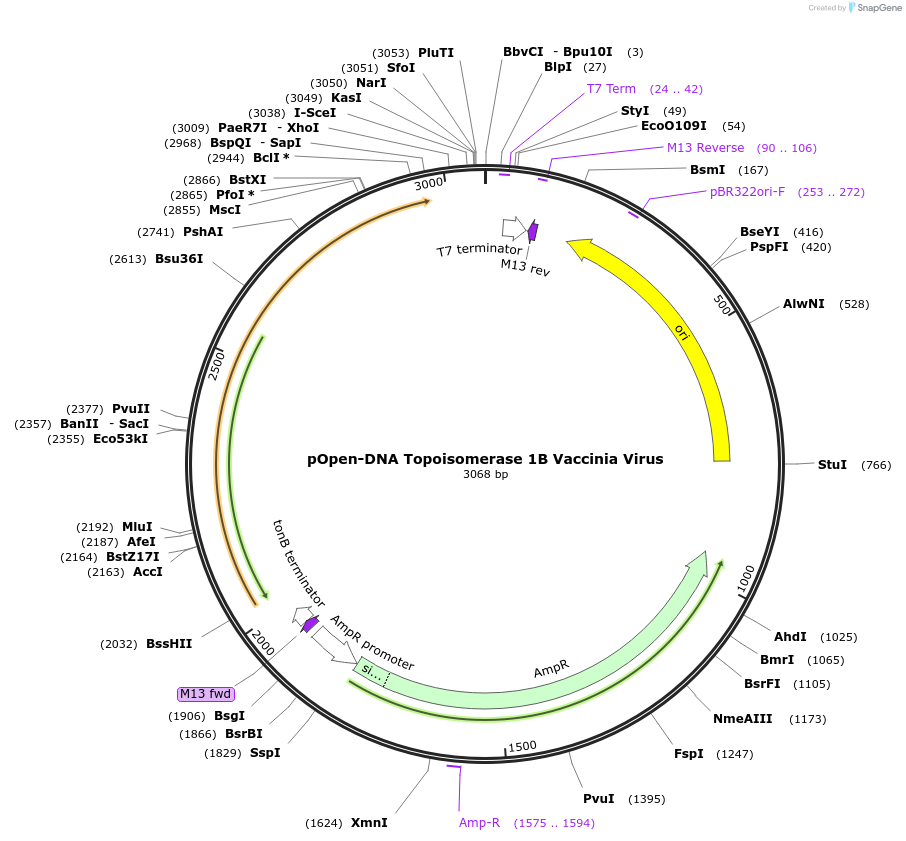
-
Plasmid#165510PurposeUsed in TOPO cloning. Recognizes the DNA sequence 5'-(C/T)CCTT-3' and digests double stranded DNA at this sequence.DepositorInsertDNA Topoisomerase 1B Vaccinia Virus
UseSynthetic BiologyAvailable sinceJuly 30, 2021AvailabilityIndustry, Academic Institutions, and Nonprofits -
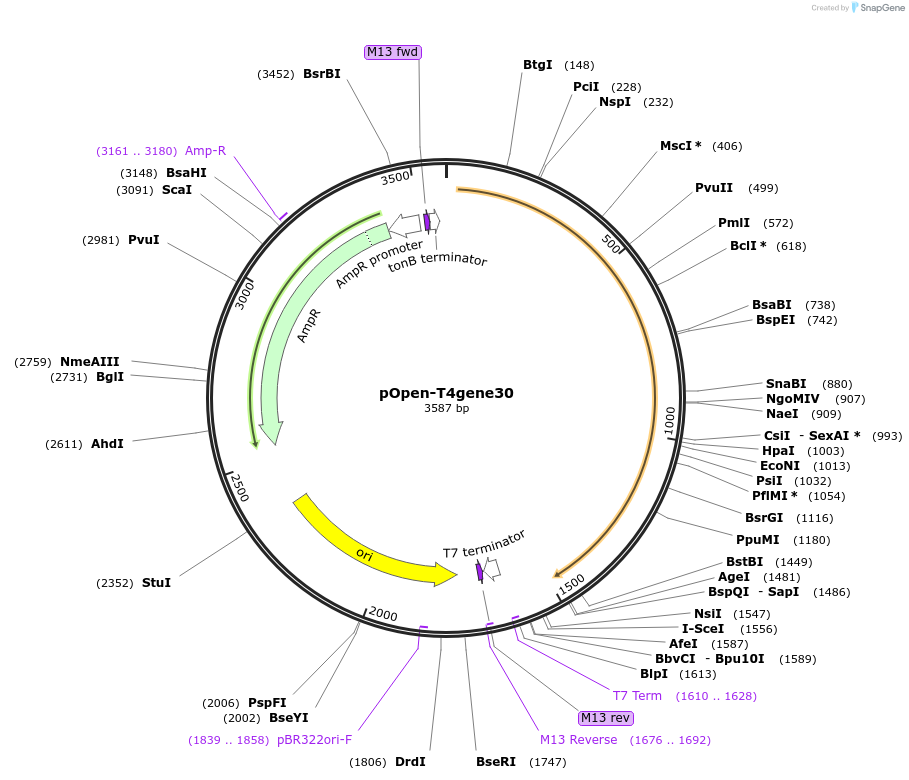
pOpen-T4gene30
Plasmid#165554PurposeLigase derived from T4 bacteriophage expressed in the early stage of lytic development. Has been implicated in T4 DNA synthesis and genetic recombination. May also play a role in T4 DNA repair.DepositorInsertT4-DNA Ligase
UseSynthetic BiologyAvailable sinceAug. 16, 2021AvailabilityIndustry, Academic Institutions, and Nonprofits -
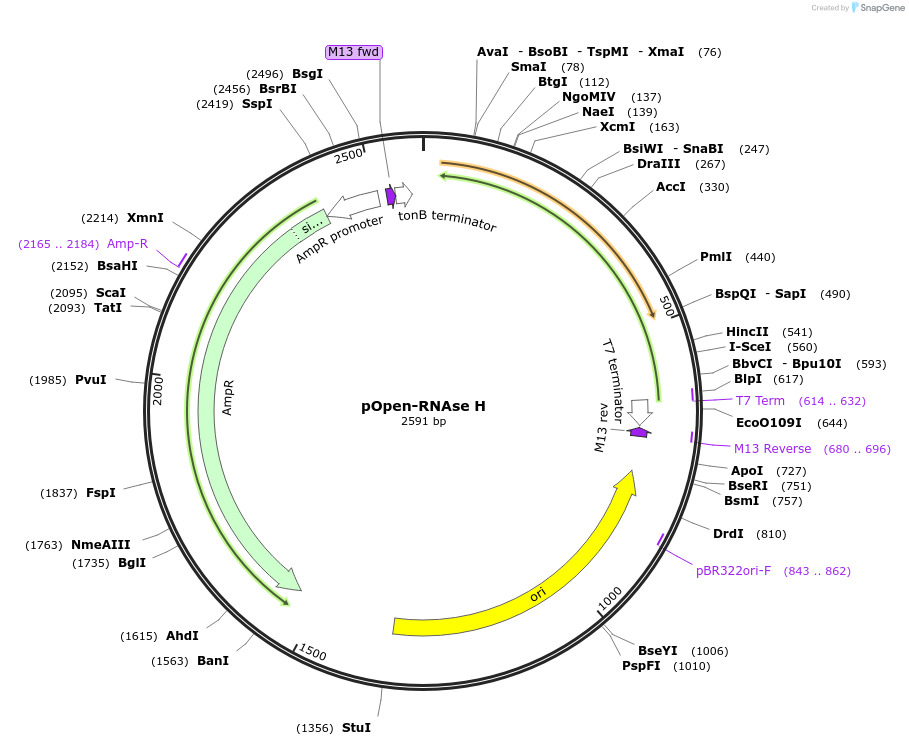
pOpen-RNAse H
Plasmid#165575PurposeEndonuclease that specifically degrades the RNA of RNA-DNA hybrids. Participates in DNA replication; helps to specify the origin of genomic replication.DepositorInsertRNAse H
UseSynthetic BiologyAvailable sinceAug. 24, 2021AvailabilityIndustry, Academic Institutions, and Nonprofits -
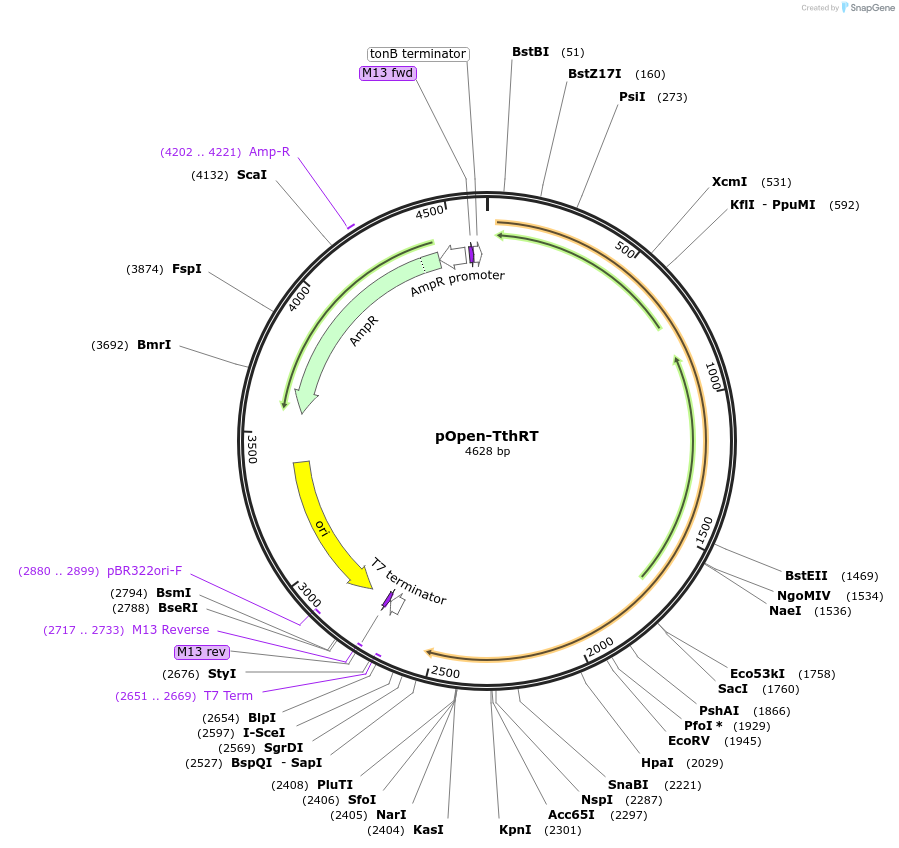
pOpen-TthRT
Plasmid#165566PurposeDNA polymerase that efficiently reverse-transcribes RNA in the presence of MnCl2DepositorInsertThermus thermophilus (Tth) RT
UseSynthetic BiologyAvailable sinceAug. 17, 2021AvailabilityIndustry, Academic Institutions, and Nonprofits -
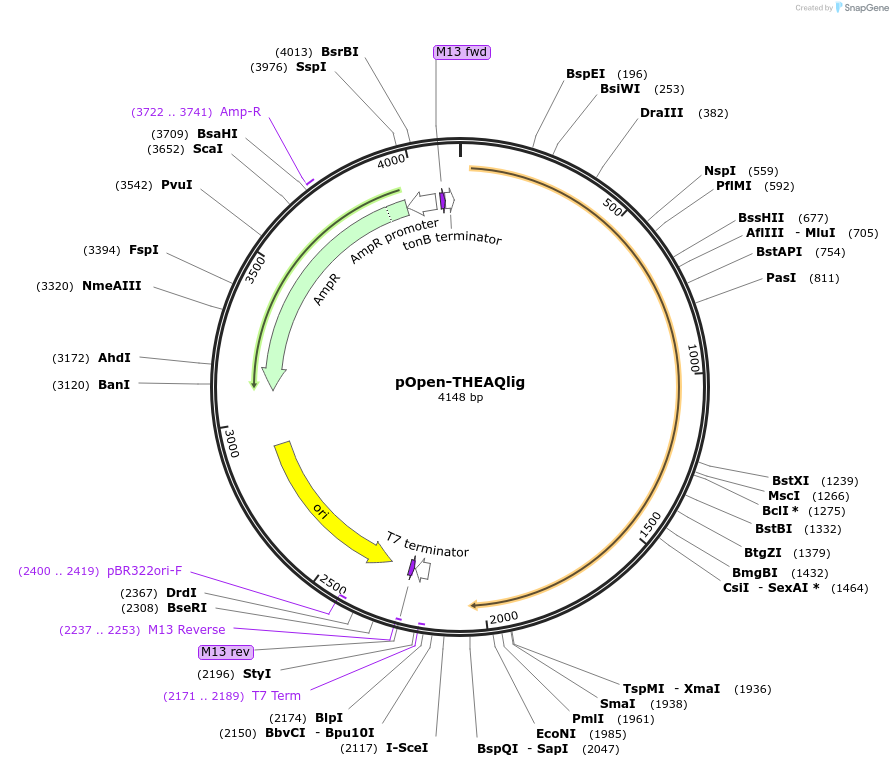
pOpen-THEAQlig
Plasmid#165535PurposeThermostable ligase for incorporation of phosphorylated oligonucleotides during PCR and Ligase Chain ReactionDepositorInsertTaq DNA Ligase
UseSynthetic BiologyAvailable sinceAug. 5, 2021AvailabilityIndustry, Academic Institutions, and Nonprofits -
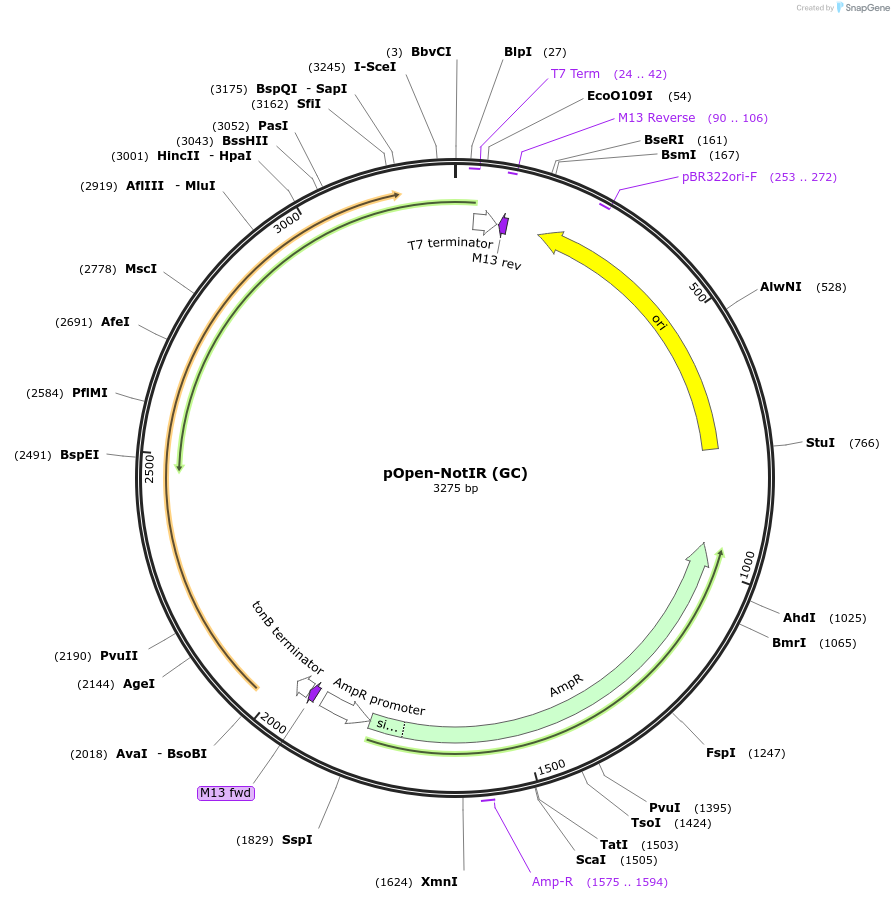
pOpen-NotIR (GC)
Plasmid#165507PurposeType II restriction enzyme that recognizes the double-stranded sequence GCGGCCGC and cleaves after C-1.DepositorInsertNotI (GC-rich recognition site)
UseSynthetic BiologyAvailable sinceJuly 30, 2021AvailabilityIndustry, Academic Institutions, and Nonprofits -
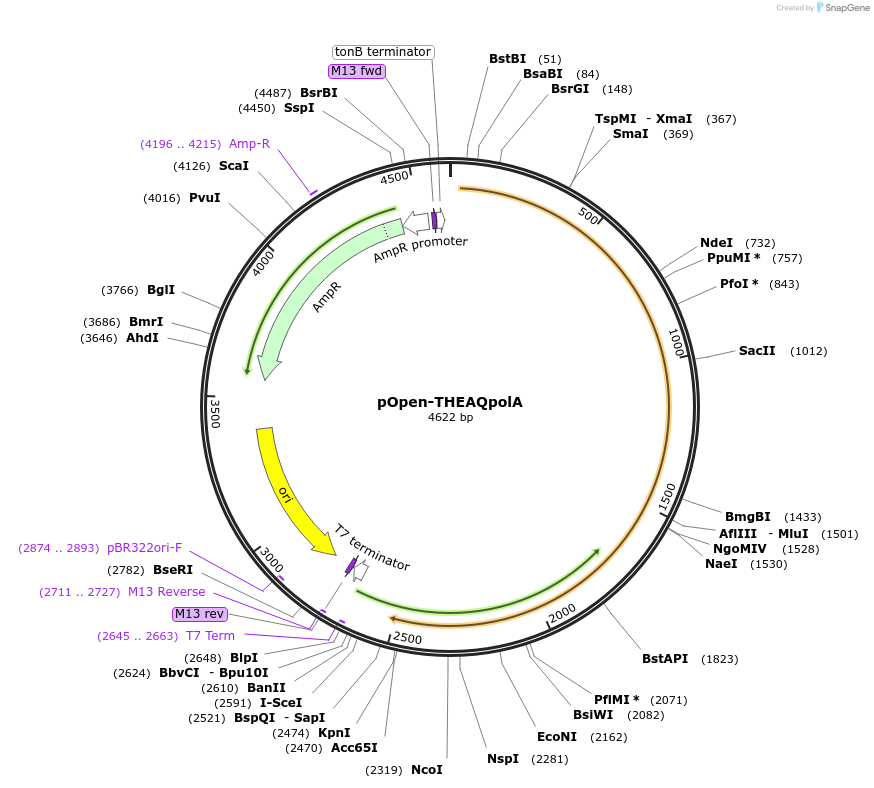
pOpen-THEAQpolA
Plasmid#165512PurposeDNA polymerase used in routine PCR method because of its high thermostability, standard testing, screening and output testing.DepositorInsertTaq DNA Polymerase
UseSynthetic BiologyAvailable sinceAug. 9, 2021AvailabilityIndustry, Academic Institutions, and Nonprofits -
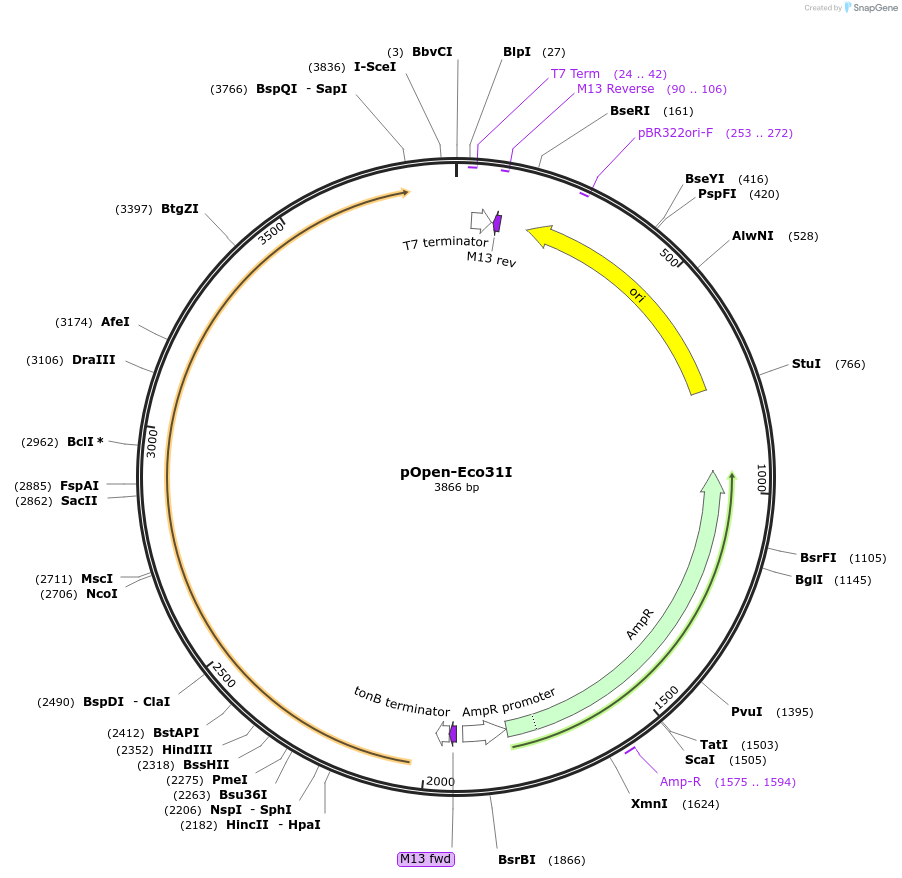
pOpen-Eco31I
Plasmid#165506PurposeType II restriction enzyme that recognized the double-stranded sequence. GGTCTC (N) and cleaves after N-1; isoschizomer of BsaI.DepositorInsertEco31I
UseSynthetic BiologyAvailable sinceJuly 30, 2021AvailabilityIndustry, Academic Institutions, and Nonprofits -
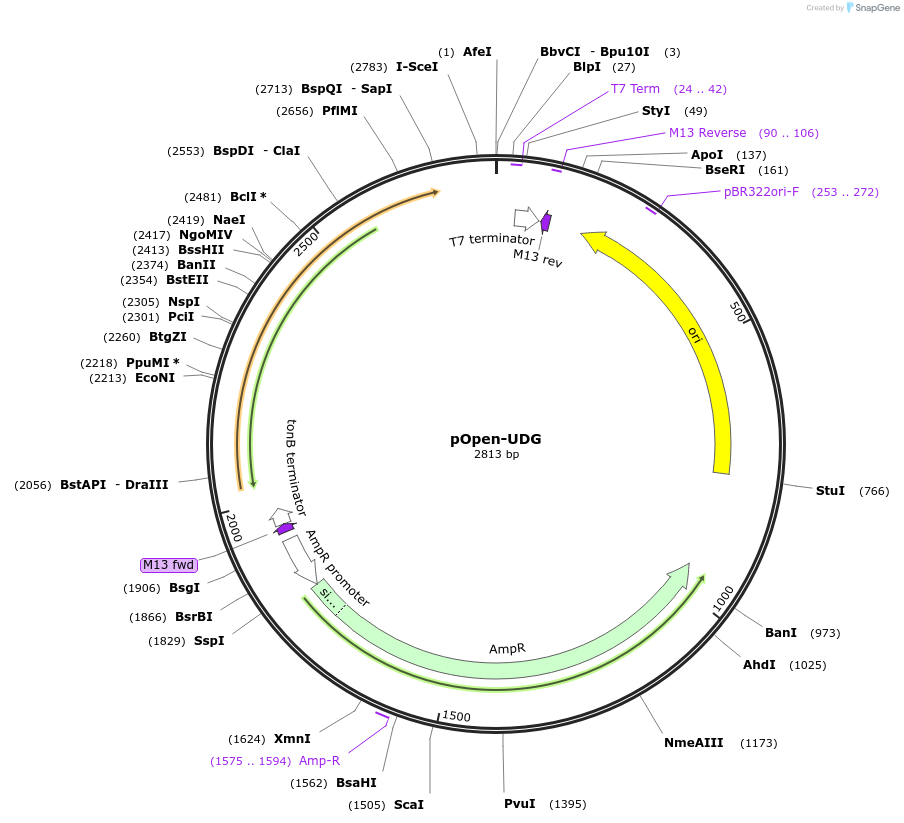
pOpen-UDG
Plasmid#165531PurposeUracil DNA glycosylase catalyzes the hydrolysis of the N-glycosidic bond from deoxyuridine to release uracil.DepositorInsertUDG
UseSynthetic BiologyAvailable sinceAug. 5, 2021AvailabilityIndustry, Academic Institutions, and Nonprofits -
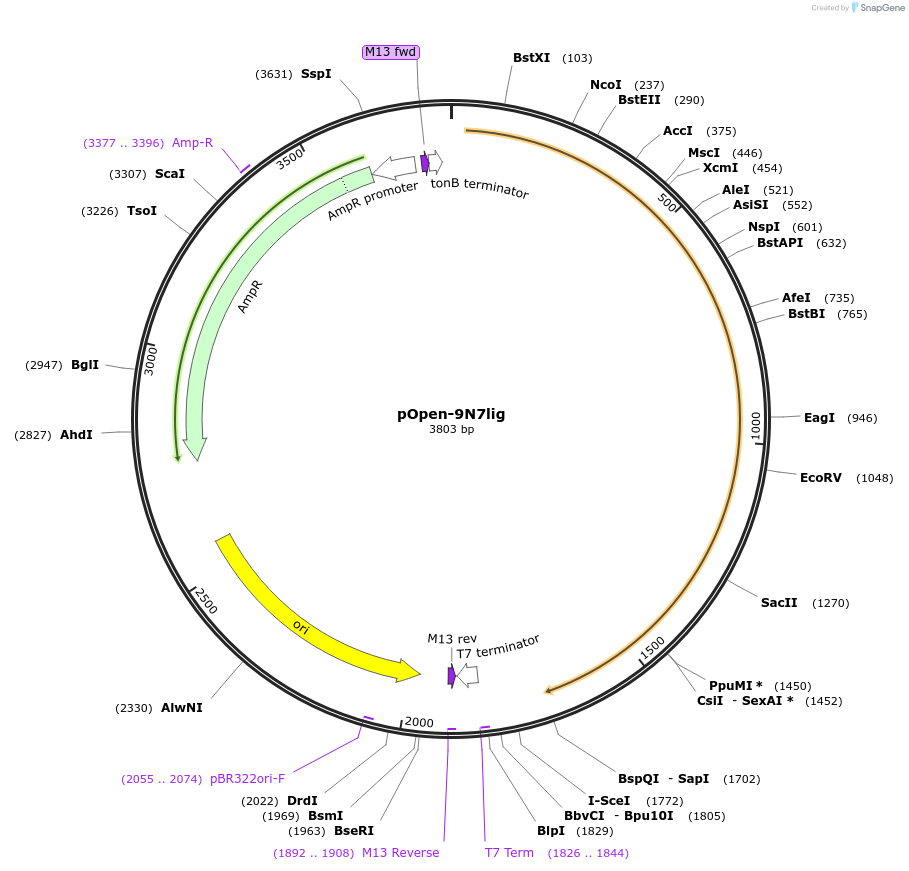
pOpen-9N7lig
Plasmid#165514Purpose9 Degrees North DNA Ligase active at elevated temperatures (45 - 90 degrees C).DepositorInsert9 Degrees North DNA Ligase
UseSynthetic BiologyAvailable sinceJuly 29, 2021AvailabilityIndustry, Academic Institutions, and Nonprofits -
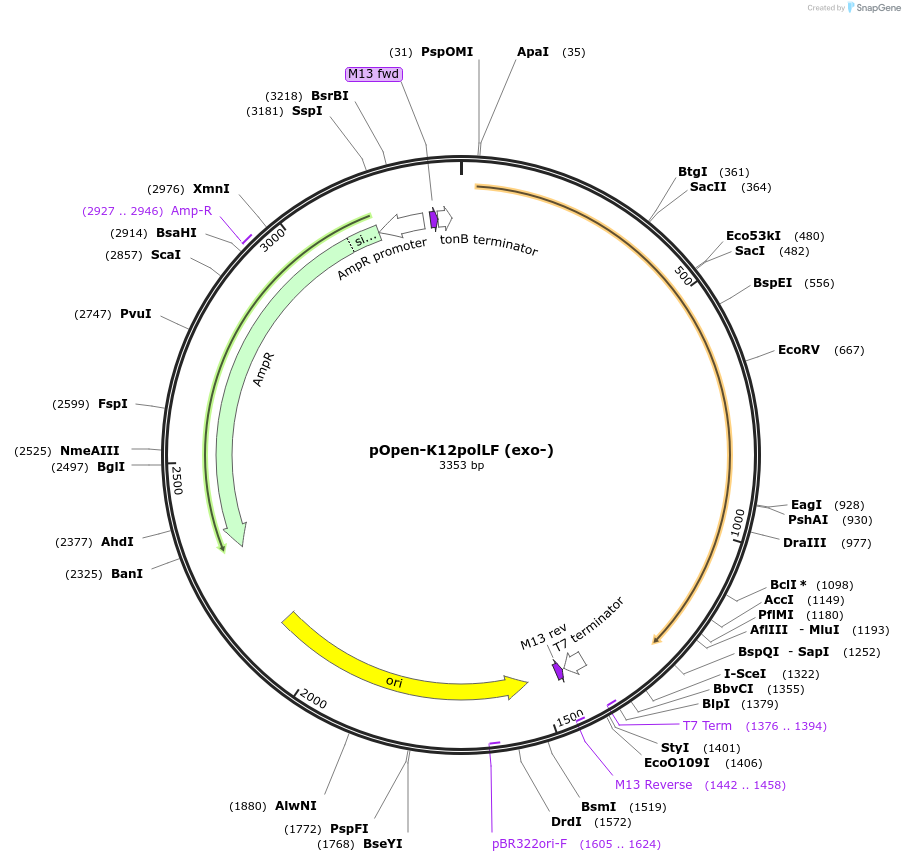
pOpen-K12polLF (exo-)
Plasmid#165522PurposeDNA pol fragment used in flourescent labelling for microarray, dA and dT tailing, and ligating DNA adapters to DNA fragments.DepositorInsertDNA Polymerase I, Large (Klenow) Fragment (3'-5' exo-)
UseSynthetic BiologyAvailable sinceDec. 21, 2021AvailabilityIndustry, Academic Institutions, and Nonprofits -
pOpen-T7EI
Plasmid#165540PurposeDNA Endonuclease; catalyzes cleavage of DNA mismatches and non-beta DNA structures (Holliday junctions and cruciform).DepositorInsertT7EI (T7 Endonuclease I)
UseSynthetic BiologyAvailable sinceAug. 9, 2021AvailabilityIndustry, Academic Institutions, and Nonprofits -
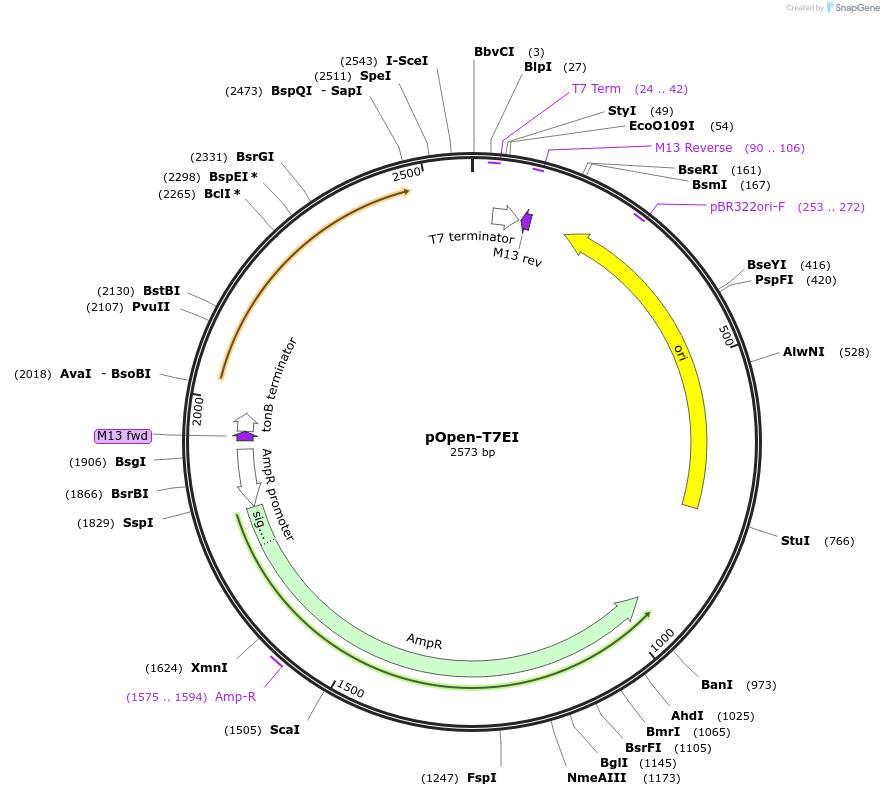
pOpen-T7gene5
Plasmid#165534PurposeDNA Pol with high fidelity and rapid extension rate (useful in copying long stretches of DNA); Has strong 3'-5' exonuclease.DepositorInsertT7 DNA Polymerase (unmodified)
UseSynthetic BiologyAvailable sinceAug. 5, 2021AvailabilityIndustry, Academic Institutions, and Nonprofits -
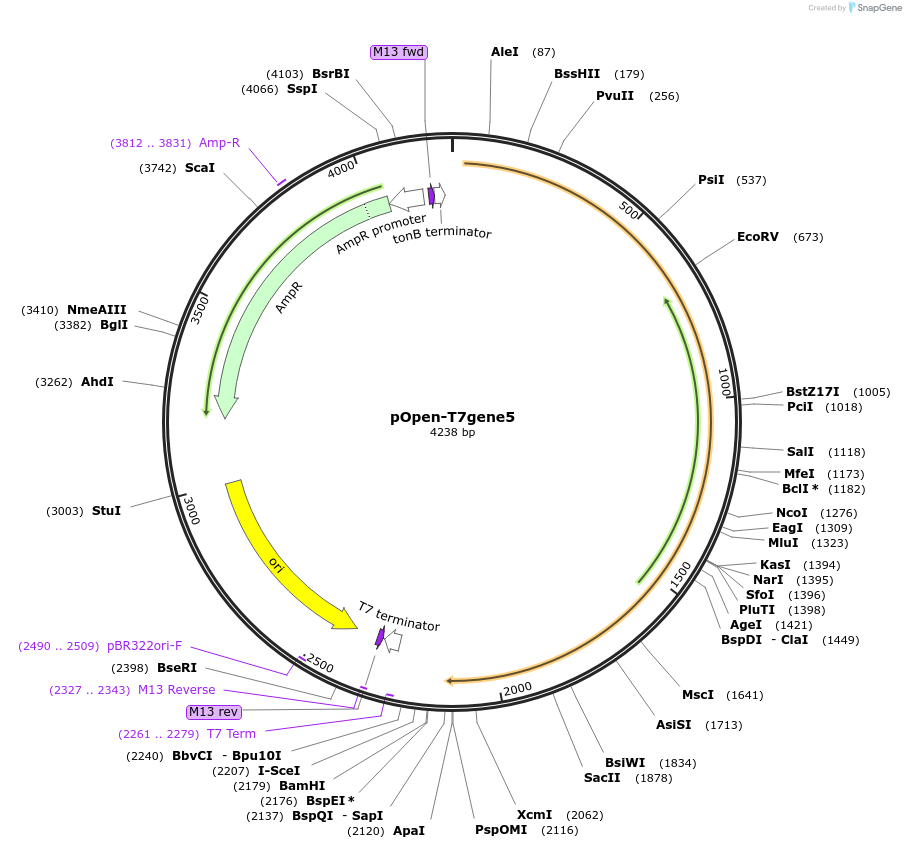
pOpen-K12polLF
Plasmid#165511PurposeDNA pol fragment that retains 5'-3' polymerase activity and 3'-5' exonuclease activity but loses 5'-3' exonuclease activity.DepositorInsertDNA Polymerase I, Large (Klenow) Fragment
UseSynthetic BiologyAvailable sinceJuly 30, 2021AvailabilityIndustry, Academic Institutions, and Nonprofits -
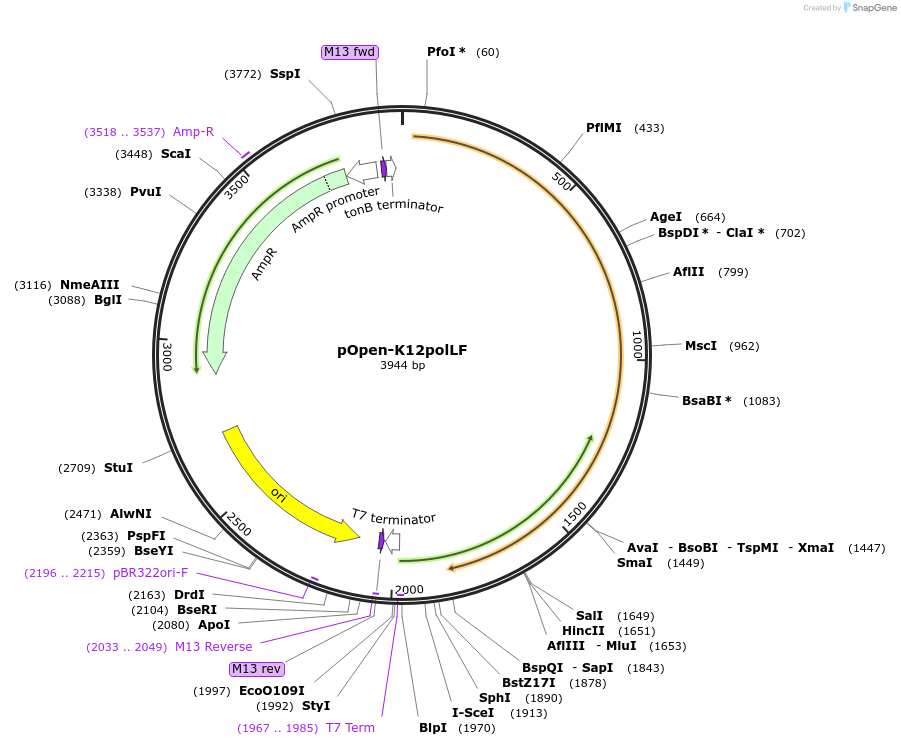
pOpen-BsupolLF
Plasmid#165563PurposeBsu DNA Polymerase I, Large Fragment retains the 5'-3' polymerase activity of the Bacillus subtilis DNA polymerase I, but lacks the 5'-3' exonuclease domain. This large fragment naturally lacks 3'-5' exonuclease activity. Applications include random primer labeling, second strand cDNA synthesis, single dA tailing, and strand displacement DNA synthesis.DepositorInsertBsu DNA Polymerase I, Large Fragment
UseSynthetic BiologyAvailable sinceAug. 17, 2021AvailabilityIndustry, Academic Institutions, and Nonprofits -
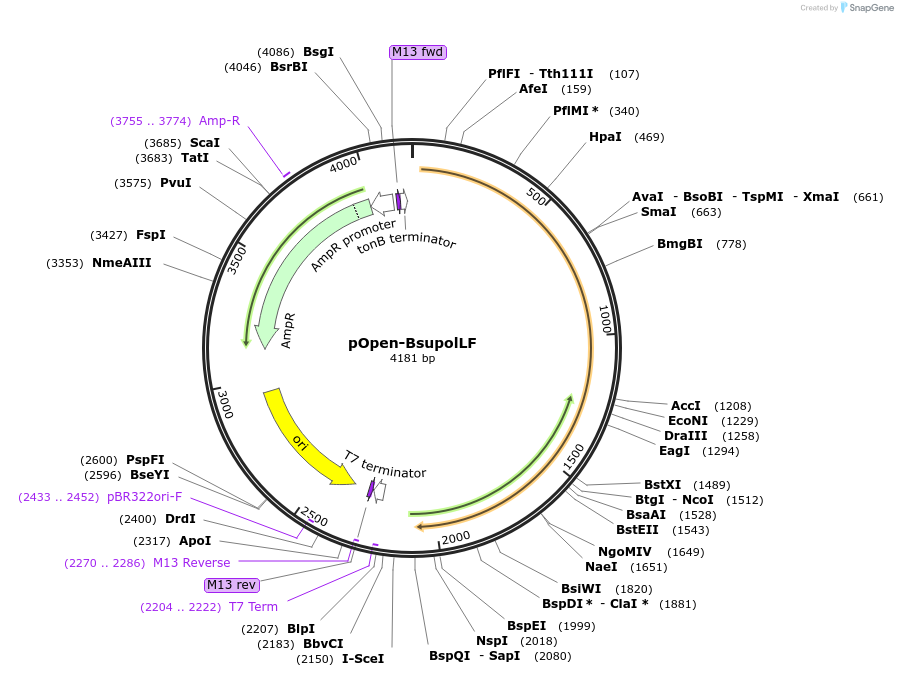
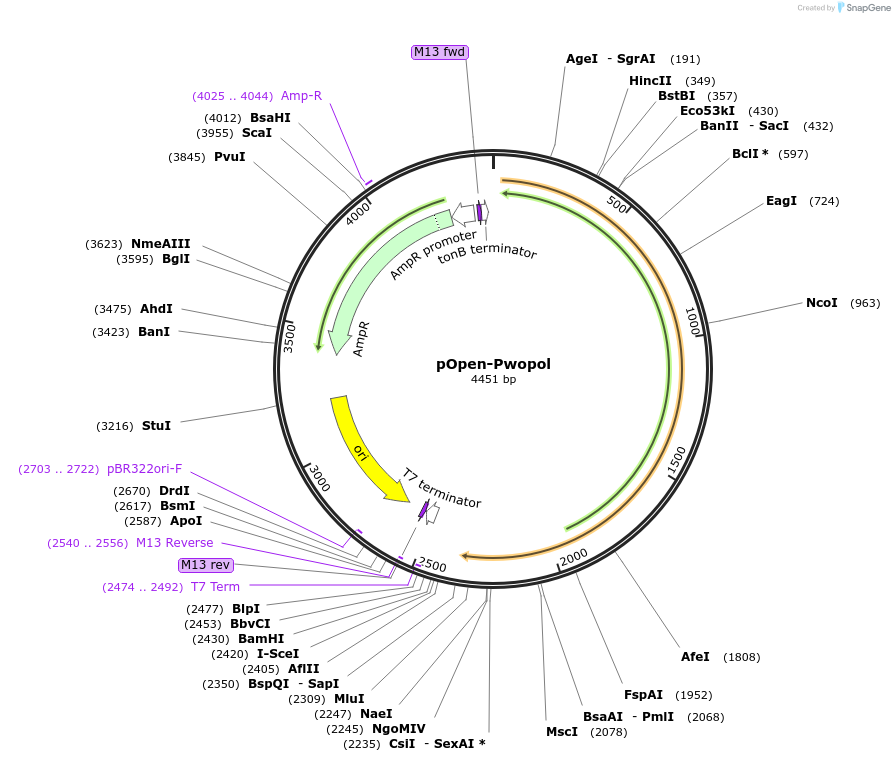
pOpen-Pwopol
Plasmid#165562PurposeDNA polymerase; additionally exhibits 3' to 5' exonuclease activity.DepositorInsertPwo DNA Polymerase
UseSynthetic BiologyAvailable sinceAug. 17, 2021AvailabilityIndustry, Academic Institutions, and Nonprofits -
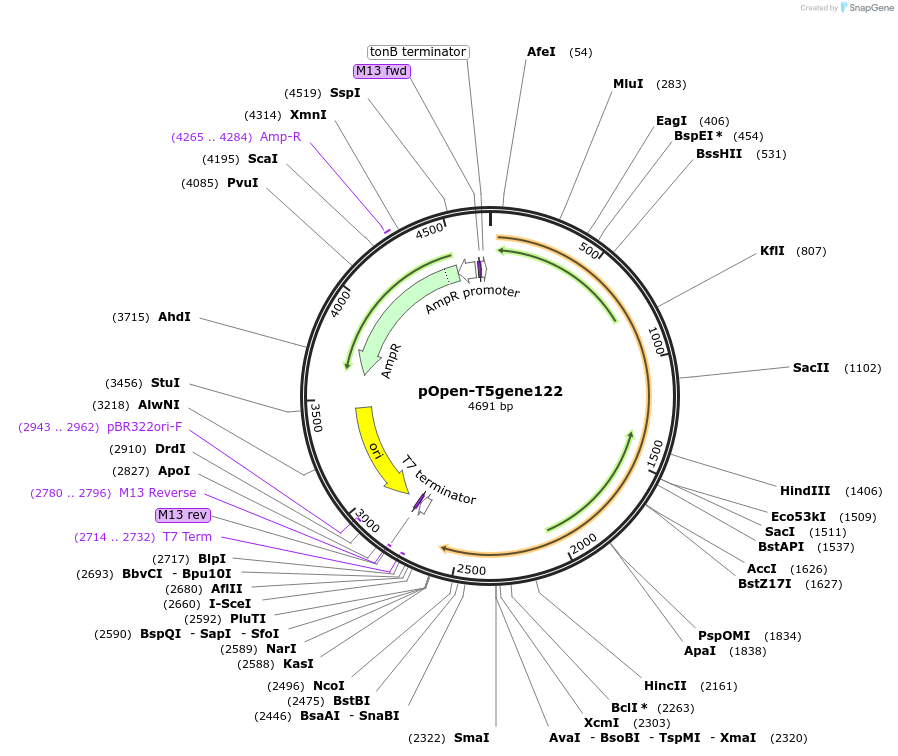
pOpen-T5gene122
Plasmid#165544PurposePossesses two enzymatic activities: DNA synthesis (polymerase) and exonucleolytic activity that degrades ssDNA in the 3'-5' direction for proofreading purposes.DepositorInsertT5 DNA Polymerase
UseSynthetic BiologyAvailable sinceAug. 9, 2021AvailabilityIndustry, Academic Institutions, and Nonprofits -
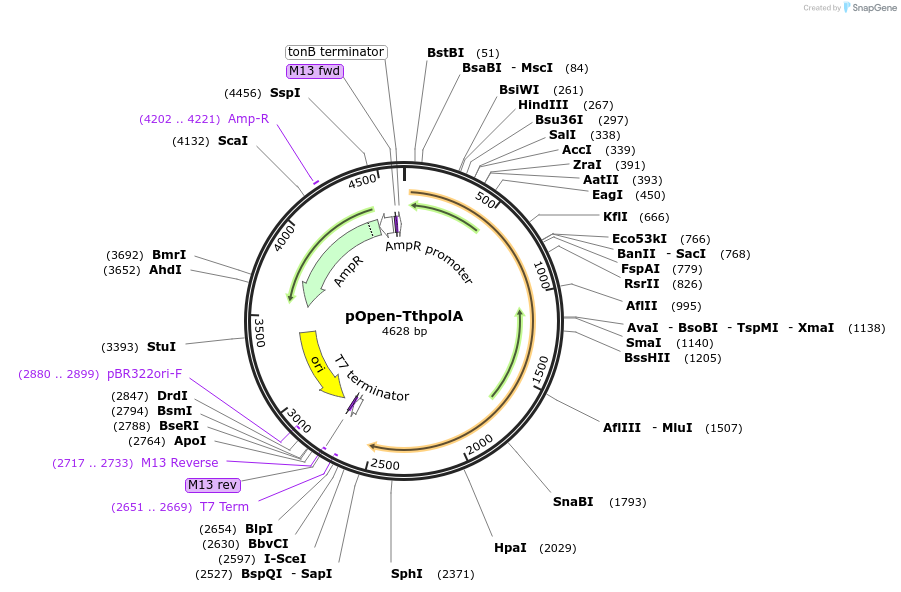
pOpen-TthpolA
Plasmid#165533PurposeDNA Polymerase whose activity is resistant to prolonged incubations at high temperatures (95 degrees C).DepositorInsertTth DNA polymerase
UseSynthetic BiologyAvailable sinceAug. 5, 2021AvailabilityIndustry, Academic Institutions, and Nonprofits -
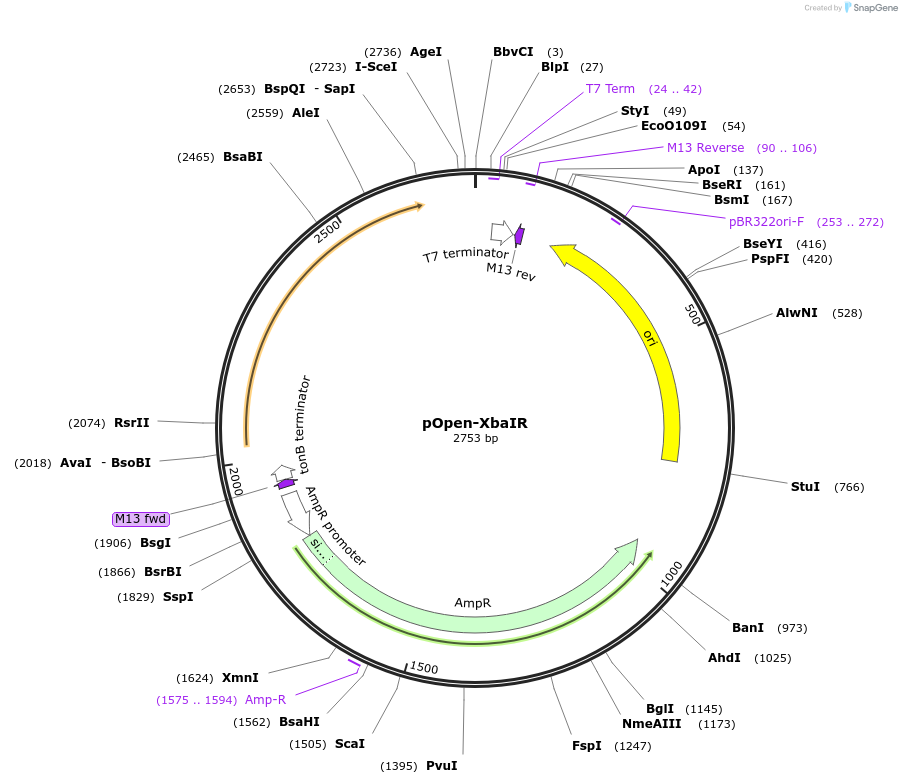
pOpen-XbaIR
Plasmid#165567PurposeType II restriction enzyme that recognizes the double-stranded sequence TCTAGA and cleaves after T-1.DepositorInsertXbaI
UseSynthetic BiologyAvailable sinceAug. 18, 2021AvailabilityIndustry, Academic Institutions, and Nonprofits -
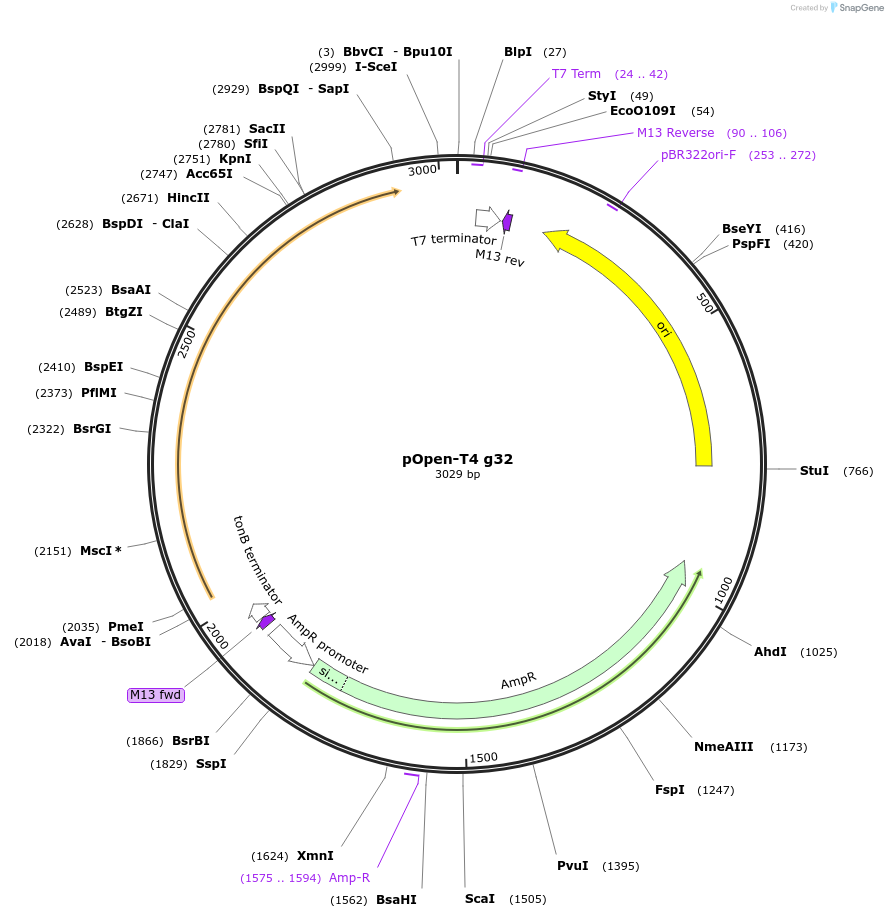
pOpen-T4 g32
Plasmid#165560PurposeA single-stranded DNA binding protein required for bacteriophage T4 replication and repair; Used extensively to stabilize and mark regions of ssDNA for electron microscopic examination of intracellular DNA structure, to increase yield and processivity of reverse transcriptase during RT-PCR, and to increase yield and specificity of PCR products from soil samples.DepositorInsertT4 gene 32
UseSynthetic BiologyAvailable sinceAug. 16, 2021AvailabilityIndustry, Academic Institutions, and Nonprofits