We narrowed to 20,363 results for: REN
-
Plasmid#176730PurposeThe plasmid is part of a GG toolkit for cell-cell communication in S. cerevisiae. This plasmid is an L0 part plasmid and contains the Ste2 gene of Lachancea thermotolerans (receiver part).DepositorArticleInsertste2Lt
UseSynthetic BiologyMutationCodon-optimized for expression in S. cerevisiaeAvailable SinceJan. 6, 2022AvailabilityAcademic Institutions and Nonprofits only -
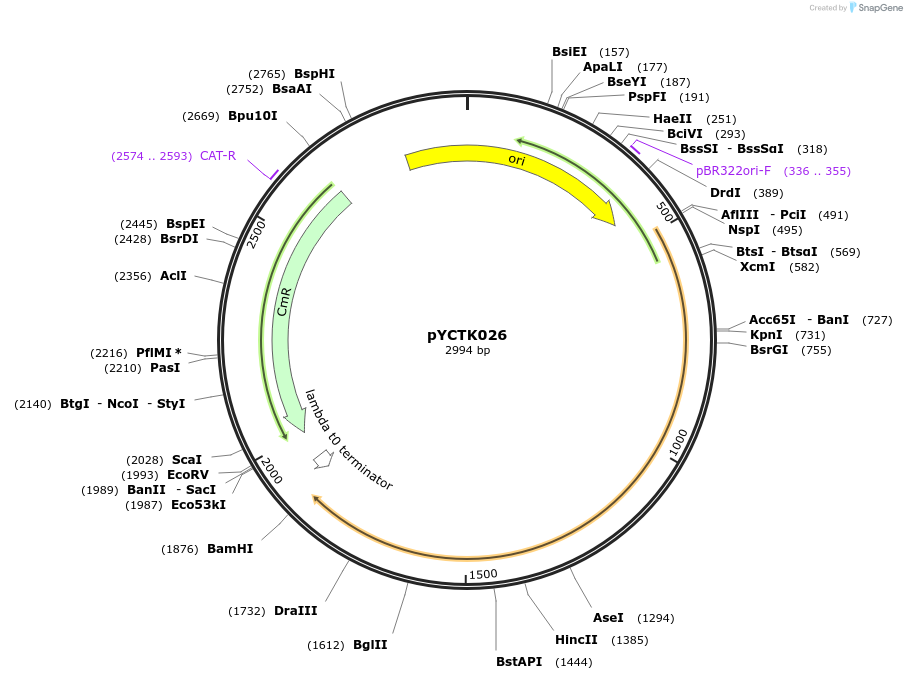
pYCTK029
Plasmid#176733PurposeThe plasmid is part of a GG toolkit for cell-cell communication in S. cerevisiae. This plasmid is an L0 part plasmid and contains the Ste2 gene of Vanderwaltozyma polyspora (receiver part).DepositorArticleInsertste2Vp
UseSynthetic BiologyMutationCodon-optimized for expression in S. cerevisiaeAvailable SinceJan. 6, 2022AvailabilityAcademic Institutions and Nonprofits only -
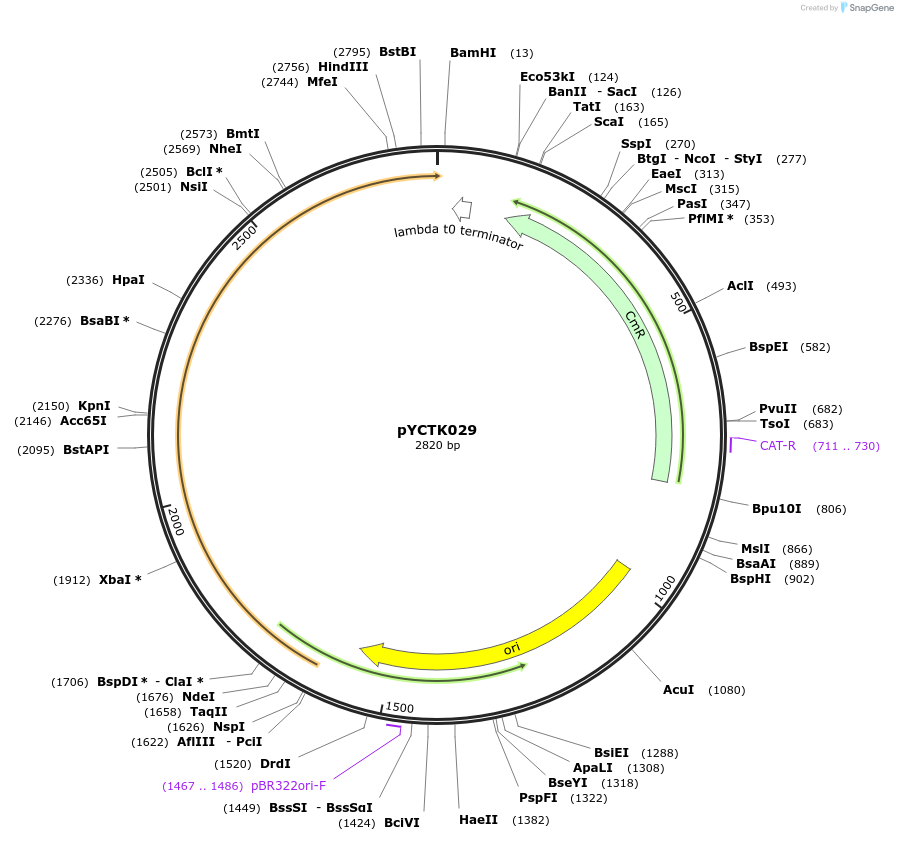
pYCTK032
Plasmid#176736PurposeThe plasmid is part of a GG toolkit for cell-cell communication in S. cerevisiae. This plasmid is an L0 part plasmid and contains the Bar1 gene of Kluyveromyces lactis (barrier part).DepositorArticleInsertbar1Kl
UseSynthetic BiologyMutationCodon-optimized for expression in S. cerevisiaeAvailable SinceJan. 6, 2022AvailabilityAcademic Institutions and Nonprofits only -
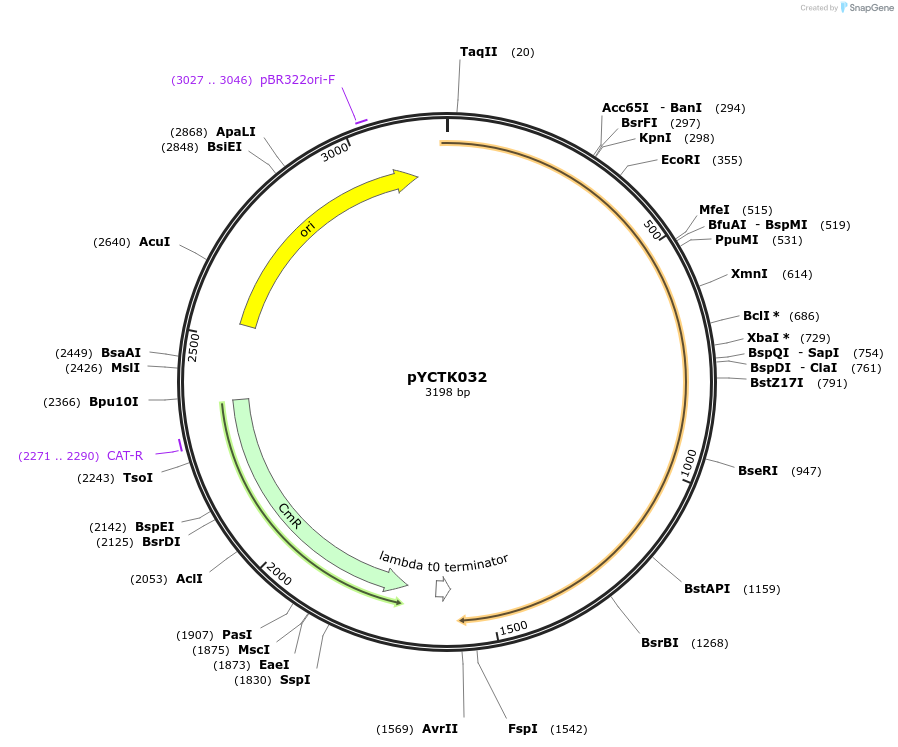
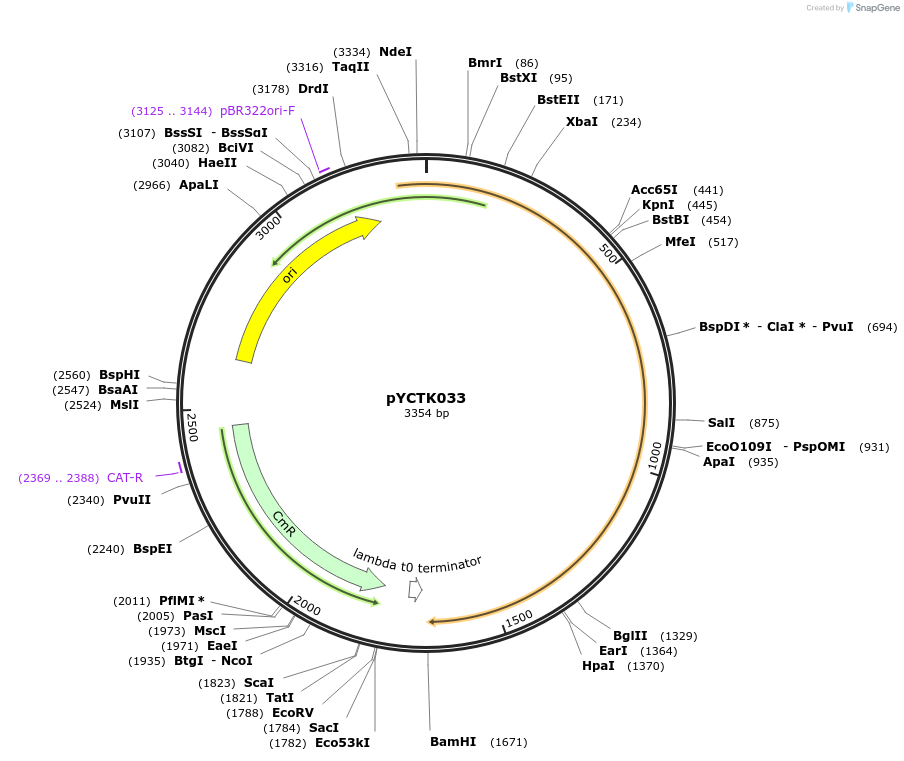
pYCTK033
Plasmid#176737PurposeThe plasmid is part of a GG toolkit for cell-cell communication in S. cerevisiae. This plasmid is an L0 part plasmid and contains the Bar1 gene of Kazachstania naganishii (barrier part).DepositorArticleInsertbar1Kn
UseSynthetic BiologyMutationCodon-optimized for expression in S. cerevisiaeAvailable SinceJan. 6, 2022AvailabilityAcademic Institutions and Nonprofits only -
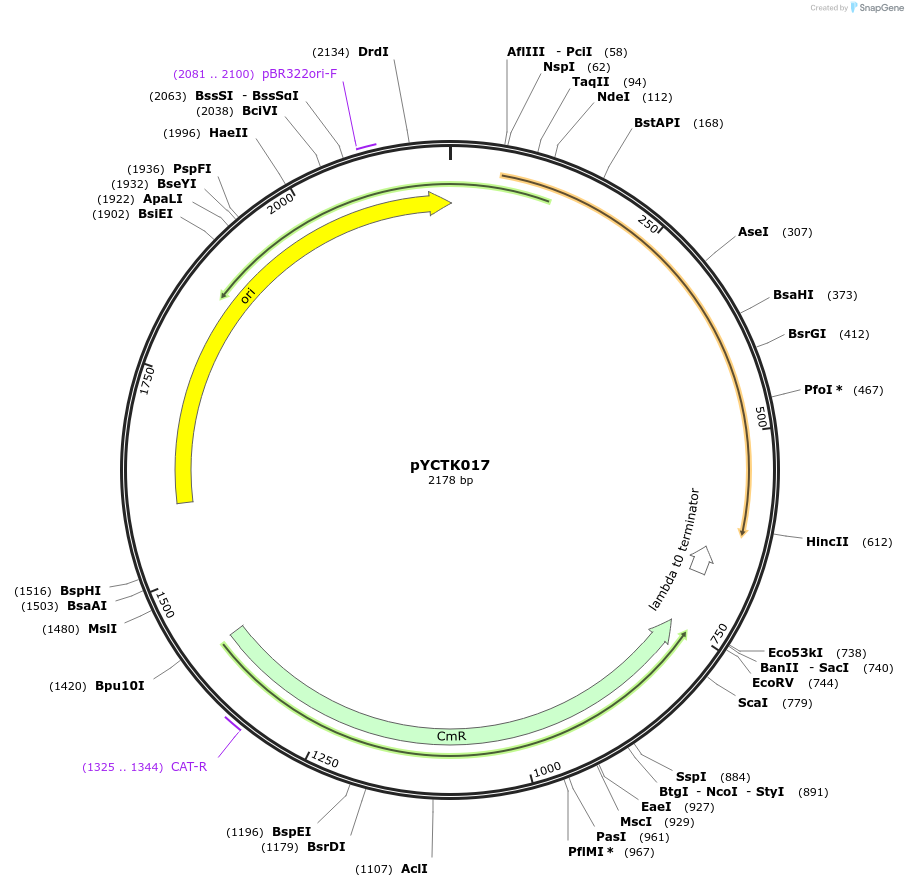
pYCTK017
Plasmid#176721PurposeThe plasmid is part of a GG toolkit for cell-cell communication in S. cerevisiae. This plasmid is an L0 part plasmid and contains the alpha-factor gene of Tetrapisispora phaffii (sender part).DepositorArticleInsertmfalpha1Tp
UseSynthetic BiologyMutationCodon-optimized for expression in S. cerevisiaeAvailable SinceJan. 6, 2022AvailabilityAcademic Institutions and Nonprofits only -
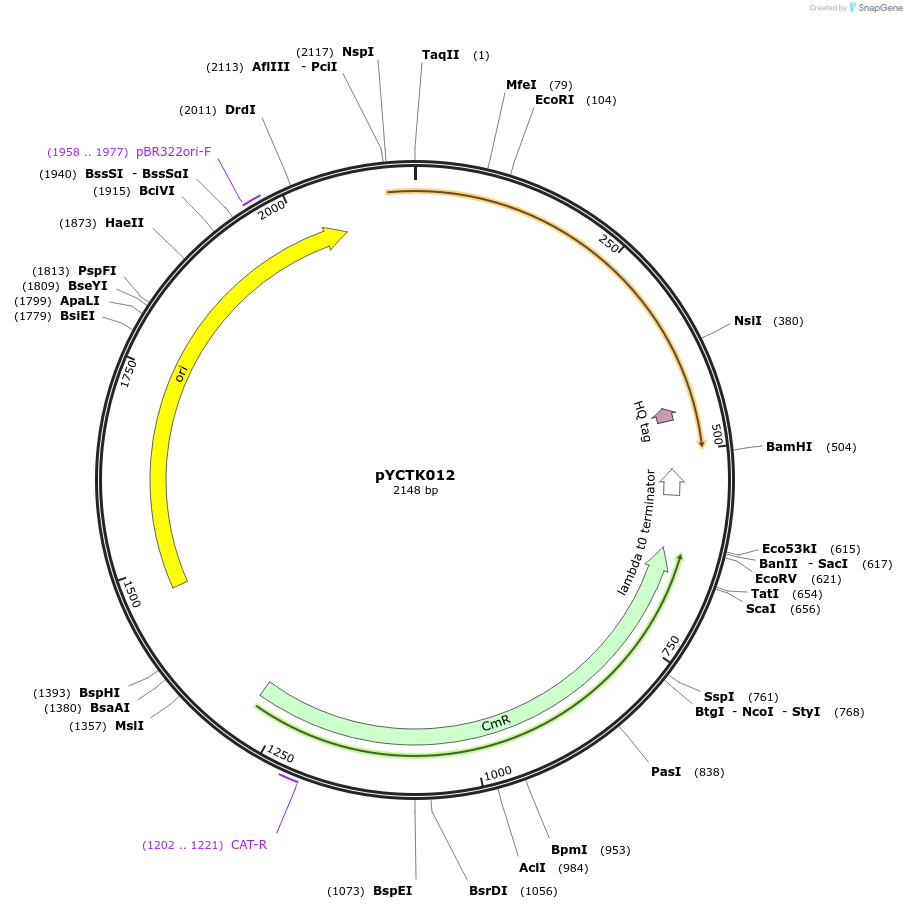
pYCTK012
Plasmid#176716PurposeThe plasmid is part of a GG toolkit for cell-cell communication in S. cerevisiae. This plasmid is an L0 part plasmid and contains the alpha-factor gene of Kazachstania naganishii (sender part).DepositorArticleInsertmfalpha1Kn
UseSynthetic BiologyMutationCodon-optimized for expression in S. cerevisiaeAvailable SinceJan. 6, 2022AvailabilityAcademic Institutions and Nonprofits only -
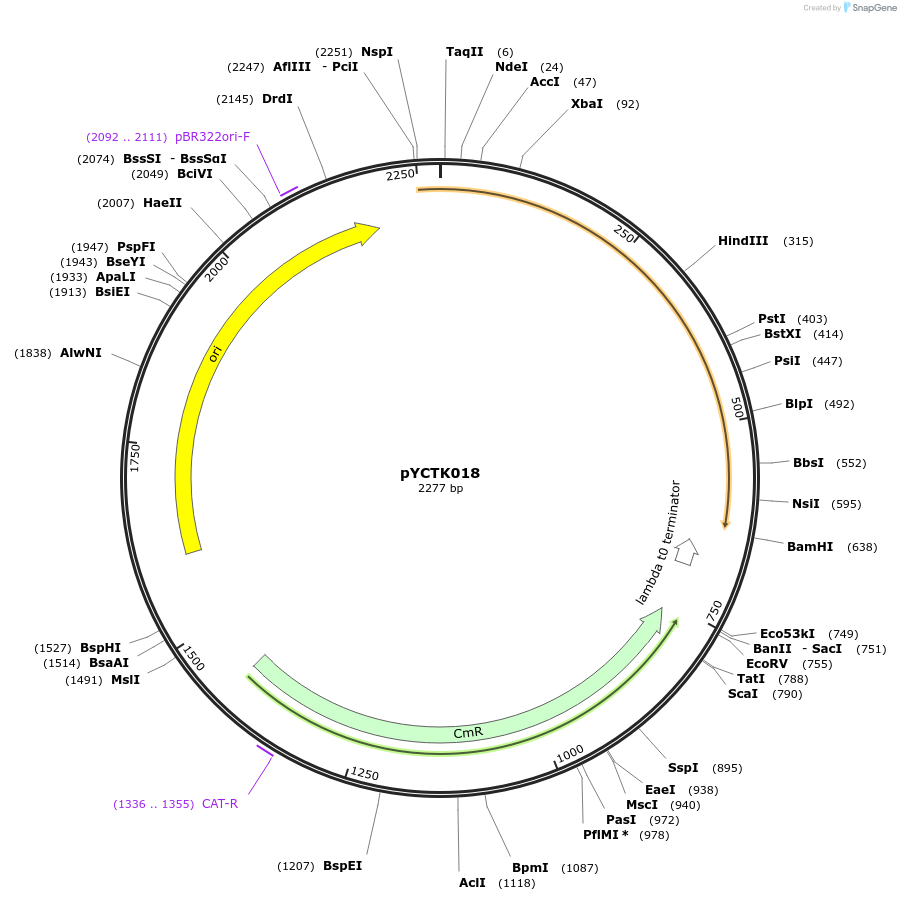
pYCTK018
Plasmid#176722PurposeThe plasmid is part of a GG toolkit for cell-cell communication in S. cerevisiae. This plasmid is an L0 part plasmid and contains the alpha-factor gene of Vanderwaltozyma polyspora (sender part).DepositorArticleInsertmfalpha1Vp
UseSynthetic BiologyMutationCodon-optimized for expression in S. cerevisiaeAvailable SinceJan. 6, 2022AvailabilityAcademic Institutions and Nonprofits only -
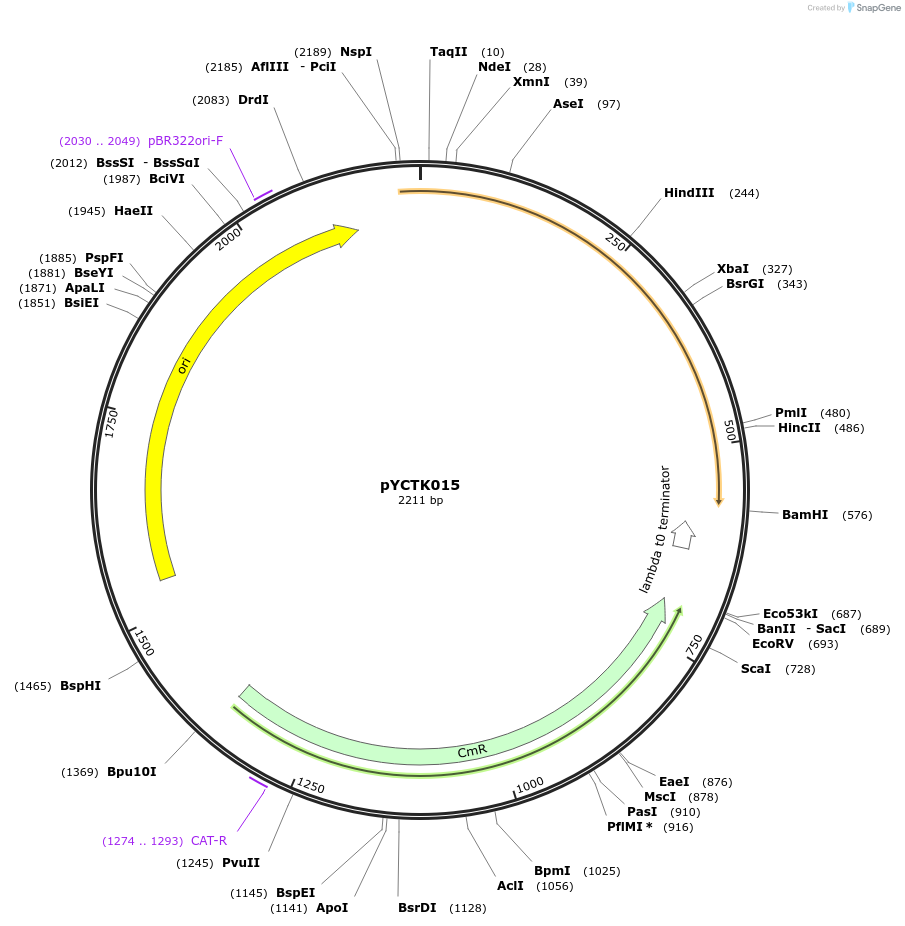
pYCTK015
Plasmid#176719PurposeThe plasmid is part of a GG toolkit for cell-cell communication in S. cerevisiae. This plasmid is an L0 part plasmid and contains the alpha-factor gene of Lachancea thermotolerans (sender part).DepositorArticleInsertmfalpha1Lt
UseSynthetic BiologyMutationCodon-optimized for expression in S. cerevisiaeAvailable SinceJan. 6, 2022AvailabilityAcademic Institutions and Nonprofits only -
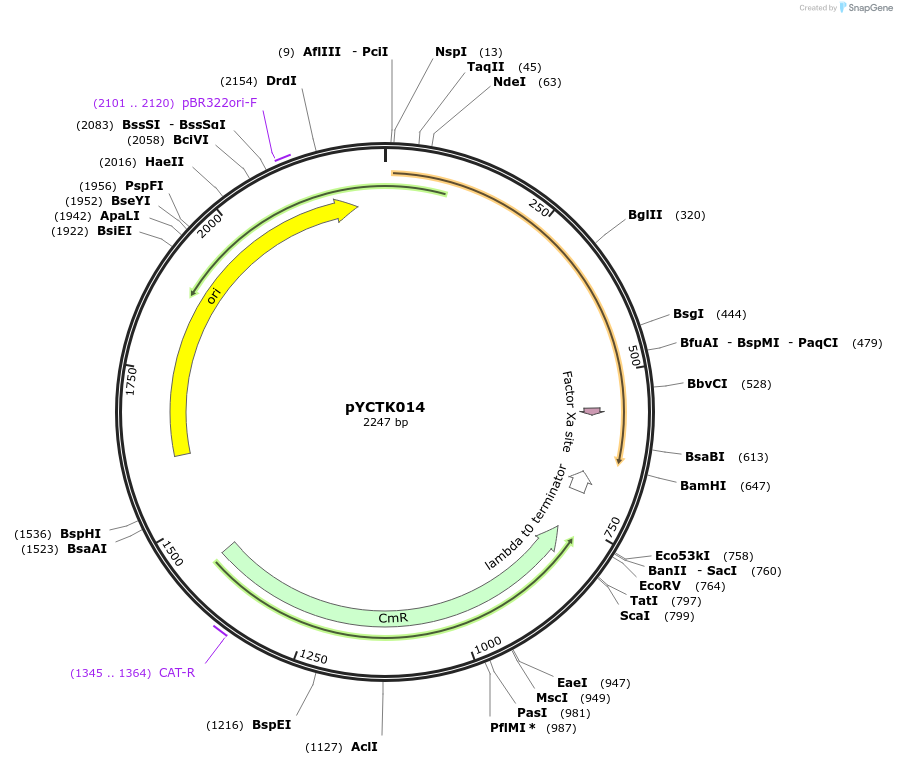
pYCTK014
Plasmid#176718PurposeThe plasmid is part of a GG toolkit for cell-cell communication in S. cerevisiae. This plasmid is an L0 part plasmid and contains the alpha-factor gene of Lachancea mirantina (sender part).DepositorArticleInsertmfalpha1Lm
UseSynthetic BiologyMutationCodon-optimized for expression in S. cerevisiaeAvailable SinceJan. 6, 2022AvailabilityAcademic Institutions and Nonprofits only -
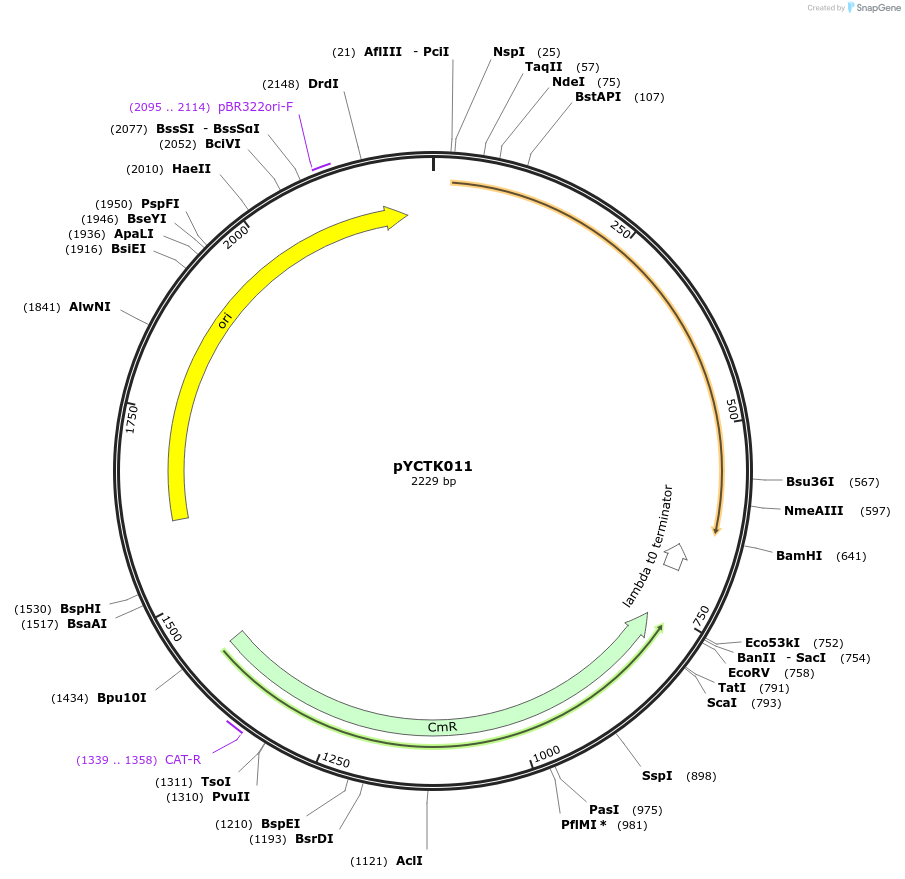
pYCTK011
Plasmid#176715PurposeThe plasmid is part of a GG toolkit for cell-cell communication in S. cerevisiae. This plasmid is an L0 part plasmid and contains the alpha-factor gene of Kluyveromyces lactis (sender part).DepositorArticleInsertmfalpha1Kl
UseSynthetic BiologyMutationCodon-optimized for expression in S. cerevisiaeAvailable SinceJan. 6, 2022AvailabilityAcademic Institutions and Nonprofits only -
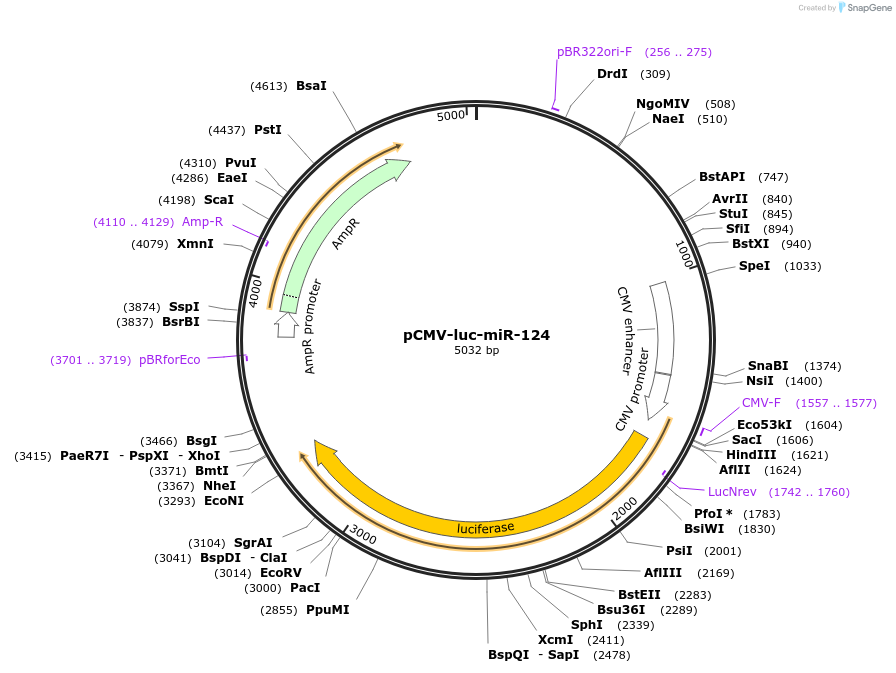
pCMV-luc-miR-124
Plasmid#171558Purposea positive control reporter with 3' UTR sequences perfectly complementary to miR-124DepositorInserta sequences perfectly complementary to miR-124
ExpressionMammalianAvailable SinceAug. 12, 2021AvailabilityAcademic Institutions and Nonprofits only -
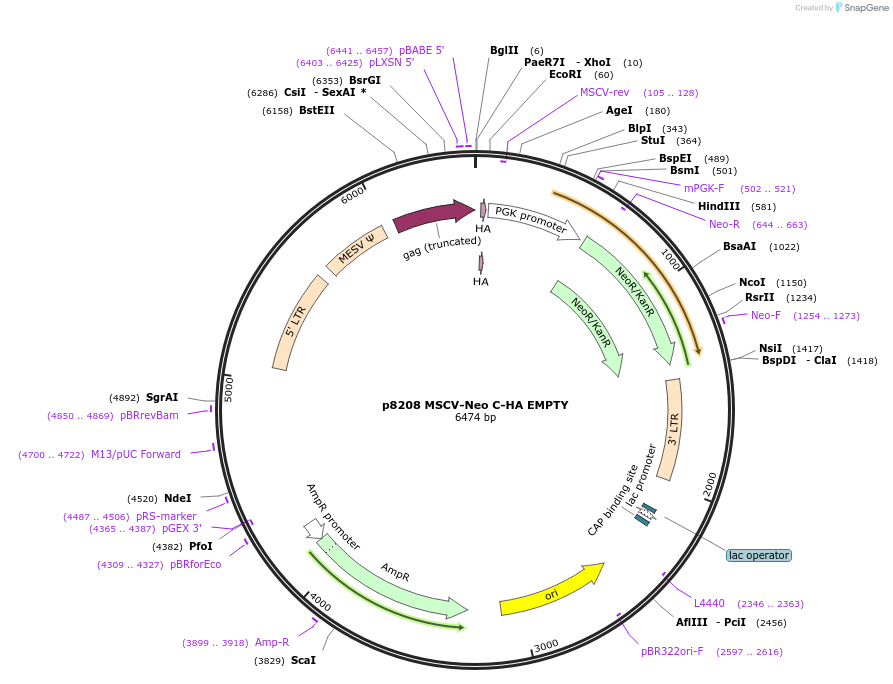
p8208 MSCV-Neo C-HA EMPTY
Plasmid#163310PurposeEmpty vector controlDepositorTypeEmpty backboneUseRetroviralAvailable SinceJan. 5, 2021AvailabilityAcademic Institutions and Nonprofits only -
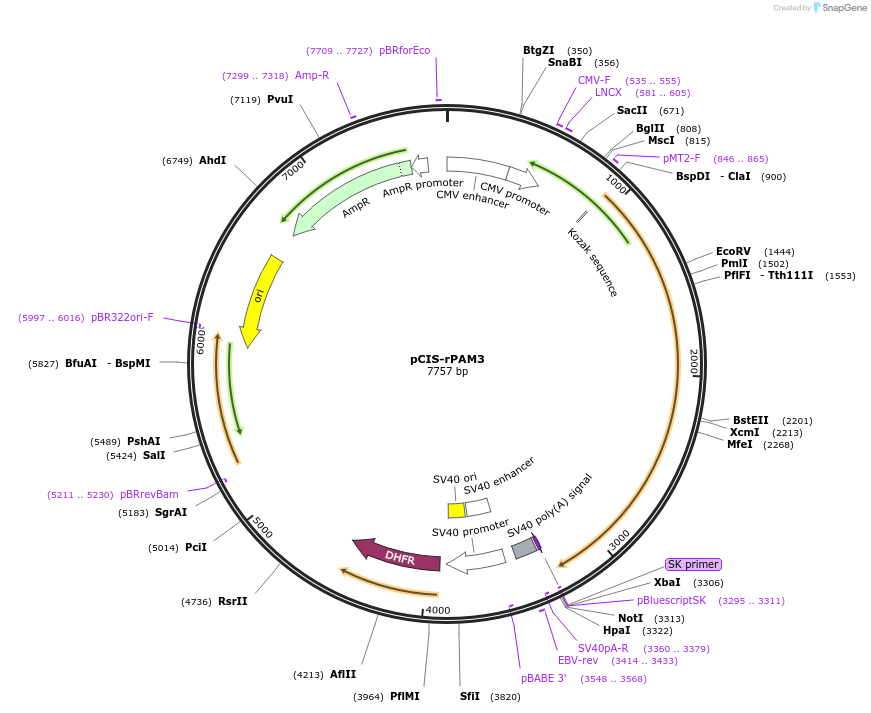
pCIS-rPAM3
Plasmid#145803Purposeexpresses rat PAM3 in mammalian cellsDepositorInsertrat PAM3
ExpressionMammalianMutationSee depositor comments belowPromoterCMVAvailable SinceDec. 9, 2020AvailabilityAcademic Institutions and Nonprofits only -
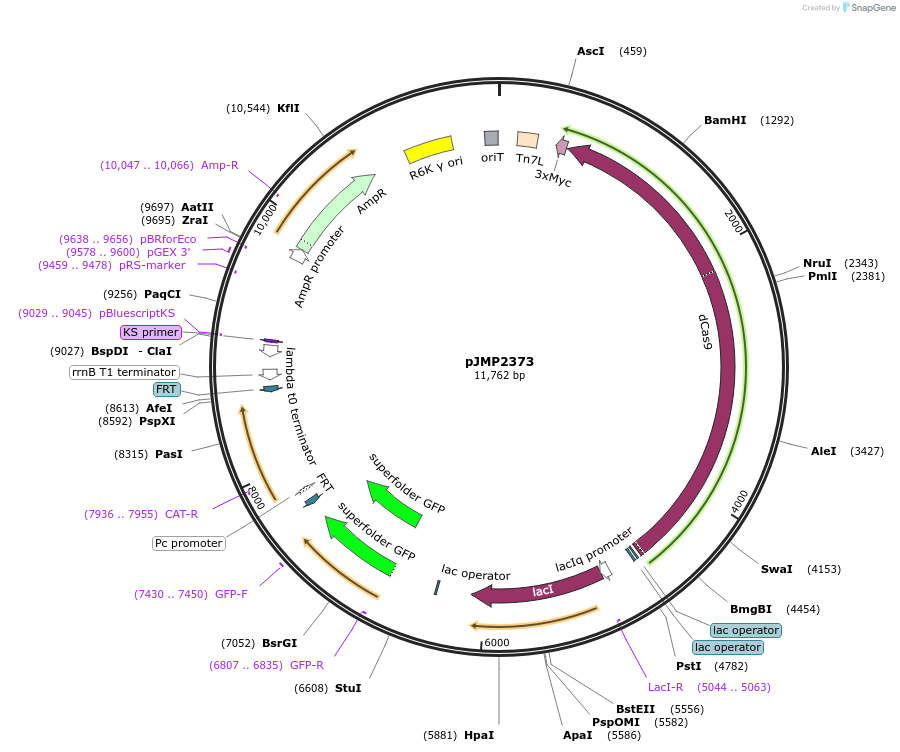
pJMP2373
Plasmid#160079PurposeZ. mobilis CRISPRi, promoter F, empty guide, sfGFPDepositorInsertempty sgRNA
ExpressionBacterialAvailable SinceNov. 17, 2020AvailabilityAcademic Institutions and Nonprofits only -
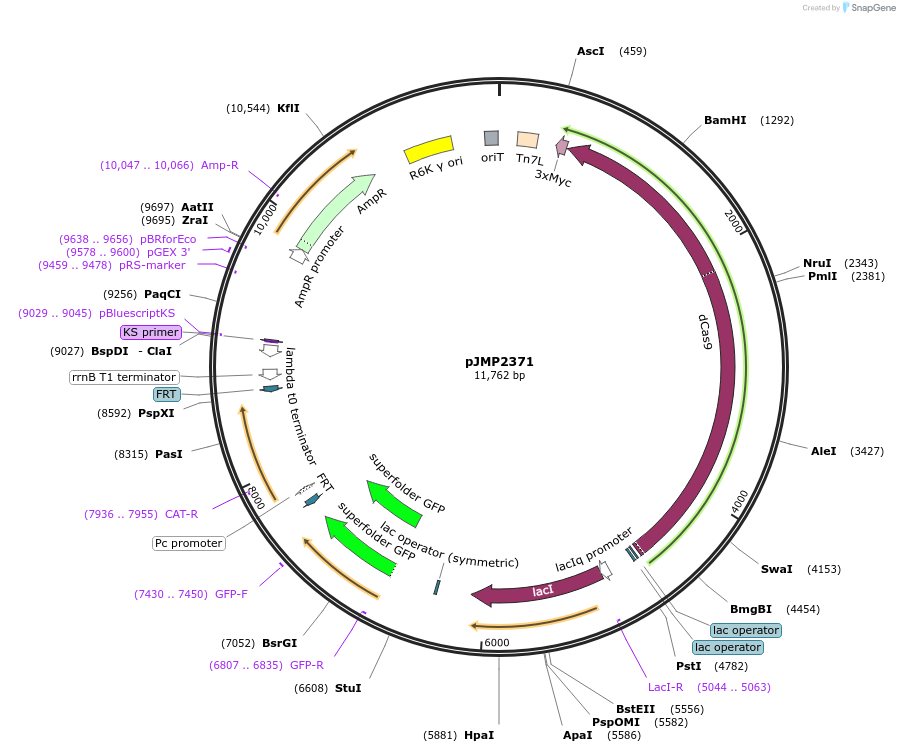
pJMP2371
Plasmid#160078PurposeZ. mobilis CRISPRi, promoter E, empty guide, sfGFPDepositorInsertempty sgRNA
ExpressionBacterialAvailable SinceNov. 17, 2020AvailabilityAcademic Institutions and Nonprofits only -
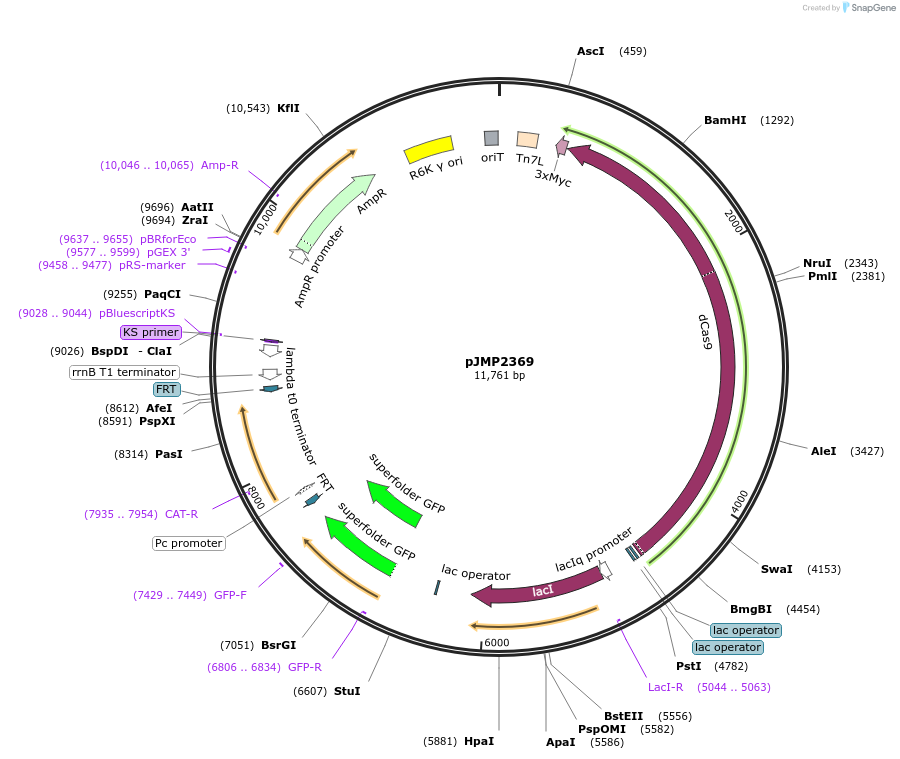
pJMP2369
Plasmid#160077PurposeZ. mobilis CRISPRi, promoter D, empty guide, sfGFPDepositorInsertempty sgRNA
ExpressionBacterialAvailable SinceNov. 17, 2020AvailabilityAcademic Institutions and Nonprofits only -
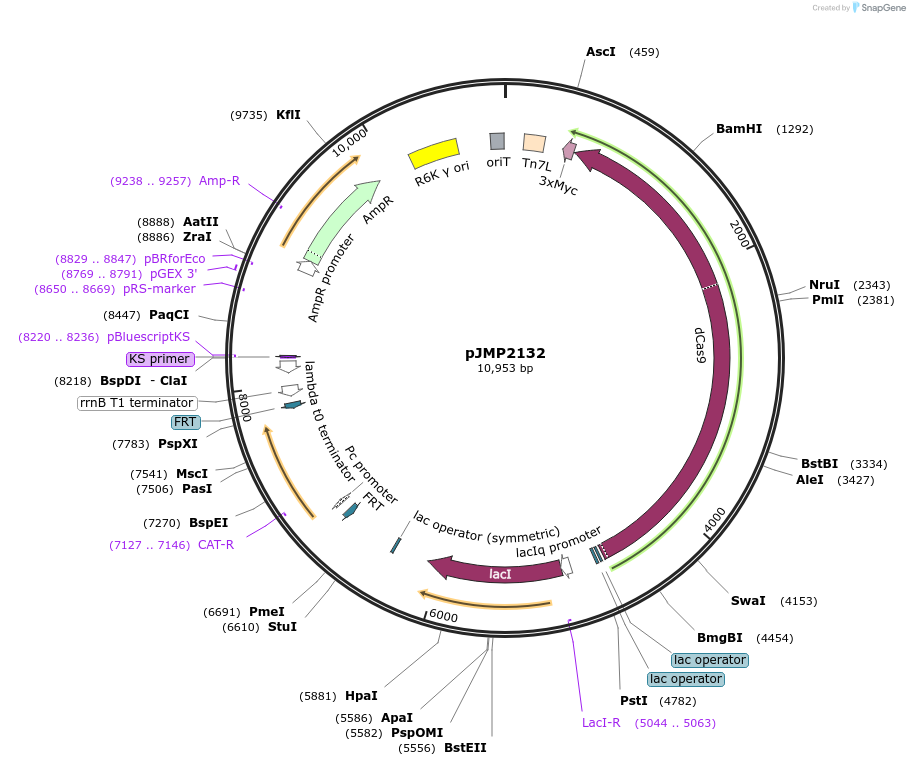
pJMP2132
Plasmid#160075PurposeZ. mobilis CRISPRi, promoter B, empty guideDepositorInsertempty sgRNA
ExpressionBacterialAvailable SinceNov. 17, 2020AvailabilityAcademic Institutions and Nonprofits only -
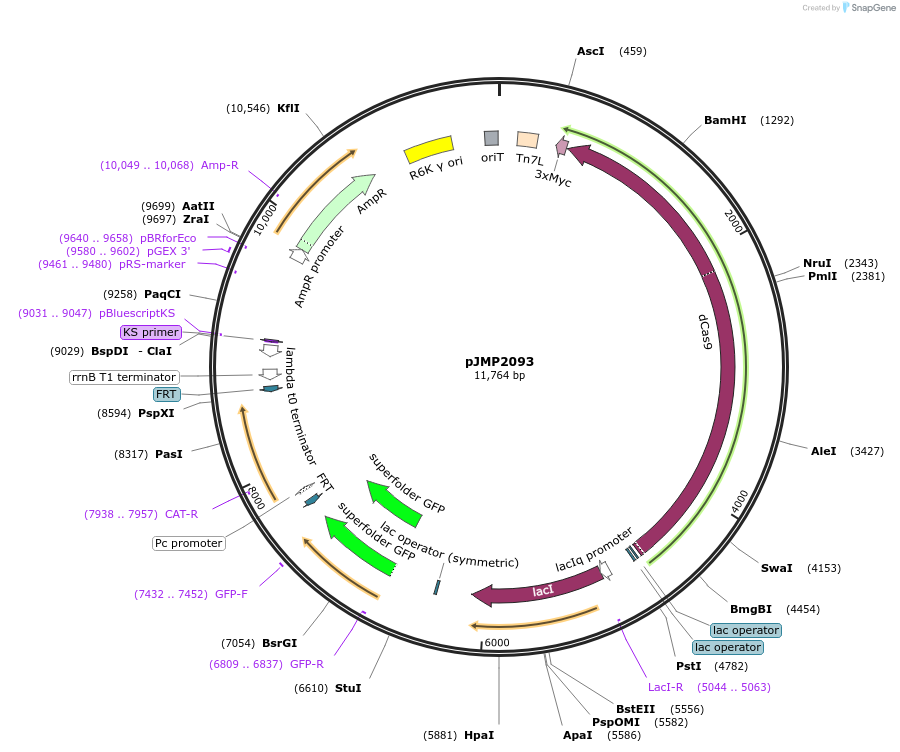
pJMP2093
Plasmid#160074PurposeZ. mobilis CRISPRi, promoter B, empty guide, sfGFPDepositorInsertempty sgRNA
ExpressionBacterialAvailable SinceNov. 17, 2020AvailabilityAcademic Institutions and Nonprofits only -
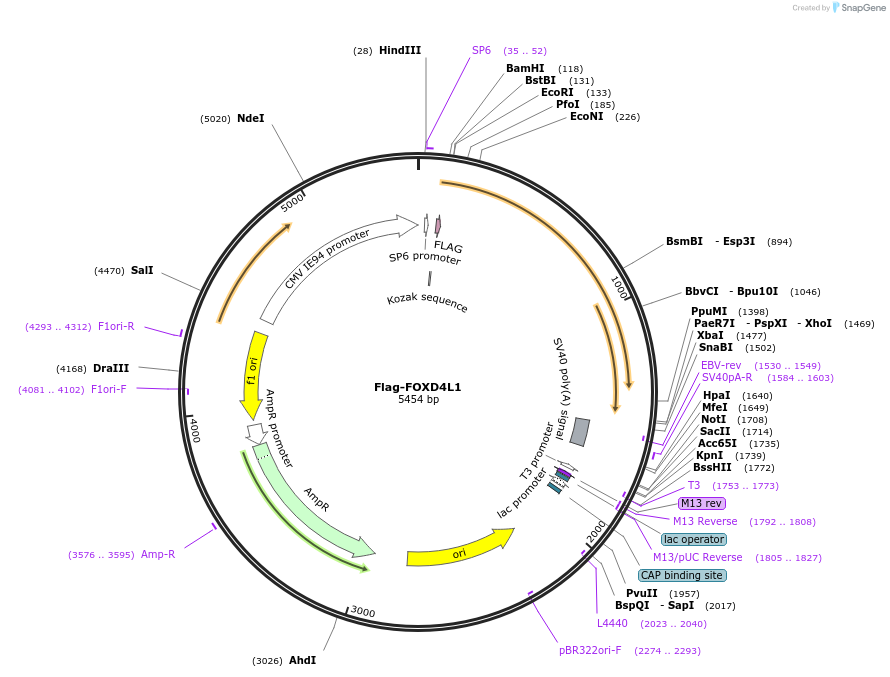
Flag-FOXD4L1
Plasmid#153154PurposeExpression of Flag tagged human FOXD4L1in mammalian cellsDepositorAvailable SinceAug. 24, 2020AvailabilityAcademic Institutions and Nonprofits only -
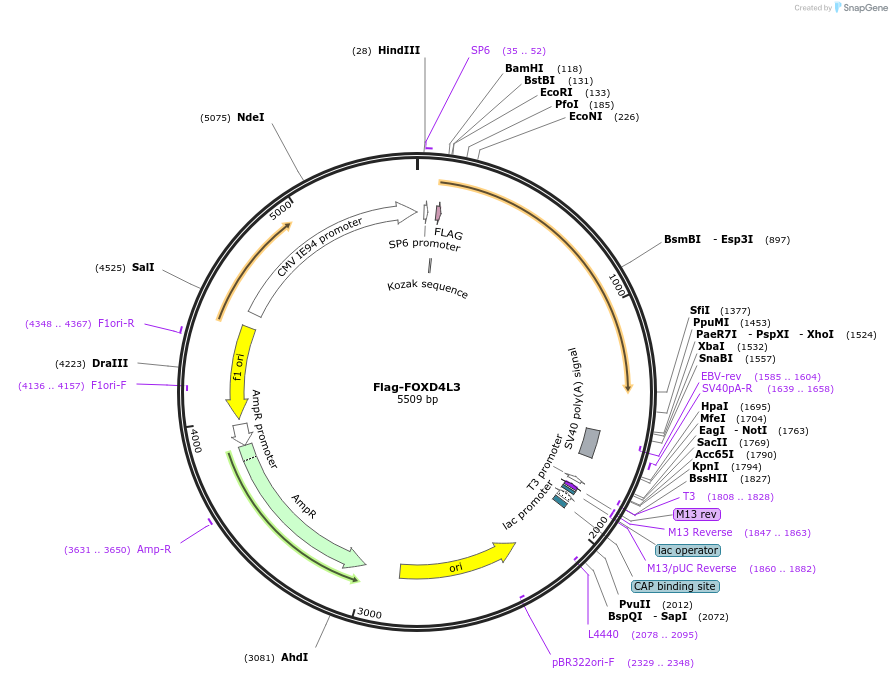
Flag-FOXD4L3
Plasmid#153155PurposeExpression of Flag tagged human FOXD4L3 in mammalian cellsDepositorAvailable SinceAug. 24, 2020AvailabilityAcademic Institutions and Nonprofits only