
We narrowed to 1,335 results for: GPCR;
-
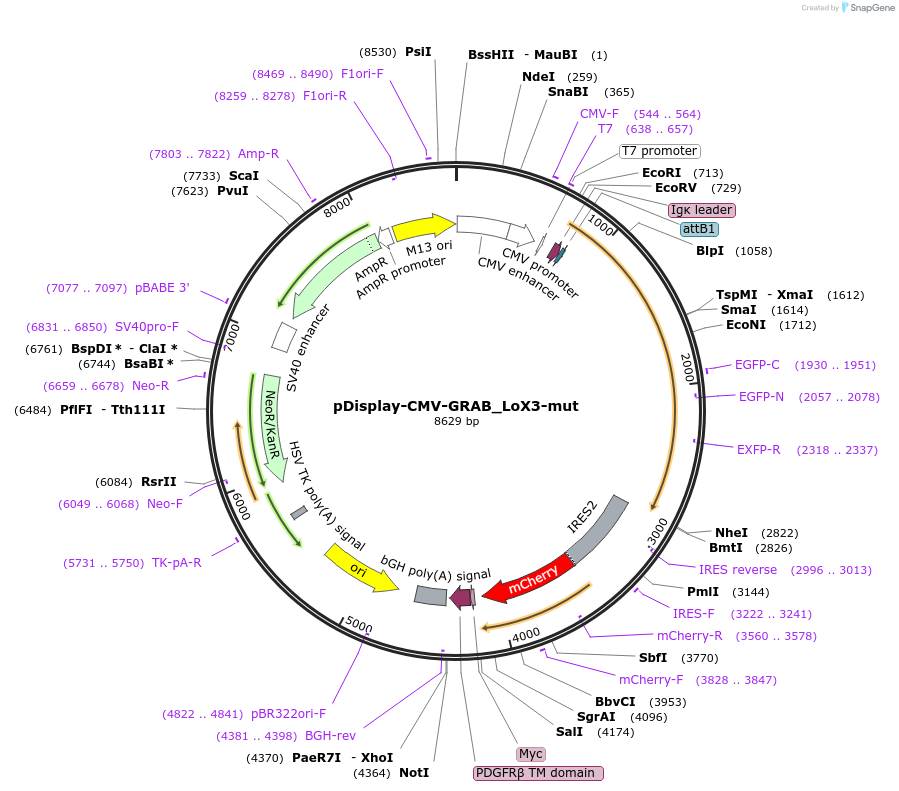
Plasmid#234651PurposeThis plasmid encodes a mutated version of the genetically encoded chemokine biosensor LoX3-1.0, which is designed to be non-responsive to chemokine binding.DepositorInsertGPCR activation-based mutant chemokine CXCL9-11 sensor GRAB_LoX3-mut
ExpressionMammalianPromoterCMVAvailable SinceAug. 12, 2025AvailabilityAcademic Institutions and Nonprofits only -
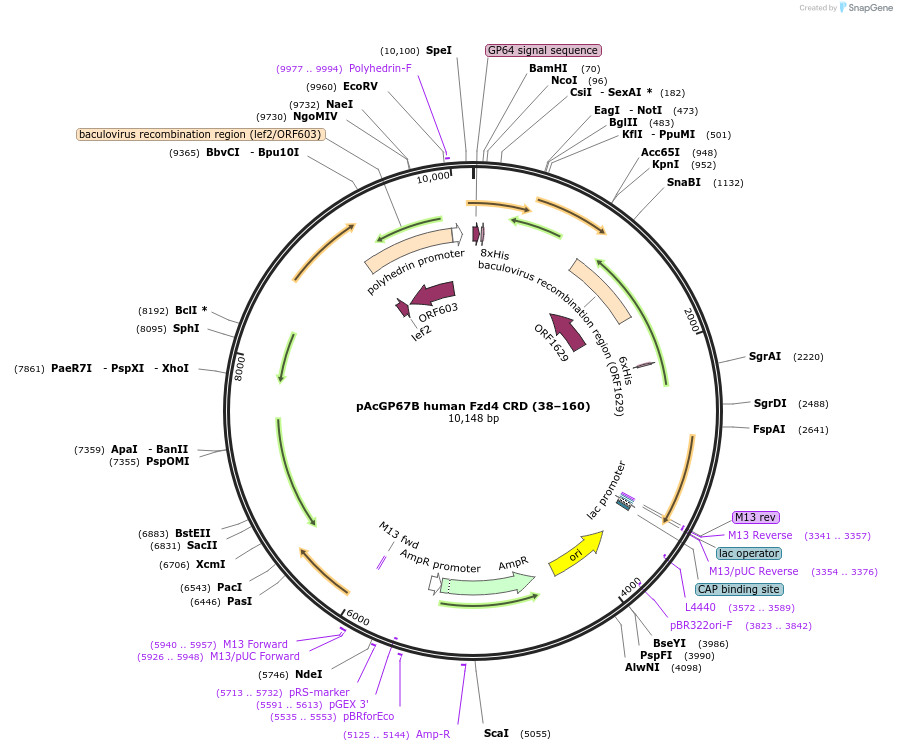
pAcGP67B human Fzd4 CRD (38–160)
Plasmid#132621Purposeexpresses human Fzd4 CRD (38-160) in Hi5 insect cellDepositorInsertFzd4 CRD (38–160) (FZD4 Human)
ExpressionInsectAvailable SinceOct. 17, 2019AvailabilityAcademic Institutions and Nonprofits only -
GPR160-Tango
Plasmid#66333PurposeExpression of G protein-coupled receptors for PRESTO-Tango: parallel receptorome expression and screening via transcriptional output, with transcriptional activation following arrestin translocationDepositorAvailable SinceSept. 15, 2015AvailabilityAcademic Institutions and Nonprofits only -
GPR12-Tango
Plasmid#66309PurposeExpression of G protein-coupled receptors for PRESTO-Tango: parallel receptorome expression and screening via transcriptional output, with transcriptional activation following arrestin translocationDepositorAvailable SinceSept. 15, 2015AvailabilityAcademic Institutions and Nonprofits only -
CYSLTR2-Tango
Plasmid#66267PurposeExpression of G protein-coupled receptors for PRESTO-Tango: parallel receptorome expression and screening via transcriptional output, with transcriptional activation following arrestin translocationDepositorAvailable SinceSept. 15, 2015AvailabilityAcademic Institutions and Nonprofits only -
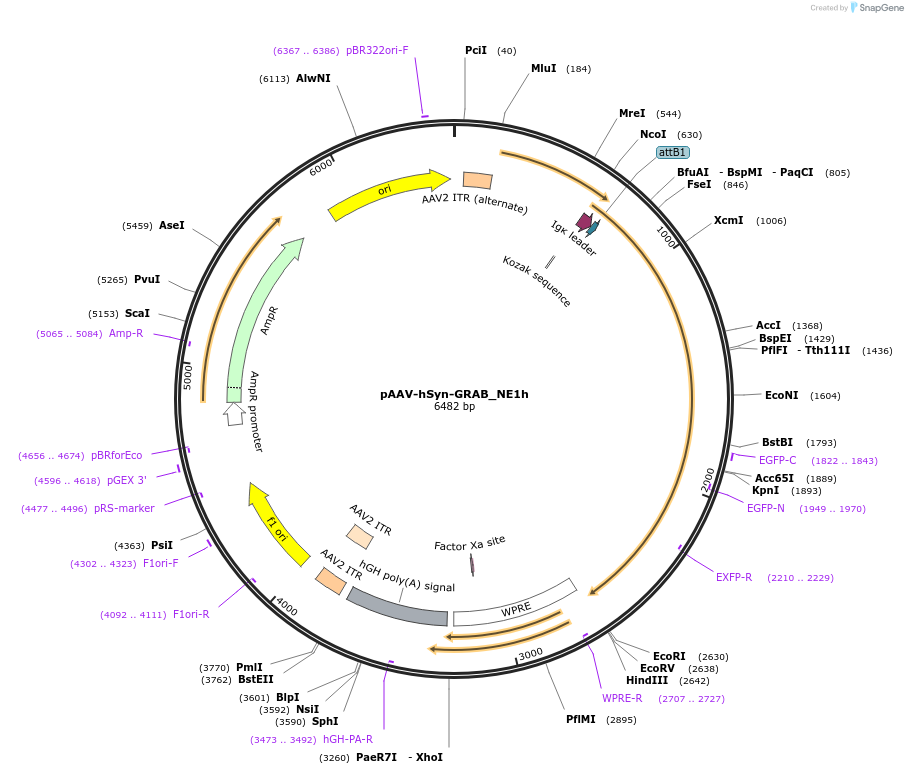
pAAV-hSyn-GRAB_NE1h
Plasmid#123309PurposeExpresses the genetically-encoded fluorescent norepinephrine(NE) sensor GRAB_NE1h in neuronsDepositorHas ServiceAAV Retrograde and AAV9InsertGPCR activation based NE sensor GRAB_NE1h
UseAAVPromoterhSynAvailable SinceApril 4, 2019AvailabilityAcademic Institutions and Nonprofits only -
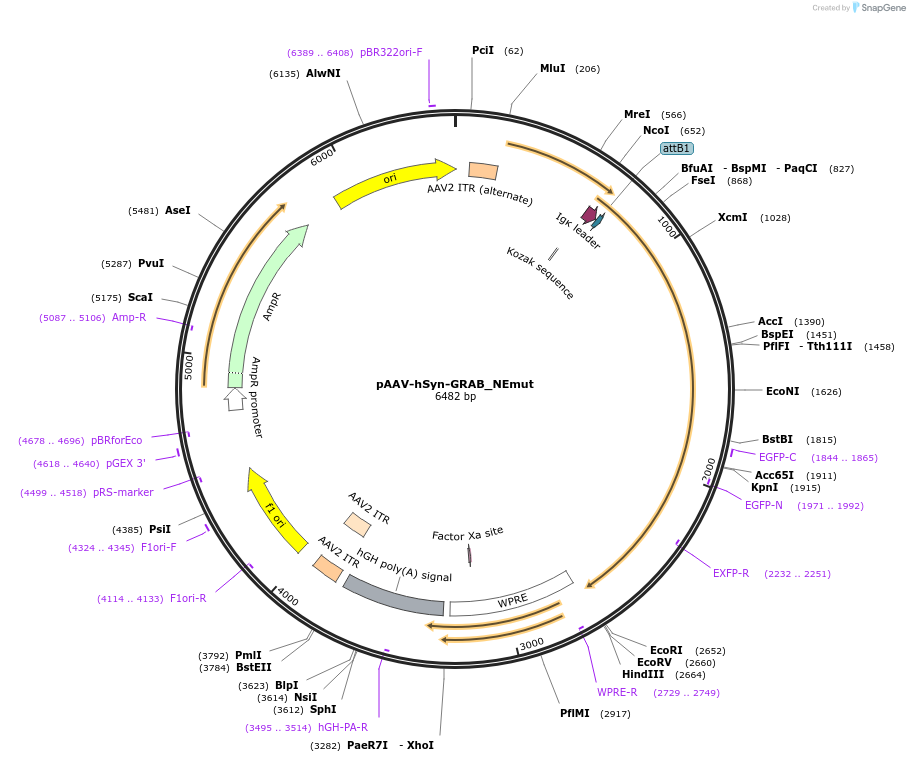
pAAV-hSyn-GRAB_NEmut
Plasmid#123310PurposeExpresses the genetically-encoded fluorescent norepinephrine(NE) control sensor GRAB_NEmut in neuronsDepositorHas ServiceAAV Retrograde and AAV9InsertGPCR activation based NE control sensor GRAB_NEmut
UseAAVPromoterhSynAvailable SinceApril 4, 2019AvailabilityAcademic Institutions and Nonprofits only -
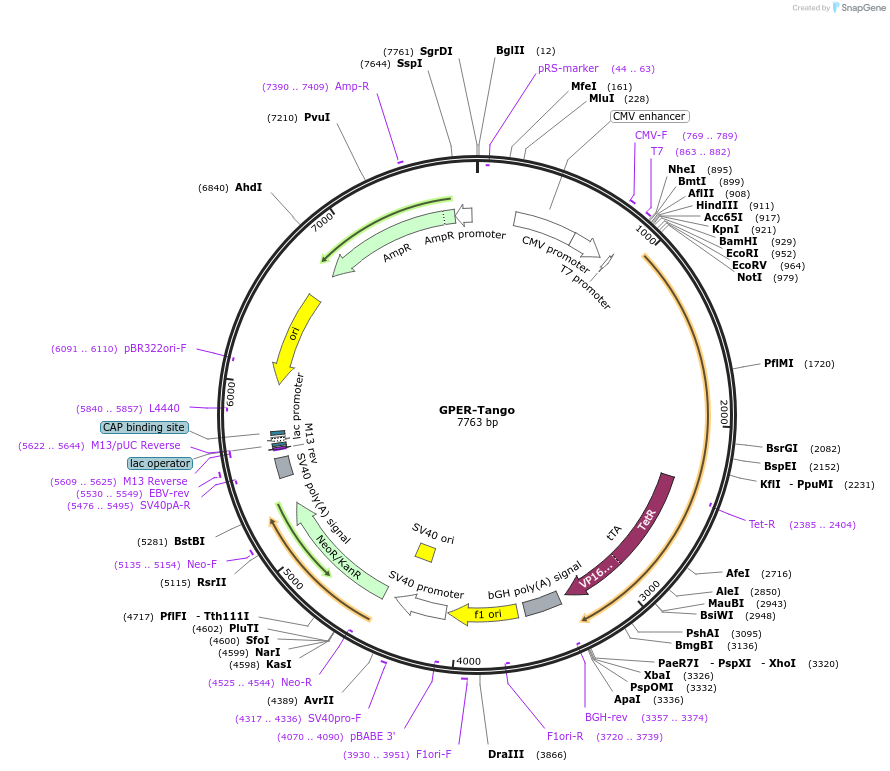
GPER-Tango
Plasmid#66299PurposeExpression of G protein-coupled receptors for PRESTO-Tango: parallel receptorome expression and screening via transcriptional output, with transcriptional activation following arrestin translocationDepositorAvailable SinceSept. 17, 2015AvailabilityAcademic Institutions and Nonprofits only -
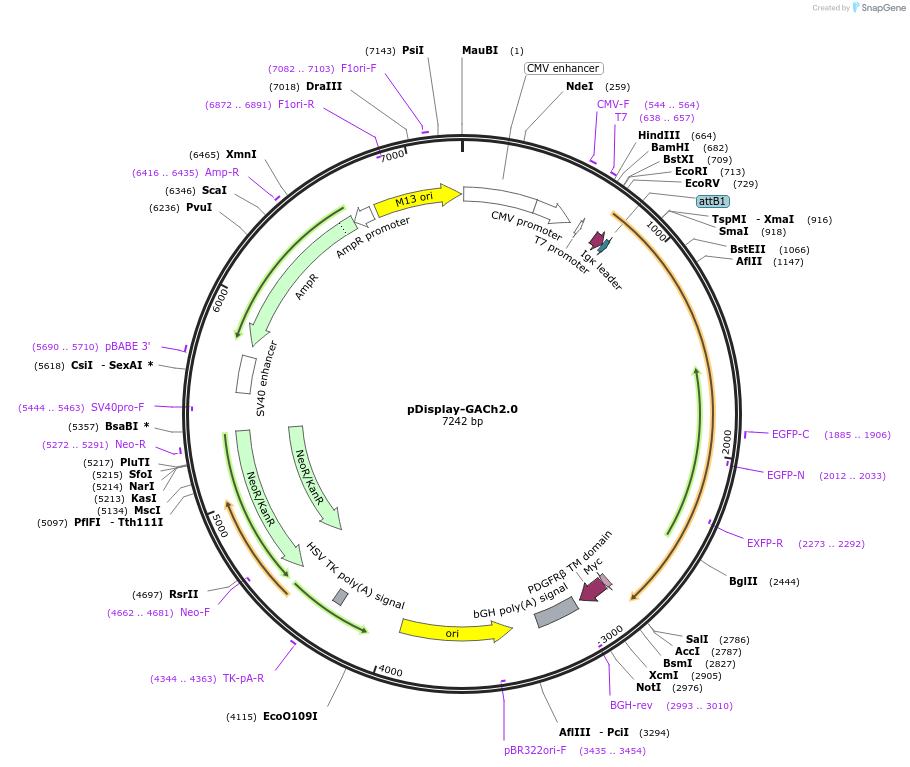
pDisplay-GACh2.0
Plasmid#106073Purposeexpress the genetically-encoded fluorescent ACh indicator GACh2.0 in mammalian cellsDepositorInsertGPCR activation based ACh sensor (GACh) 2.0
ExpressionMammalianPromoterCMVAvailable SinceMarch 30, 2018AvailabilityAcademic Institutions and Nonprofits only -
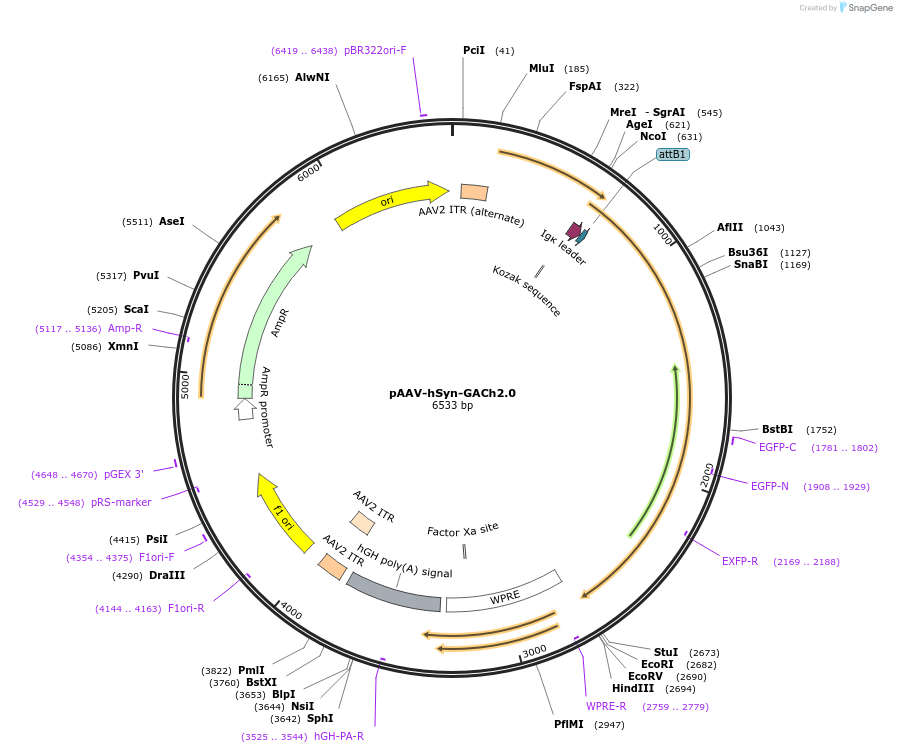
pAAV-hSyn-GACh2.0
Plasmid#121921Purposeexpress the genetically-encoded fluorescent acethycholine(ACh) sensor GACh2.0DepositorInsertGPCR activation based ACh sensor GACh2.0
UseAAVPromoterhSynAvailable SinceFeb. 21, 2019AvailabilityAcademic Institutions and Nonprofits only -
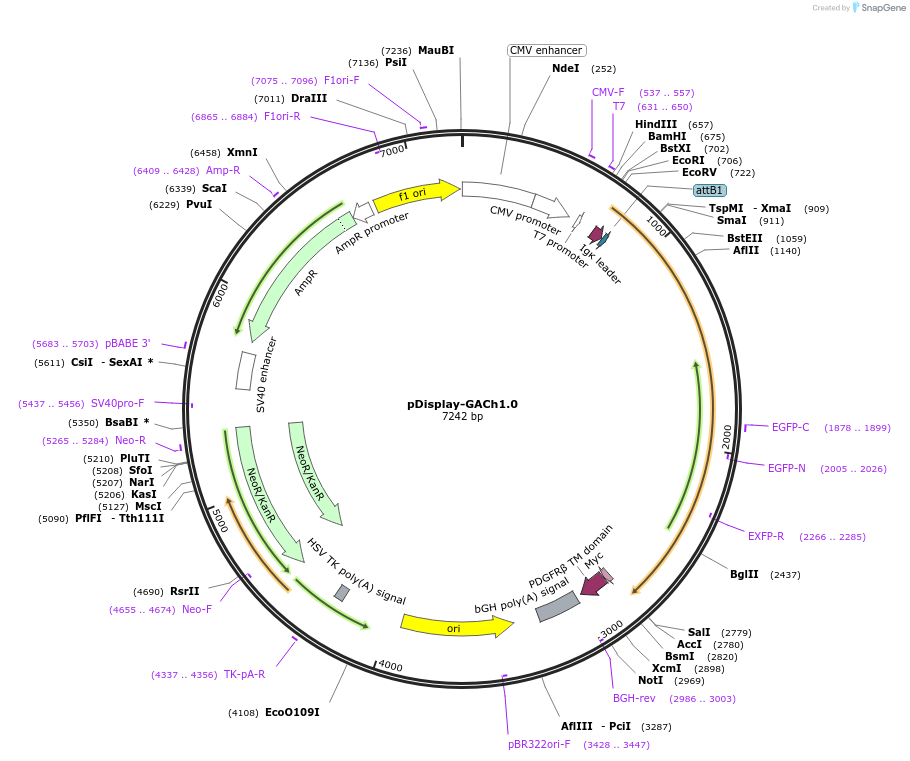
pDisplay-GACh1.0
Plasmid#106072Purposeexpress the genetically-encoded fluorescent ACh indicator GACh1.0 in mammalian cellsDepositorInsertGPCR activation based ACh sensor (GACh) 1.0
ExpressionMammalianPromoterCMVAvailable SinceApril 30, 2018AvailabilityAcademic Institutions and Nonprofits only -
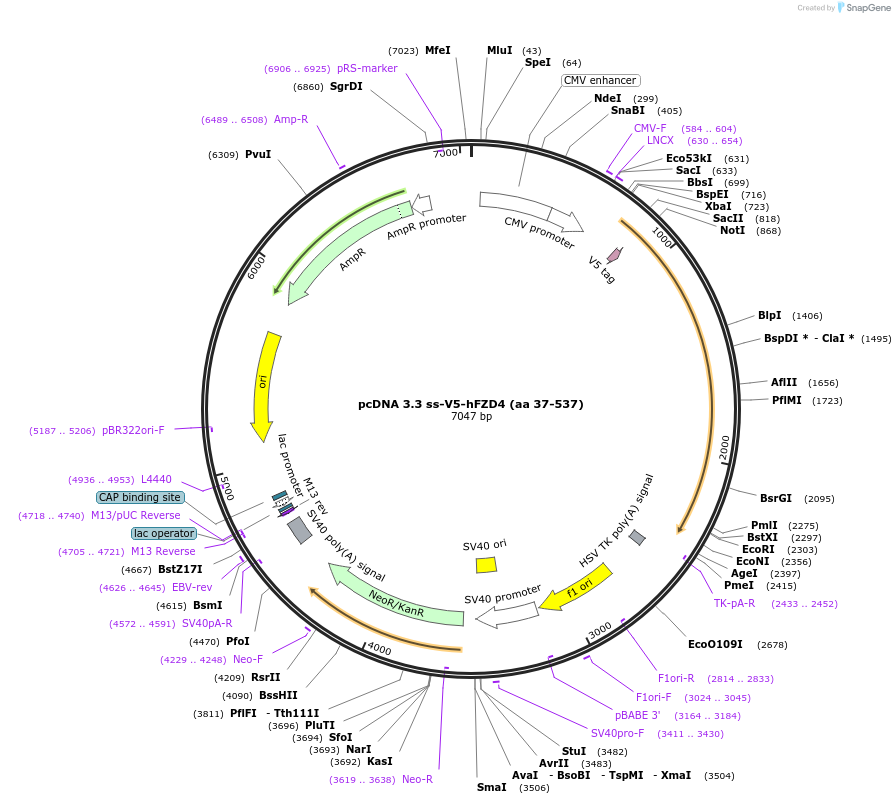
pcDNA 3.3 ss-V5-hFZD4 (aa 37-537)
Plasmid#115787PurposeExpresses human FZD4 with N-terminal V5-tag in mammalian cells, contains artificial signal sequence upstream of tag.DepositorAvailable SinceOct. 1, 2018AvailabilityAcademic Institutions and Nonprofits only -
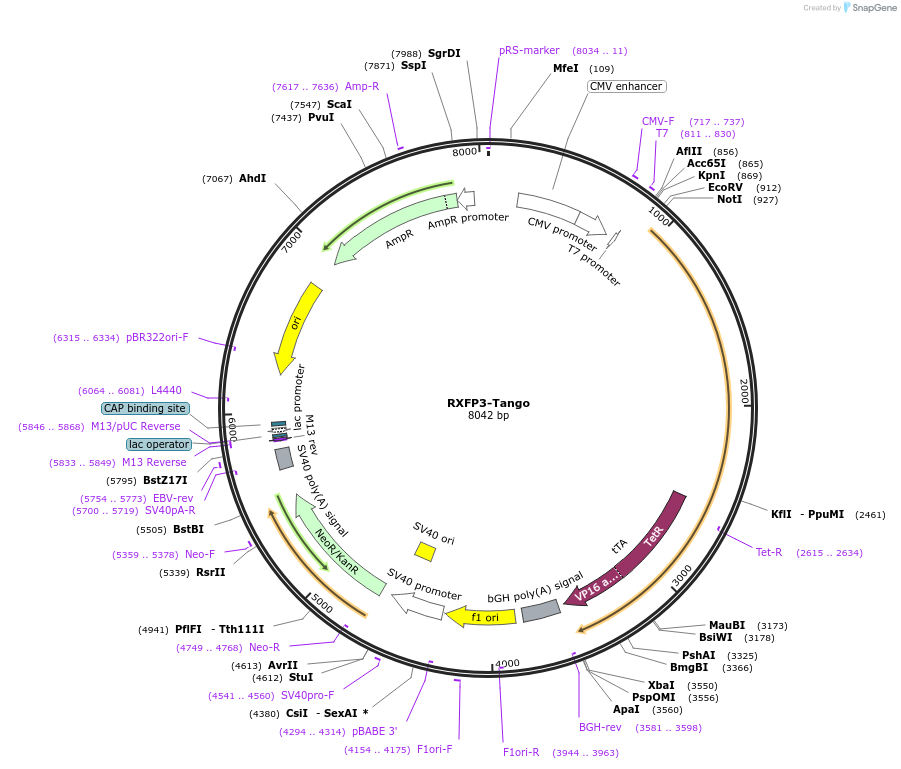
RXFP3-Tango
Plasmid#66494PurposeExpression of G protein-coupled receptors for PRESTO-Tango: parallel receptorome expression and screening via transcriptional output, with transcriptional activation following arrestin translocationDepositorAvailable SinceSept. 15, 2015AvailabilityAcademic Institutions and Nonprofits only -
RXFP4-Tango
Plasmid#66495PurposeExpression of G protein-coupled receptors for PRESTO-Tango: parallel receptorome expression and screening via transcriptional output, with transcriptional activation following arrestin translocationDepositorAvailable SinceSept. 15, 2015AvailabilityAcademic Institutions and Nonprofits only -
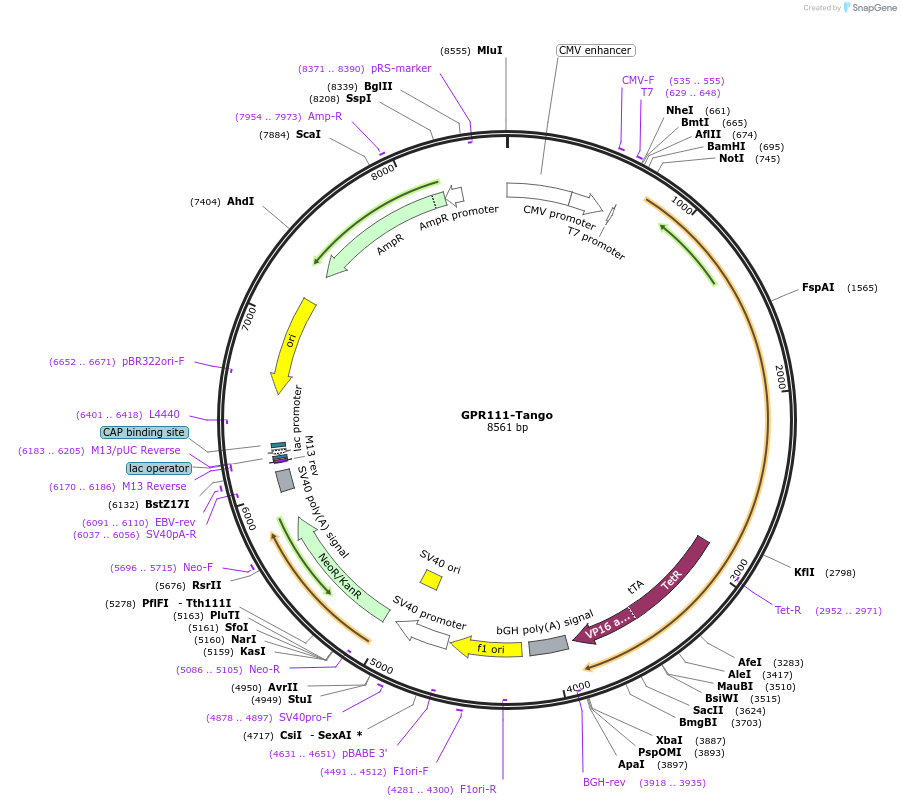
GPR111-Tango
Plasmid#66303PurposeExpression of G protein-coupled receptors for PRESTO-Tango: parallel receptorome expression and screening via transcriptional output, with transcriptional activation following arrestin translocationDepositorAvailable SinceSept. 15, 2015AvailabilityAcademic Institutions and Nonprofits only -
P2RY13-Tango
Plasmid#66472PurposeExpression of G protein-coupled receptors for PRESTO-Tango: parallel receptorome expression and screening via transcriptional output, with transcriptional activation following arrestin translocationDepositorAvailable SinceSept. 15, 2015AvailabilityAcademic Institutions and Nonprofits only -
GPR62-Tango
Plasmid#66367PurposeExpression of G protein-coupled receptors for PRESTO-Tango: parallel receptorome expression and screening via transcriptional output, with transcriptional activation following arrestin translocationDepositorAvailable SinceSept. 15, 2015AvailabilityAcademic Institutions and Nonprofits only -
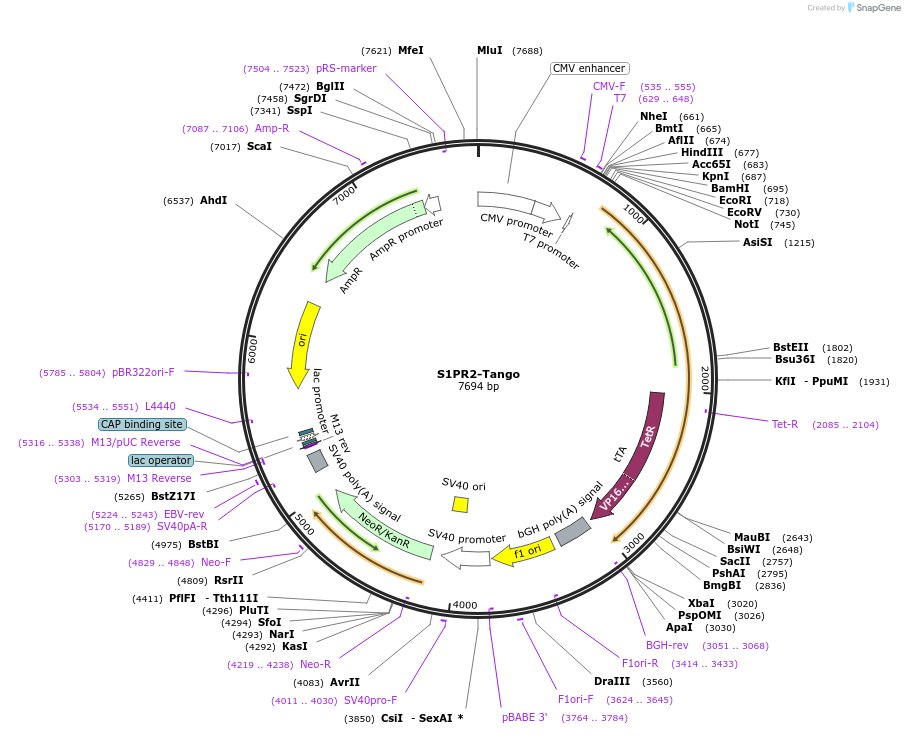
S1PR2-Tango
Plasmid#66497PurposeExpression of G protein-coupled receptors for PRESTO-Tango: parallel receptorome expression and screening via transcriptional output, with transcriptional activation following arrestin translocationDepositorAvailable SinceSept. 15, 2015AvailabilityAcademic Institutions and Nonprofits only -
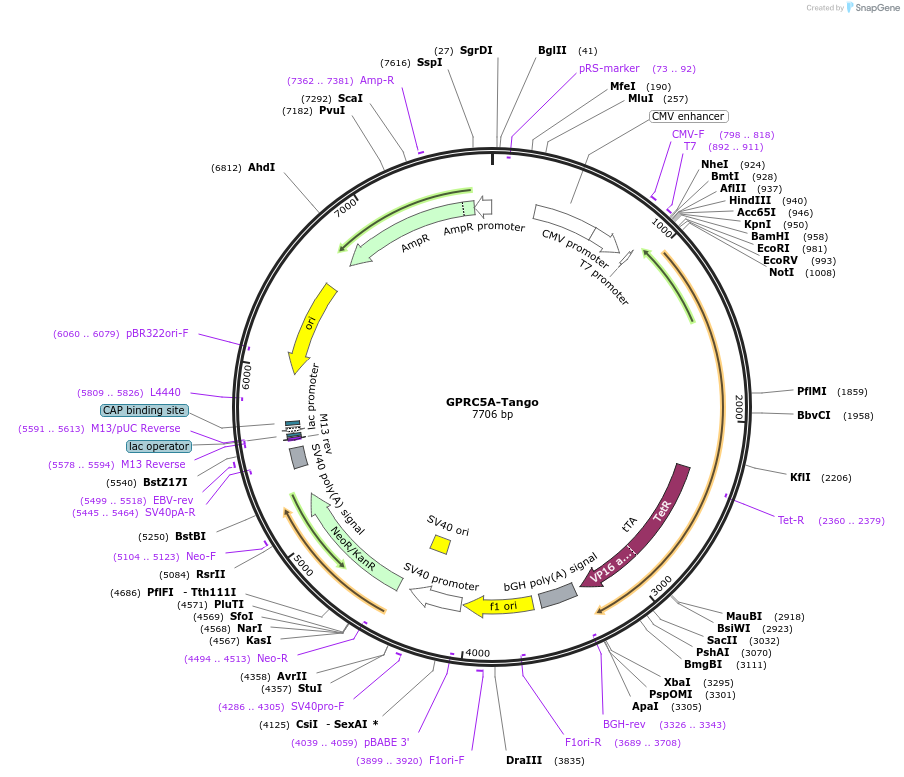
GPRC5A-Tango
Plasmid#66382PurposeExpression of G protein-coupled receptors for PRESTO-Tango: parallel receptorome expression and screening via transcriptional output, with transcriptional activation following arrestin translocationDepositorAvailable SinceSept. 15, 2015AvailabilityAcademic Institutions and Nonprofits only -
HRH3-Tango
Plasmid#66402PurposeExpression of G protein-coupled receptors for PRESTO-Tango: parallel receptorome expression and screening via transcriptional output, with transcriptional activation following arrestin translocationDepositorAvailable SinceSept. 15, 2015AvailabilityAcademic Institutions and Nonprofits only