We narrowed to 4,326 results for: CIT
-
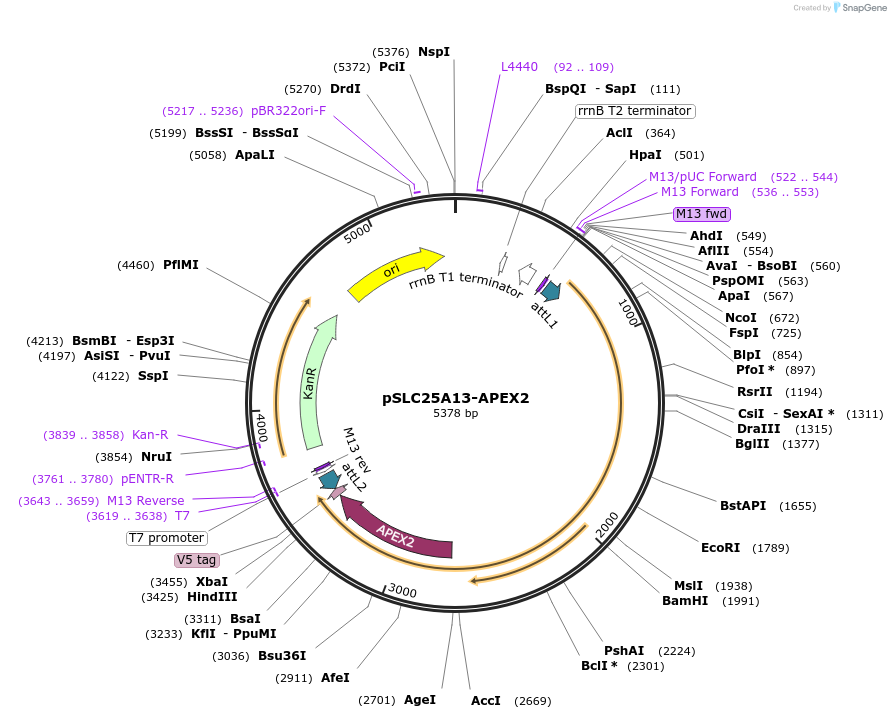
Plasmid#228198Purposeplasmid encoding human SLC25A13 with an APEX protein tagDepositorAvailable SinceNov. 20, 2024AvailabilityAcademic Institutions and Nonprofits only
-
-
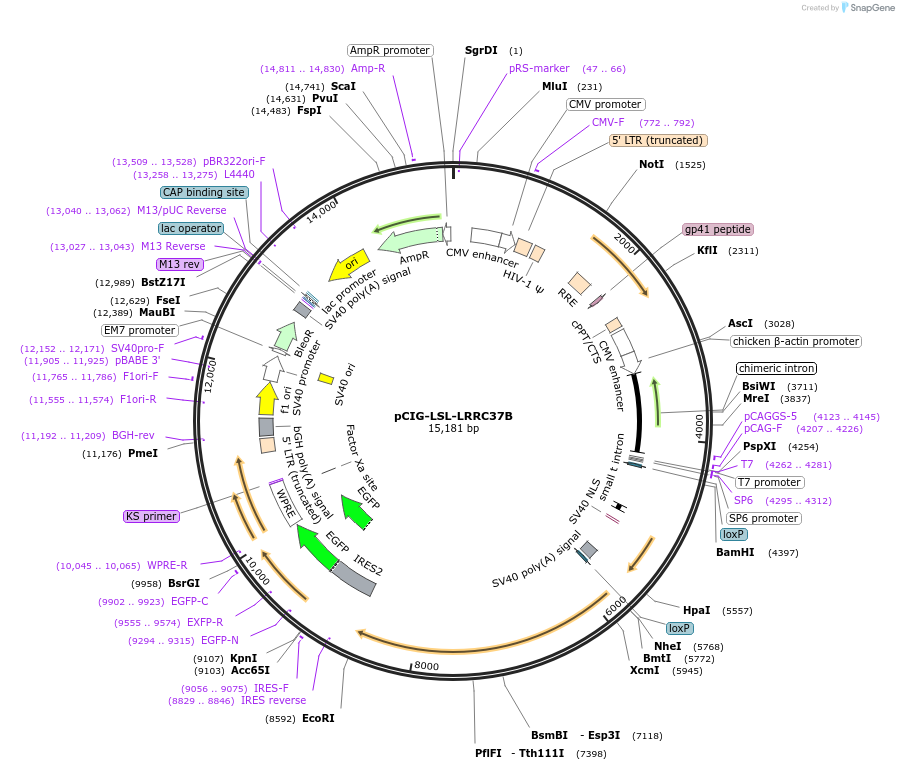
pCIG-LSL-LRRC37B
Plasmid#220791PurposeTo express the human receptor LRRC37B (cre-dependent) in mammalian cells together with EGFPDepositorInsertLRRC37B (LRRC37B Human)
Available SinceJuly 22, 2024AvailabilityAcademic Institutions and Nonprofits only -
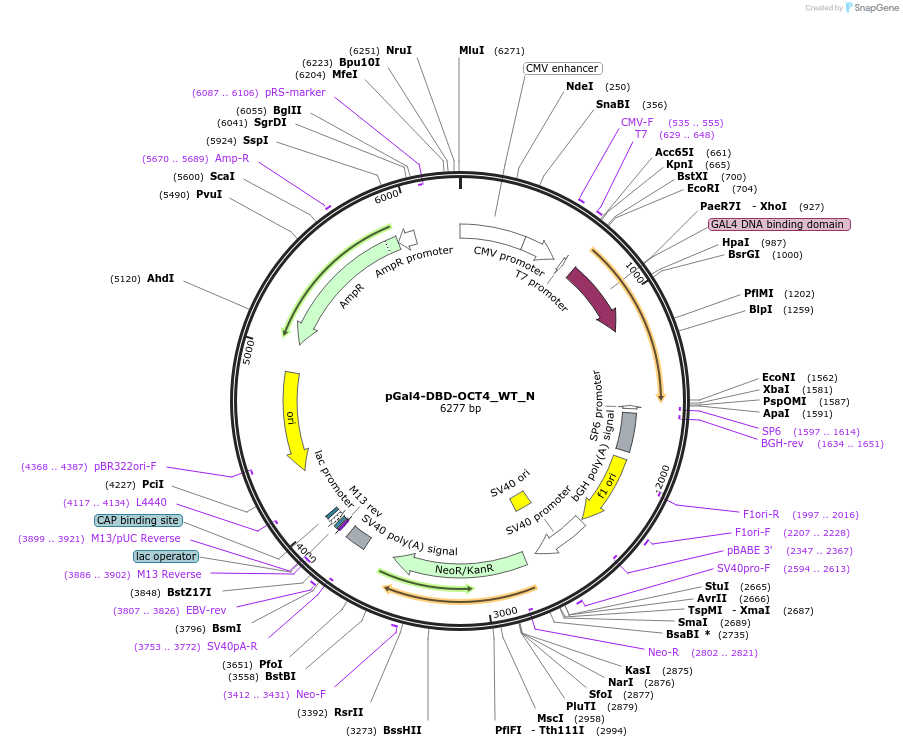
pGal4-DBD-OCT4_WT_N
Plasmid#215622PurposeFor overexpression of Gal4-DBD OCT4 WT NDepositorInsertOCT4 N
ExpressionMammalianAvailable SinceMay 21, 2024AvailabilityAcademic Institutions and Nonprofits only -
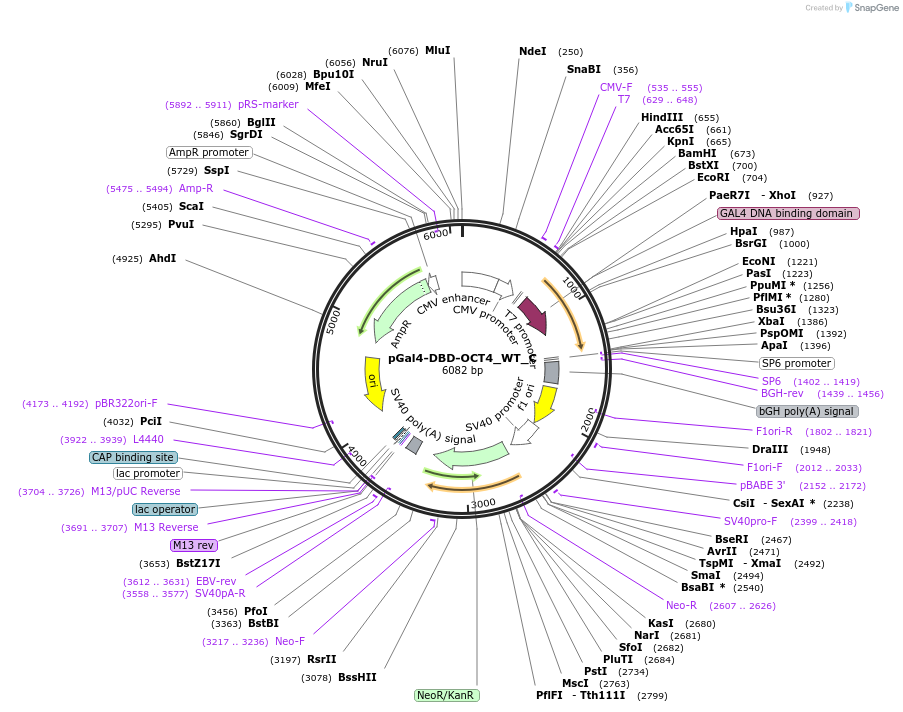
pGal4-DBD-OCT4_WT_C
Plasmid#215623PurposeFor overexpression of Gal4-DBD OCT4 WT CDepositorInsertOCT4 C
ExpressionMammalianAvailable SinceMarch 27, 2024AvailabilityAcademic Institutions and Nonprofits only -
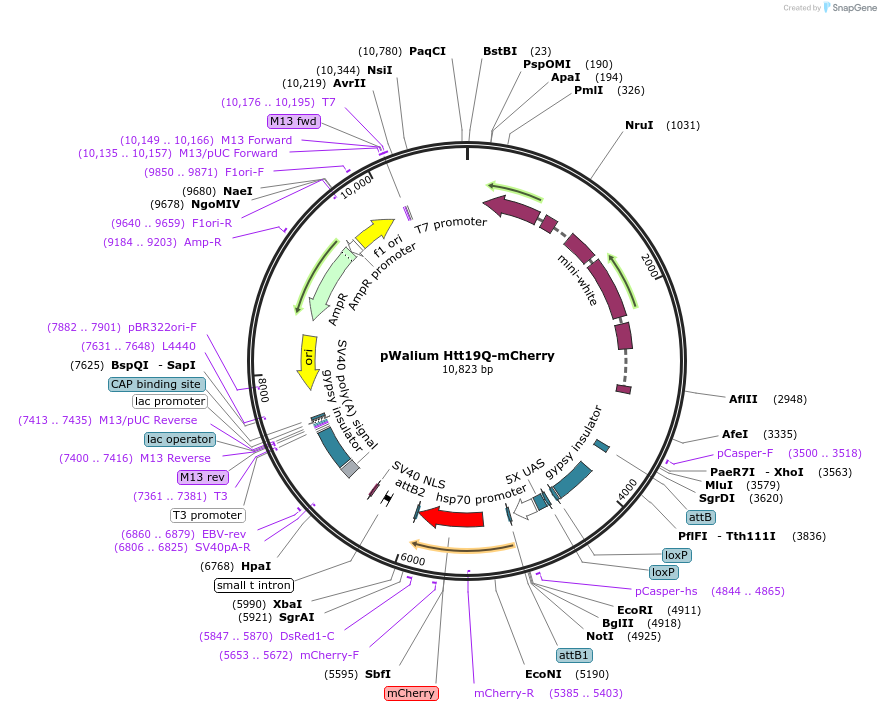
pWalium Htt19Q-mCherry
Plasmid#201248Purposeallows the expression of the insert in Drosophila melanogasterDepositorInsertHuntingtin (HTT Human)
ExpressionInsectAvailable SinceAug. 1, 2023AvailabilityAcademic Institutions and Nonprofits only -
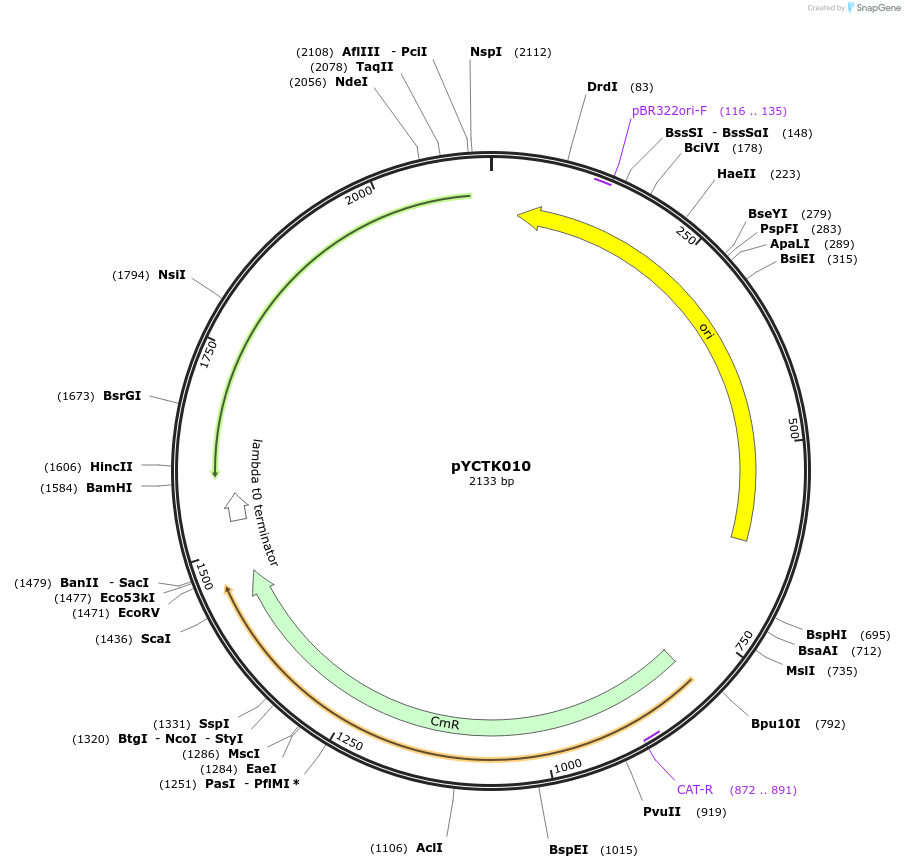
pYCTK010
Plasmid#176714PurposeThe plasmid is part of a GG toolkit for cell-cell communication in S. cerevisiae. This plasmid is an L0 part plasmid and contains the alpha-factor gene of Kazachstania africana (sender part).DepositorArticleInsertmfalpha1Ka
UseSynthetic BiologyMutationCodon-optimized for expression in S. cerevisiaeAvailable SinceApril 26, 2022AvailabilityAcademic Institutions and Nonprofits only -
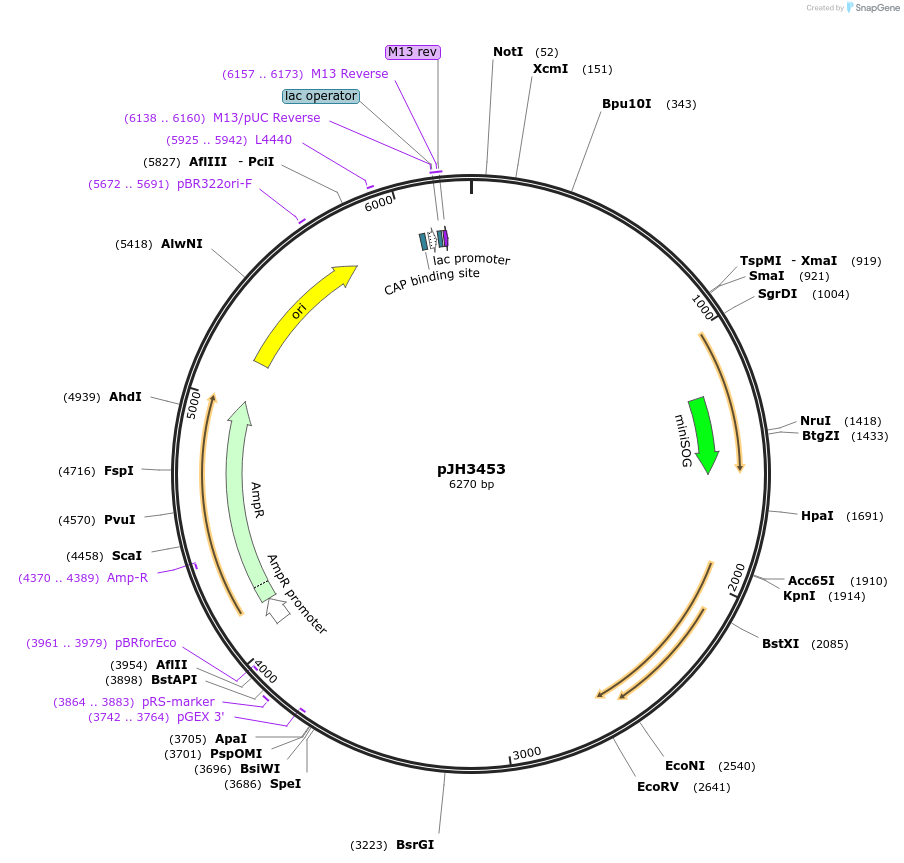
pJH3453
Plasmid#179577PurposePglc-55B::tomm20::miniSOG-SL2::BFP unc-54 3' UTR C.elegans AVB/others premotor IN and others expression of miniSOG-SL2 BFPDepositorAvailable SinceMarch 1, 2022AvailabilityIndustry, Academic Institutions, and Nonprofits -
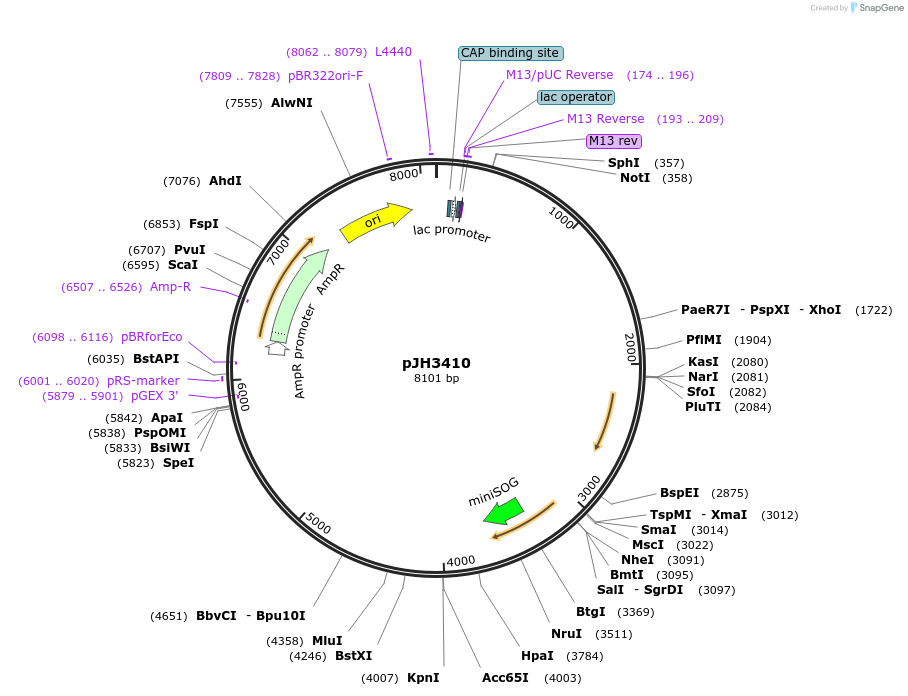
pJH3410
Plasmid#179575PurposePunc-129(DB)::tomm20::miniSOG-SL2::RFP unc-54 3' UTR C.elegans B-MN -specific expression of miniSOG-SL2 RFPDepositorAvailable SinceMarch 1, 2022AvailabilityAcademic Institutions and Nonprofits only -
pJH2890
Plasmid#179561PurposePlgc-55B::tomm20::miniSOG-SL2::RFP unc-54 3' UTR C.elegans AVB premotor IN and other neurals expression of miniSOG-SL2 RFPDepositorAvailable SinceMarch 1, 2022AvailabilityAcademic Institutions and Nonprofits only -
pYCTK013
Plasmid#176717PurposeThe plasmid is part of a GG toolkit for cell-cell communication in S. cerevisiae. This plasmid is an L0 part plasmid and contains the alpha-factor gene of Lachancea fermentati (sender part).DepositorArticleInsertmfalpha1Lf
UseSynthetic BiologyMutationCodon-optimized for expression in S. cerevisiaeAvailable SinceJan. 6, 2022AvailabilityAcademic Institutions and Nonprofits only -
pYCTK021
Plasmid#176725PurposeThe plasmid is part of a GG toolkit for cell-cell communication in S. cerevisiae. This plasmid is an L0 part plasmid and contains the Ste2 gene of Kazachstania africana (receiver part).DepositorArticleInsertste2Ka
UseSynthetic BiologyMutationCodon-optimized for expression in S. cerevisiaeAvailable SinceJan. 6, 2022AvailabilityAcademic Institutions and Nonprofits only -
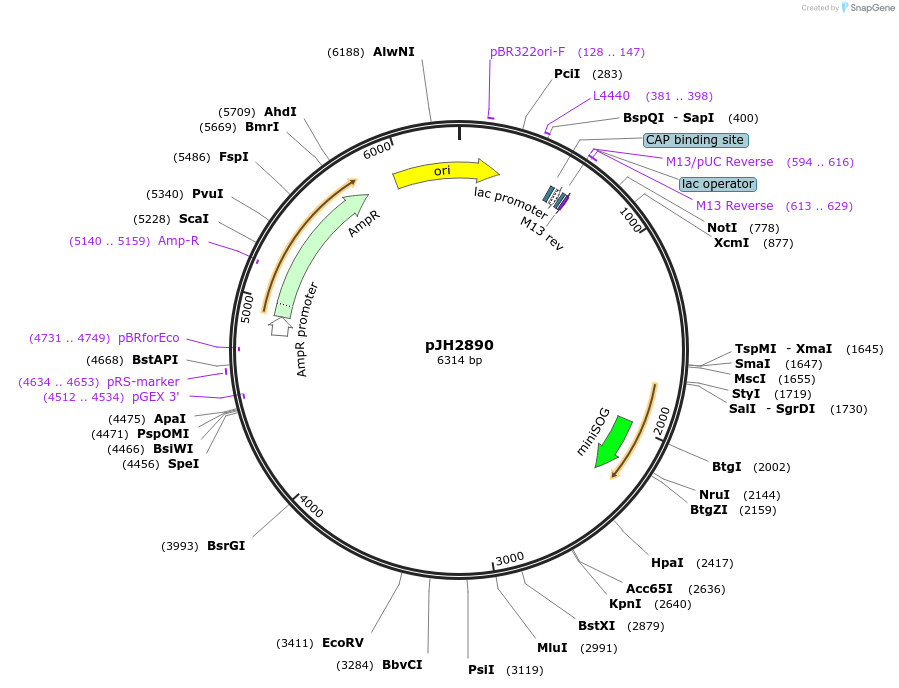
pYCTK022
Plasmid#176726PurposeThe plasmid is part of a GG toolkit for cell-cell communication in S. cerevisiae. This plasmid is an L0 part plasmid and contains the Ste2 gene of Kluyveromyces lactis (receiver part).DepositorArticleInsertste2Kl
UseSynthetic BiologyMutationCodon-optimized for expression in S. cerevisiaeAvailable SinceJan. 6, 2022AvailabilityAcademic Institutions and Nonprofits only -
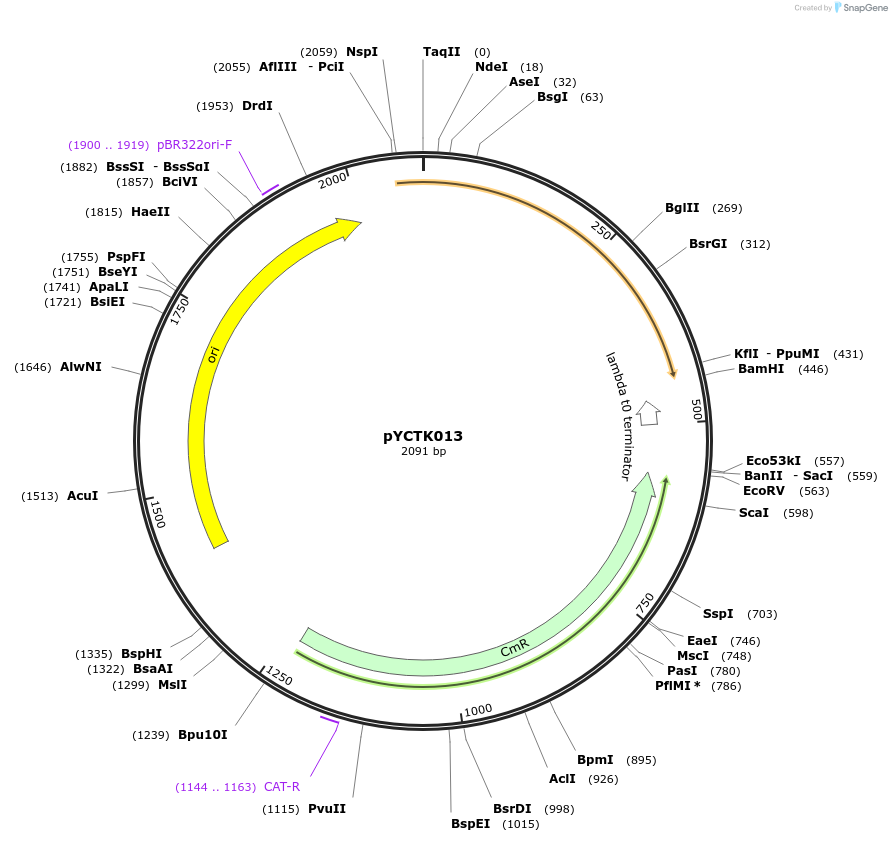
pYCTK023
Plasmid#176727PurposeThe plasmid is part of a GG toolkit for cell-cell communication in S. cerevisiae. This plasmid is an L0 part plasmid and contains the Ste2 gene of Kazachstania naganishii (receiver part).DepositorArticleInsertste2Kn
UseSynthetic BiologyMutationCodon-optimized for expression in S. cerevisiaeAvailable SinceJan. 6, 2022AvailabilityAcademic Institutions and Nonprofits only -
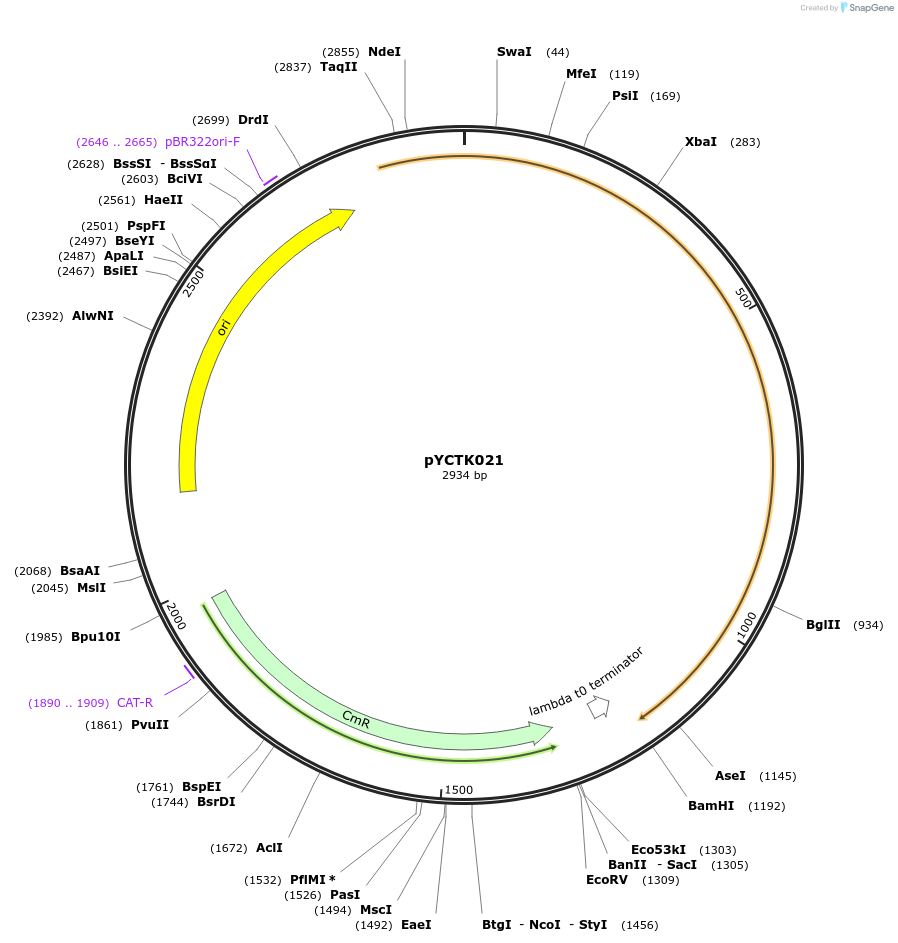
pYCTK024
Plasmid#176728PurposeThe plasmid is part of a GG toolkit for cell-cell communication in S. cerevisiae. This plasmid is an L0 part plasmid and contains the Ste2 gene of Lachancea fermentati (receiver part).DepositorArticleInsertste2Lf
UseSynthetic BiologyMutationCodon-optimized for expression in S. cerevisiaeAvailable SinceJan. 6, 2022AvailabilityAcademic Institutions and Nonprofits only -
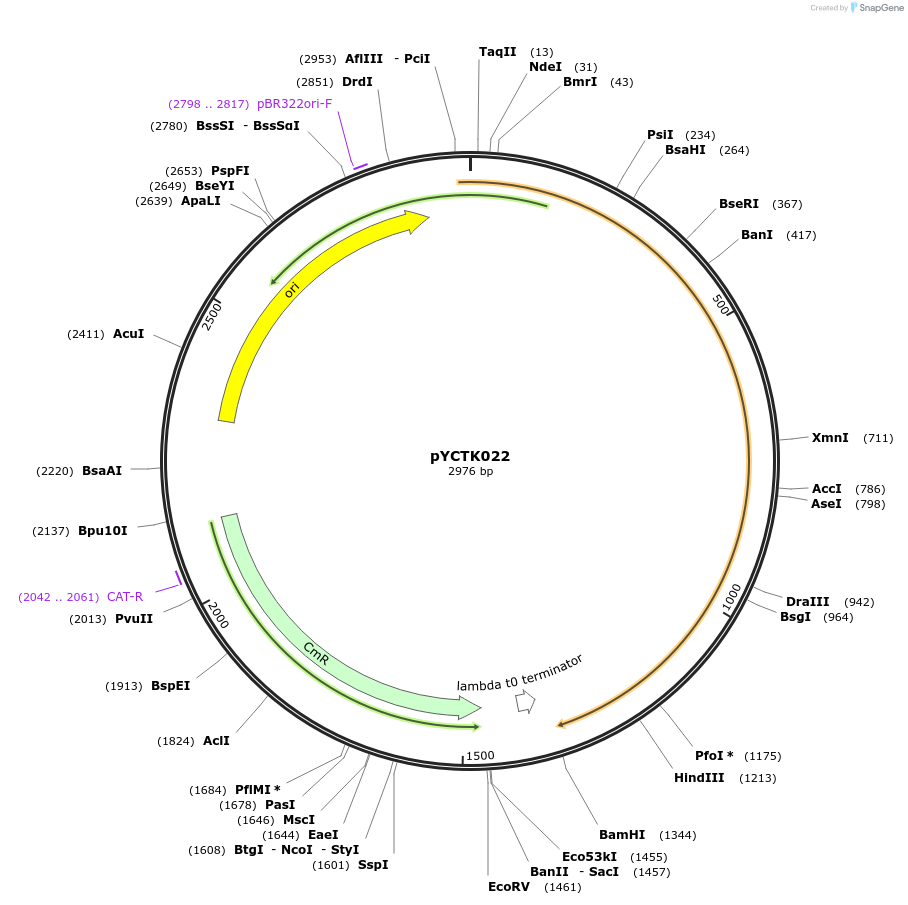
pYCTK026
Plasmid#176730PurposeThe plasmid is part of a GG toolkit for cell-cell communication in S. cerevisiae. This plasmid is an L0 part plasmid and contains the Ste2 gene of Lachancea thermotolerans (receiver part).DepositorArticleInsertste2Lt
UseSynthetic BiologyMutationCodon-optimized for expression in S. cerevisiaeAvailable SinceJan. 6, 2022AvailabilityAcademic Institutions and Nonprofits only -
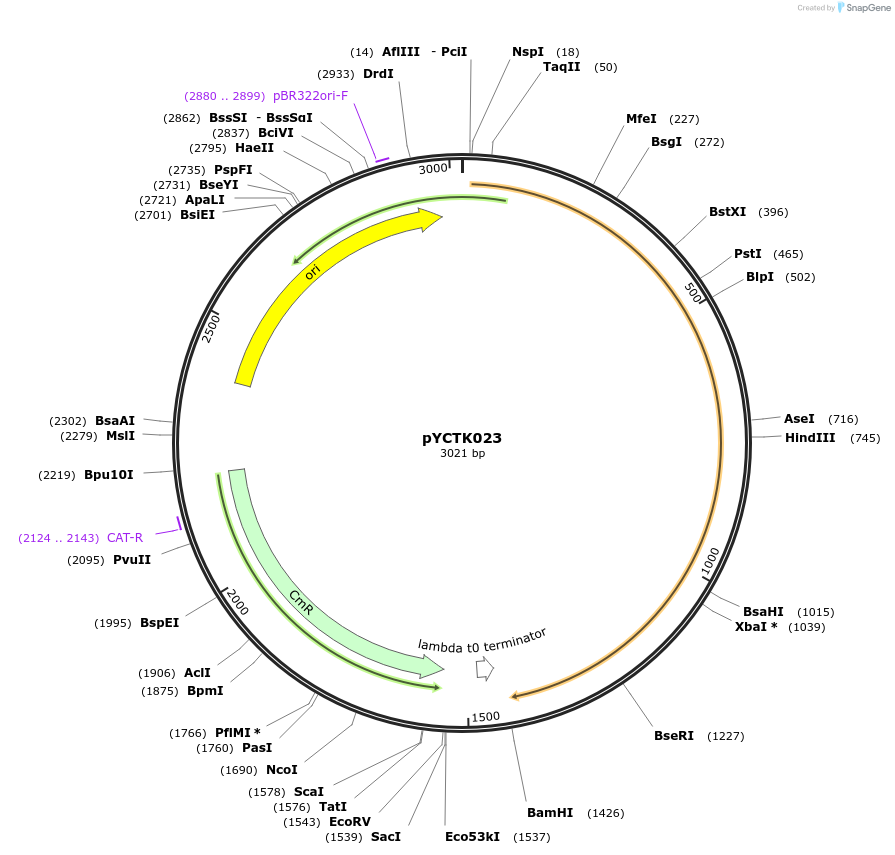
pYCTK029
Plasmid#176733PurposeThe plasmid is part of a GG toolkit for cell-cell communication in S. cerevisiae. This plasmid is an L0 part plasmid and contains the Ste2 gene of Vanderwaltozyma polyspora (receiver part).DepositorArticleInsertste2Vp
UseSynthetic BiologyMutationCodon-optimized for expression in S. cerevisiaeAvailable SinceJan. 6, 2022AvailabilityAcademic Institutions and Nonprofits only -
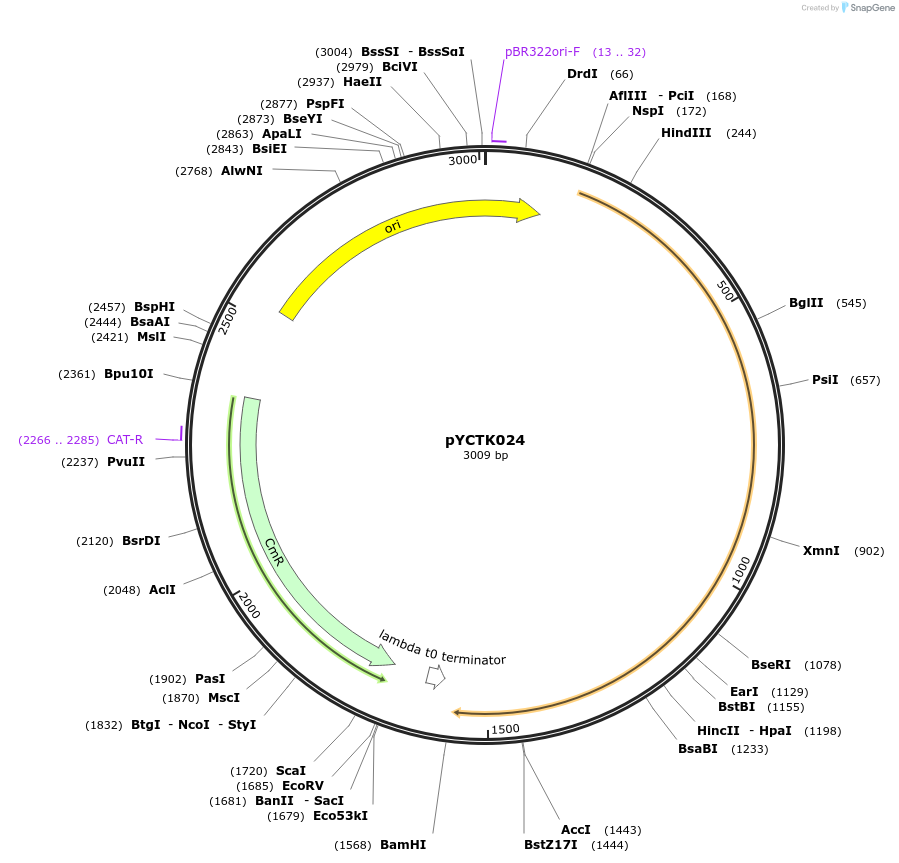
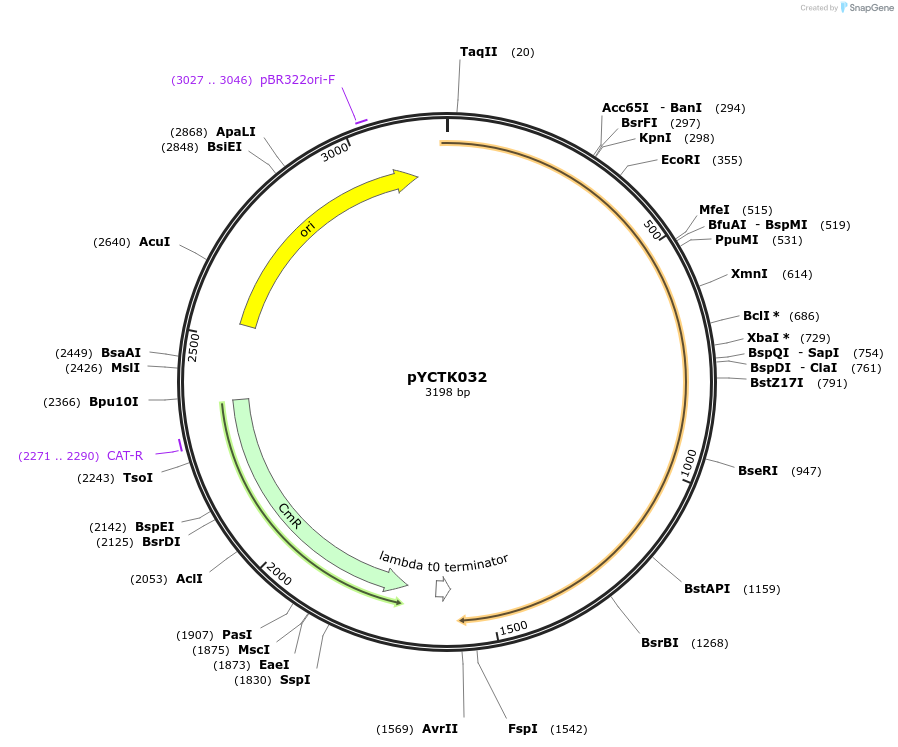
pYCTK032
Plasmid#176736PurposeThe plasmid is part of a GG toolkit for cell-cell communication in S. cerevisiae. This plasmid is an L0 part plasmid and contains the Bar1 gene of Kluyveromyces lactis (barrier part).DepositorArticleInsertbar1Kl
UseSynthetic BiologyMutationCodon-optimized for expression in S. cerevisiaeAvailable SinceJan. 6, 2022AvailabilityAcademic Institutions and Nonprofits only -
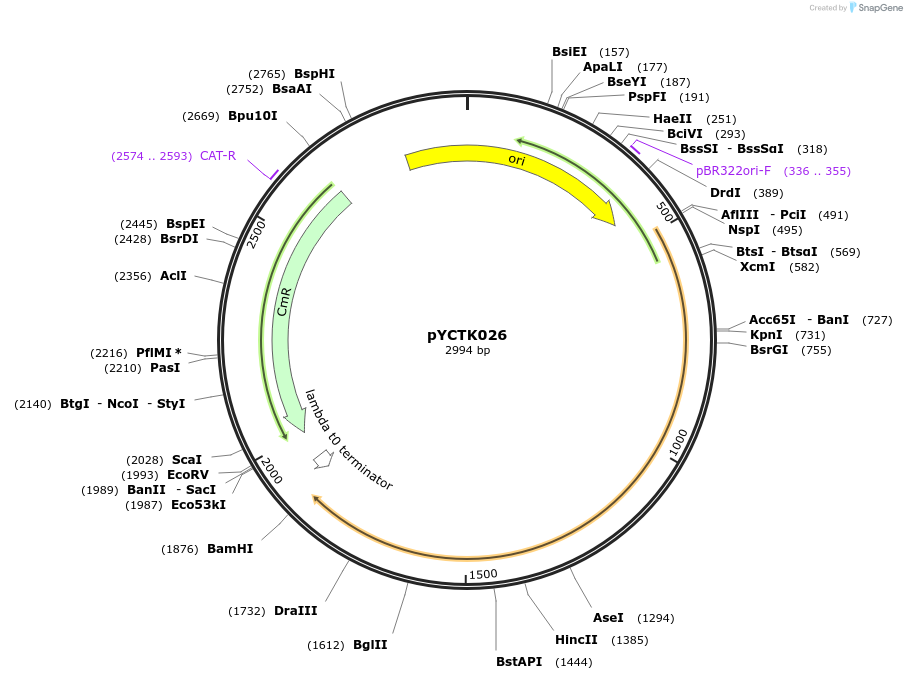
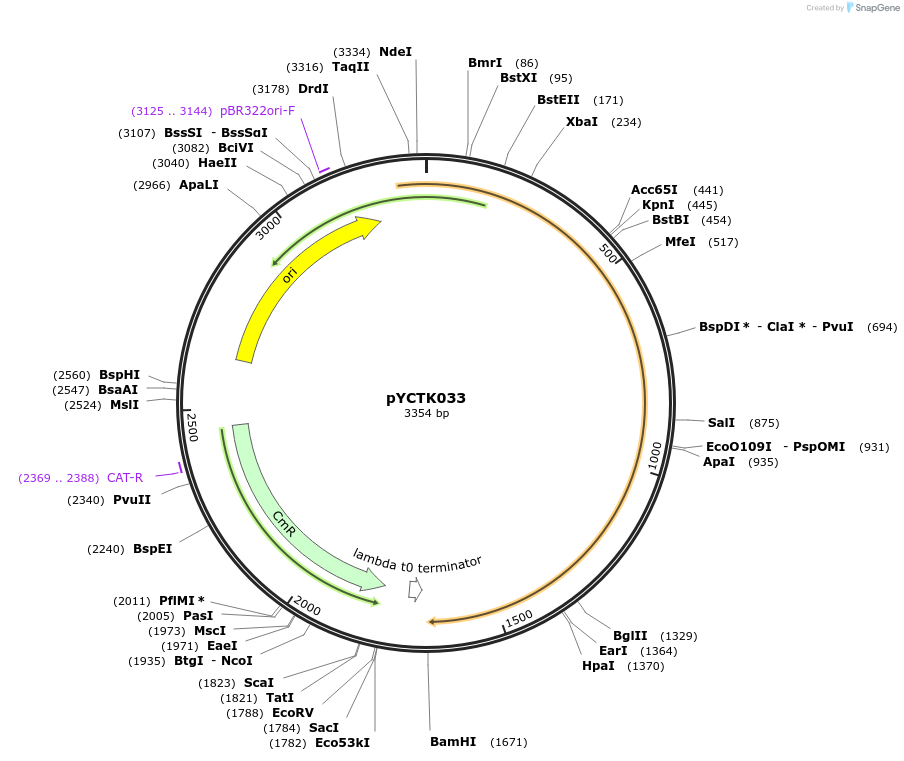
pYCTK033
Plasmid#176737PurposeThe plasmid is part of a GG toolkit for cell-cell communication in S. cerevisiae. This plasmid is an L0 part plasmid and contains the Bar1 gene of Kazachstania naganishii (barrier part).DepositorArticleInsertbar1Kn
UseSynthetic BiologyMutationCodon-optimized for expression in S. cerevisiaeAvailable SinceJan. 6, 2022AvailabilityAcademic Institutions and Nonprofits only -
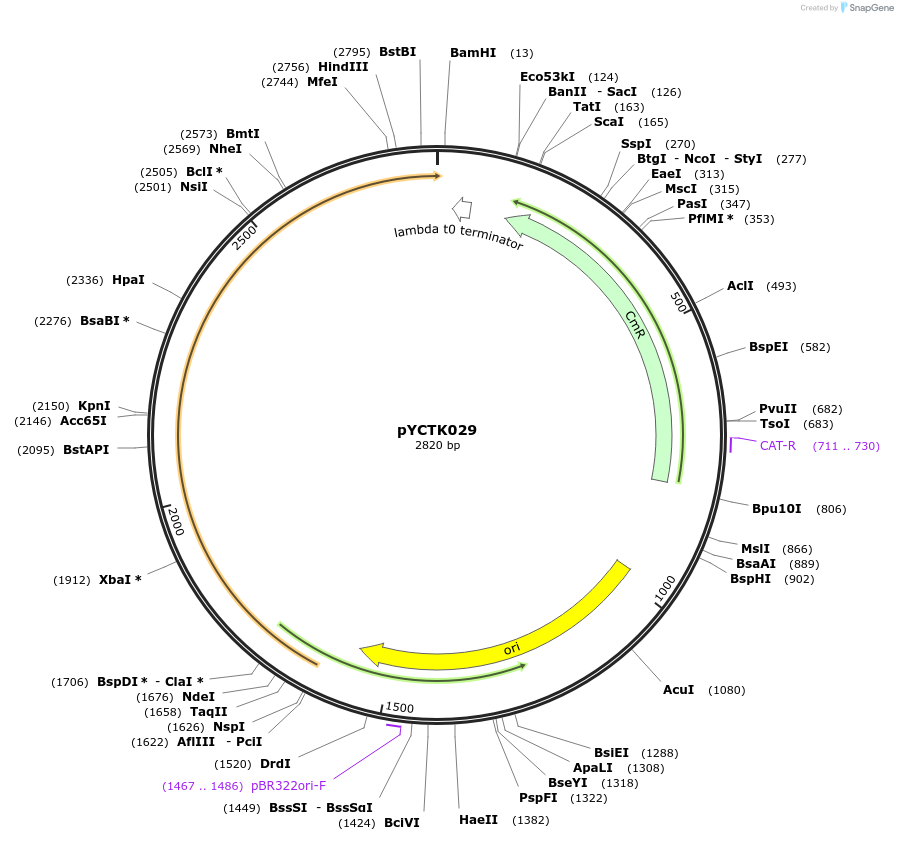
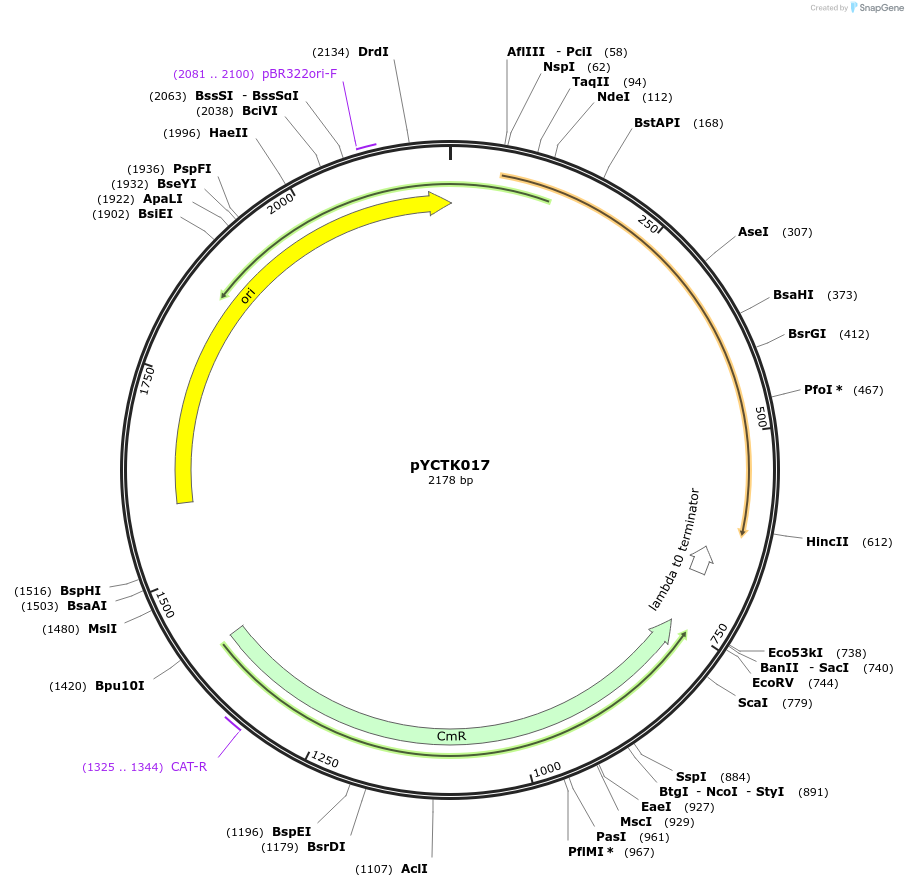
pYCTK017
Plasmid#176721PurposeThe plasmid is part of a GG toolkit for cell-cell communication in S. cerevisiae. This plasmid is an L0 part plasmid and contains the alpha-factor gene of Tetrapisispora phaffii (sender part).DepositorArticleInsertmfalpha1Tp
UseSynthetic BiologyMutationCodon-optimized for expression in S. cerevisiaeAvailable SinceJan. 6, 2022AvailabilityAcademic Institutions and Nonprofits only