
We narrowed to 826 results for: NUA
-
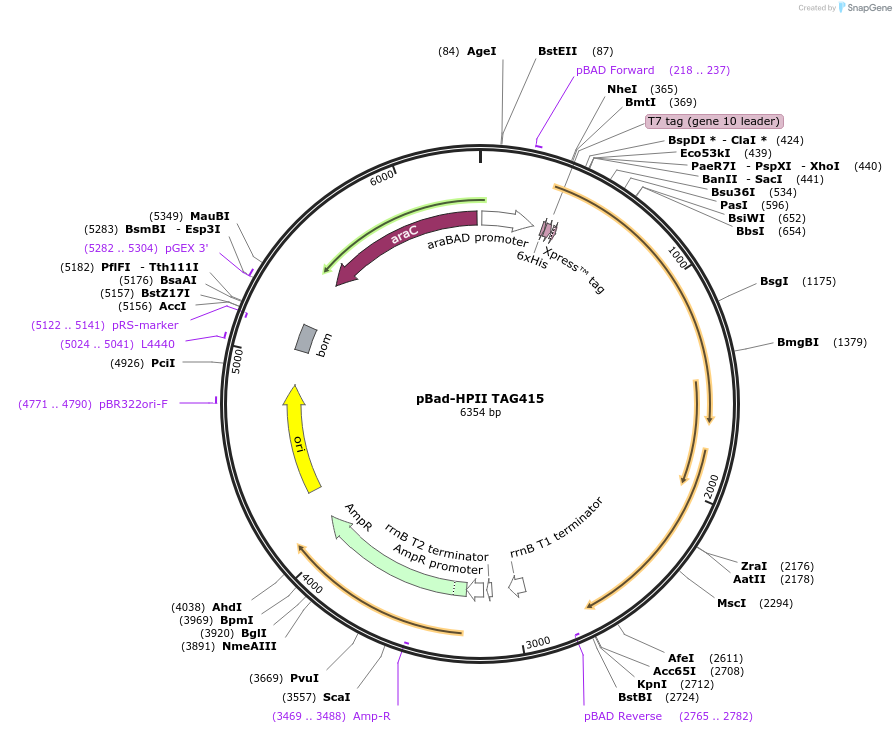
Plasmid#105847Purposeexpresses E. coli HPII catalase with TAG stop codon at site 415 and N-terminal 6x his tagDepositorArticleInserthydroperoxidase II catalase
Tags6x his tagExpressionBacterialMutationTAG stop codon at site 415PromoterpBad/arabinoseAvailable SinceMarch 14, 2018AvailabilityAcademic Institutions and Nonprofits only -
pBad-HPII TAG348
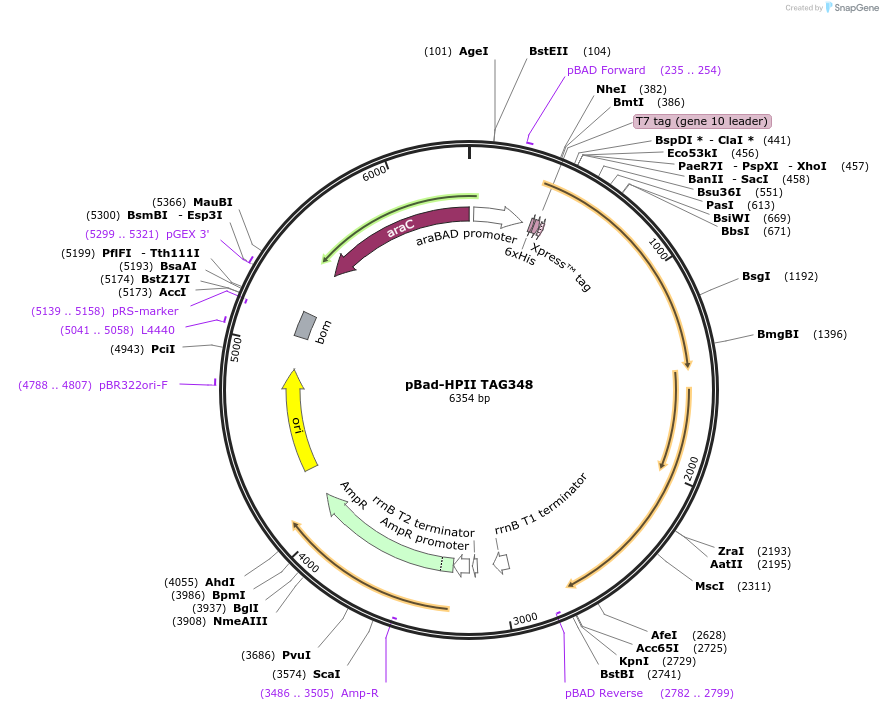
Plasmid#105844Purposeexpresses E. coli HPII catalase with TAG stop codon at site 348 and N-terminal 6x his tagDepositorArticleInserthydroperoxidase II catalase
Tags6x his tagExpressionBacterialMutationTAG stop codon at site 348PromoterpBad/arabinoseAvailable SinceMarch 14, 2018AvailabilityAcademic Institutions and Nonprofits only -
pBad-HPII TAG283
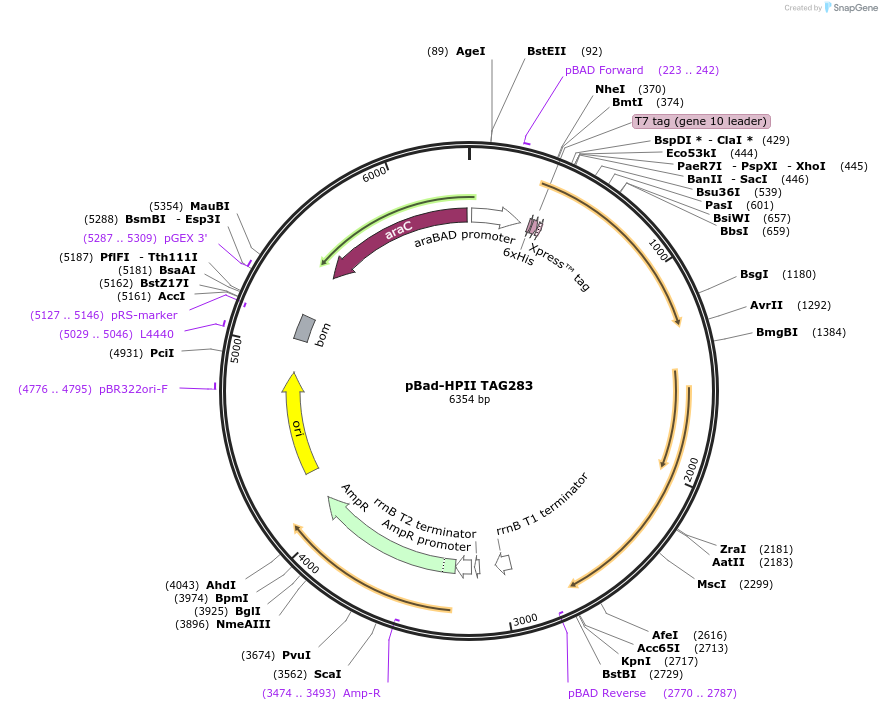
Plasmid#105843Purposeexpresses E. coli HPII catalase with TAG stop codon at site 283 and N-terminal 6x his tagDepositorArticleInserthydroperoxidase II catalase
Tags6x his tagExpressionBacterialMutationTAG stop codon at site 283PromoterpBad/arabinoseAvailable SinceMarch 14, 2018AvailabilityAcademic Institutions and Nonprofits only -
pYCTK006
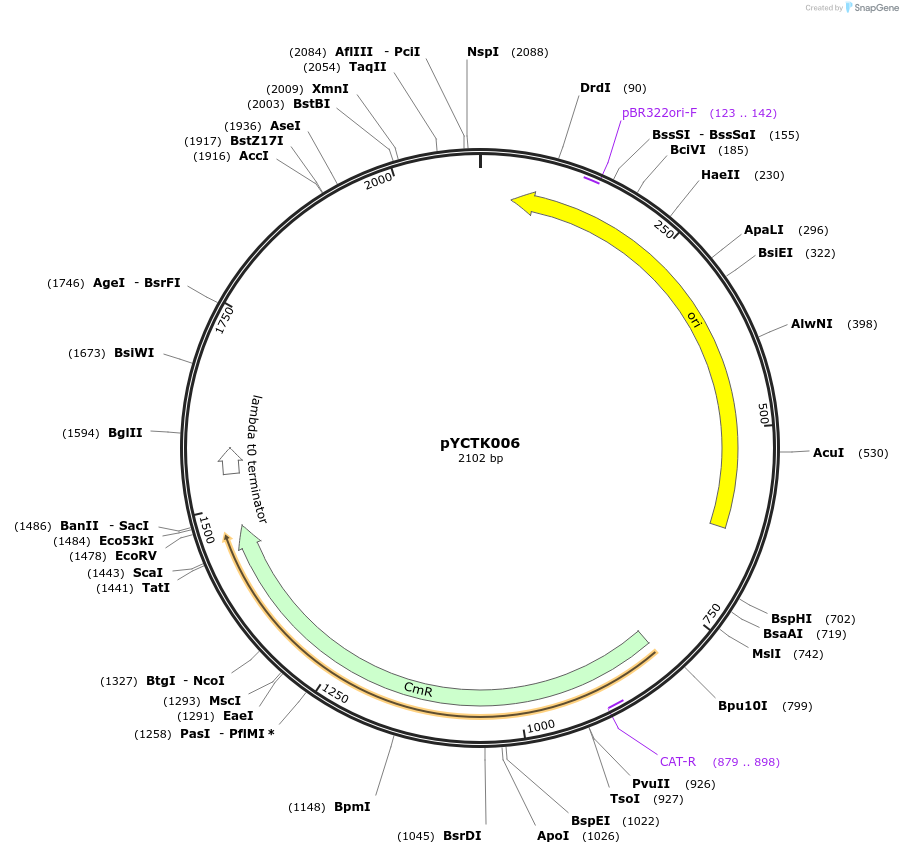
Plasmid#176710PurposeThe plasmid is part of a GG toolkit for cell-cell communication in S. cerevisiae. This plasmid is an L0 part plasmid and contains the alpha-factor-responsive promoter SST2 (response part).DepositorArticleInsertP-SST2
UseSynthetic BiologyAvailable SinceApril 26, 2022AvailabilityAcademic Institutions and Nonprofits only -
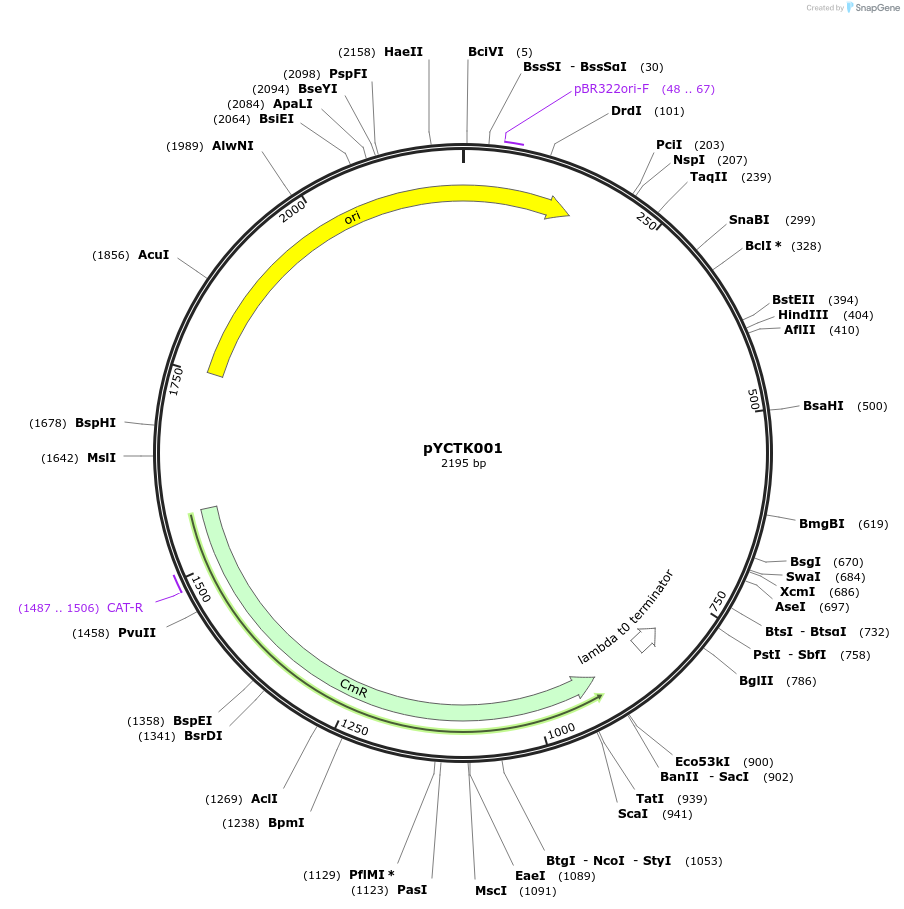
pYCTK001
Plasmid#176705PurposeThe plasmid is part of a GG toolkit for cell-cell communication in S. cerevisiae. This plasmid is an L0 part plasmid and contains the alpha-factor-responsive promoter DIG2 of S. cerevisiae (response part)DepositorArticleInsertP-DIG2
UseSynthetic BiologyAvailable SinceFeb. 8, 2022AvailabilityAcademic Institutions and Nonprofits only -
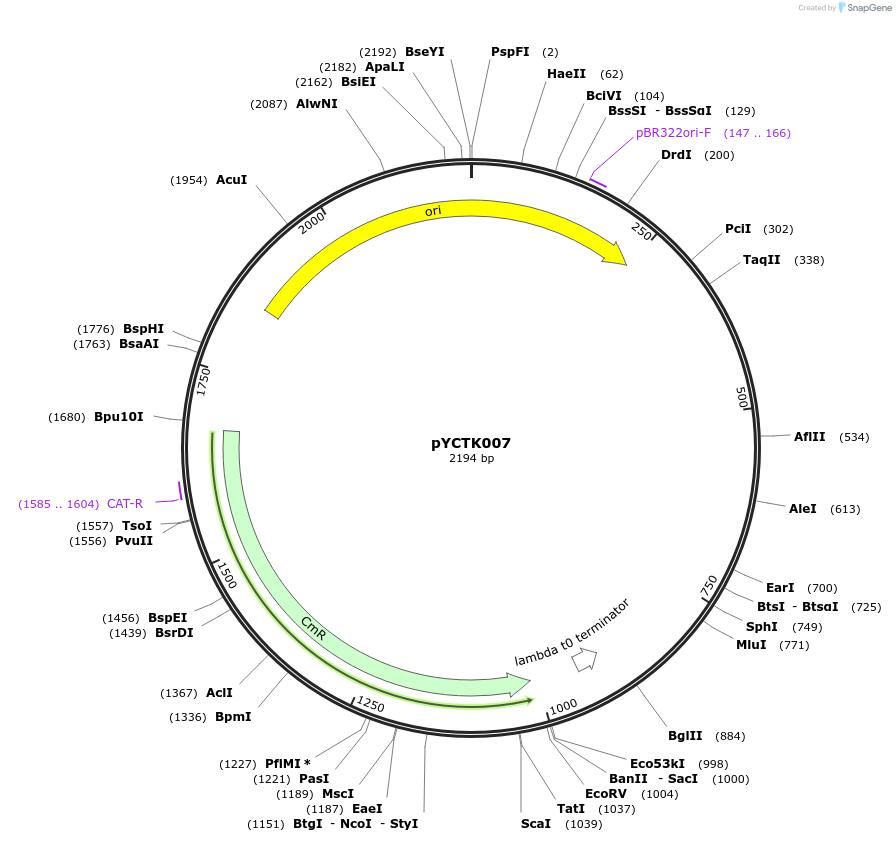
pYCTK007
Plasmid#176711PurposeThe plasmid is part of a GG toolkit for cell-cell communication in S. cerevisiae. This plasmid is an L0 part plasmid and contains the alpha-factor-responsive promoter YPS1 (response part).DepositorArticleInsertP-YPS1
UseSynthetic BiologyAvailable SinceJan. 6, 2022AvailabilityAcademic Institutions and Nonprofits only -
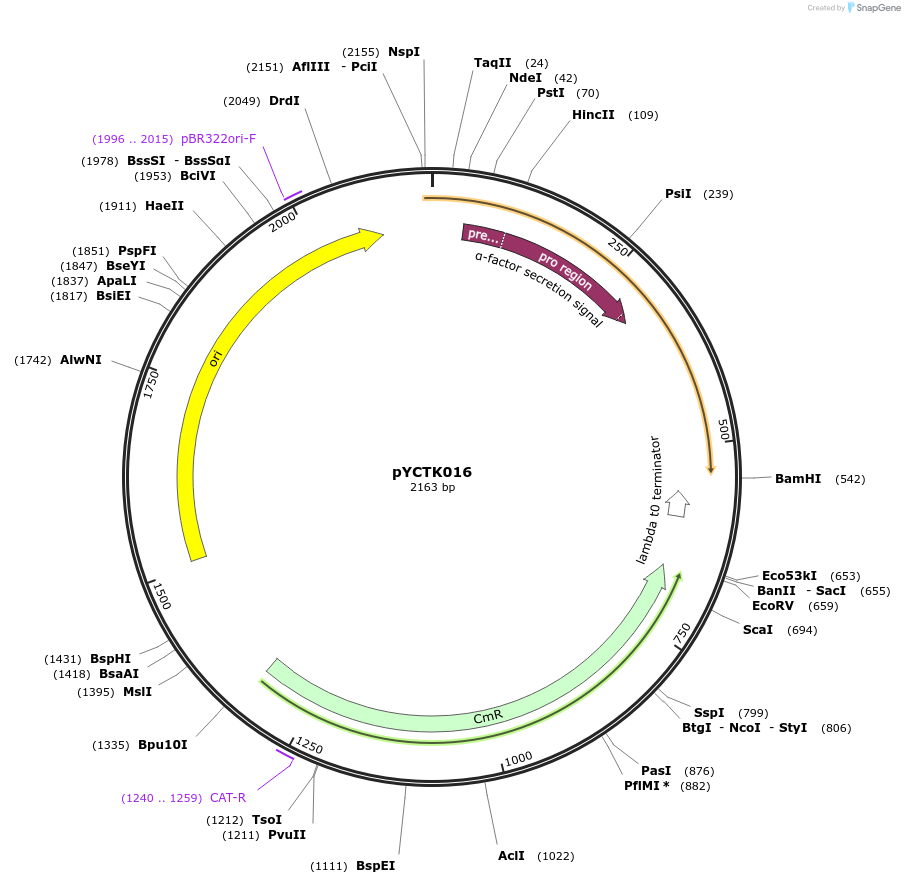
pYCTK016
Plasmid#176720PurposeThe plasmid is part of a GG toolkit for cell-cell communication in S. cerevisiae. This plasmid is an L0 part plasmid and contains the alpha-factor gene of Saccharomyces cerevisiae (sender part).DepositorArticleInsertmfalpha1Sc
UseSynthetic BiologyAvailable SinceJan. 6, 2022AvailabilityAcademic Institutions and Nonprofits only -
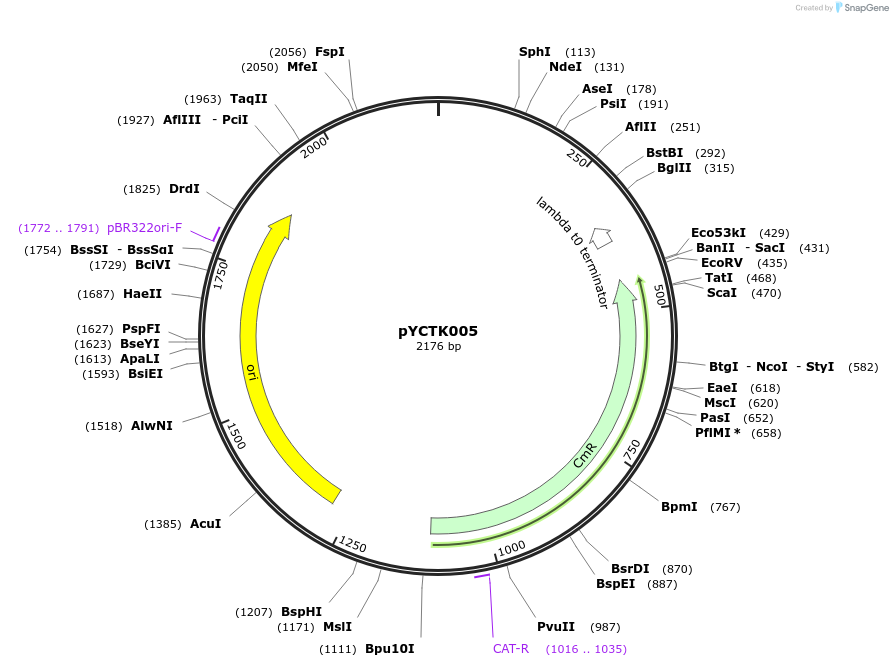
pYCTK005
Plasmid#176709PurposeThe plasmid is part of a GG toolkit for cell-cell communication in S. cerevisiae. This plasmid is an L0 part plasmid and contains the alpha-factor-responsive promoter PRM1 of S. cerevisiae (response part)DepositorArticleInsertP-PRM1
UseSynthetic BiologyAvailable SinceJan. 6, 2022AvailabilityAcademic Institutions and Nonprofits only -
pYCTK004
Plasmid#176708PurposeThe plasmid is part of a GG toolkit for cell-cell communication in S. cerevisiae. This plasmid is an L0 part plasmid and contains the alpha-factor-responsive promoter MSG5 of S. cerevisiae (response part)DepositorArticleInsertP-MSG5
UseSynthetic BiologyAvailable SinceJan. 6, 2022AvailabilityAcademic Institutions and Nonprofits only -
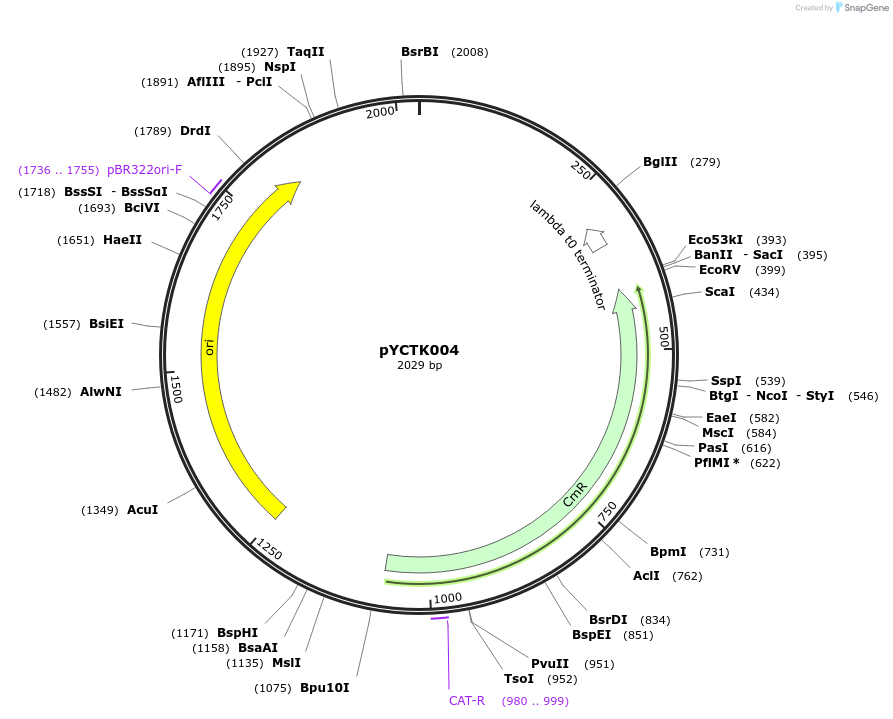
pYCTK003
Plasmid#176707PurposeThe plasmid is part of a GG toolkit for cell-cell communication in S. cerevisiae. This plasmid is an L0 part plasmid and contains the alpha-factor-responsive promoter FUS3 (response part).DepositorArticleInsertP-FUS3
UseSynthetic BiologyAvailable SinceJan. 6, 2022AvailabilityAcademic Institutions and Nonprofits only -
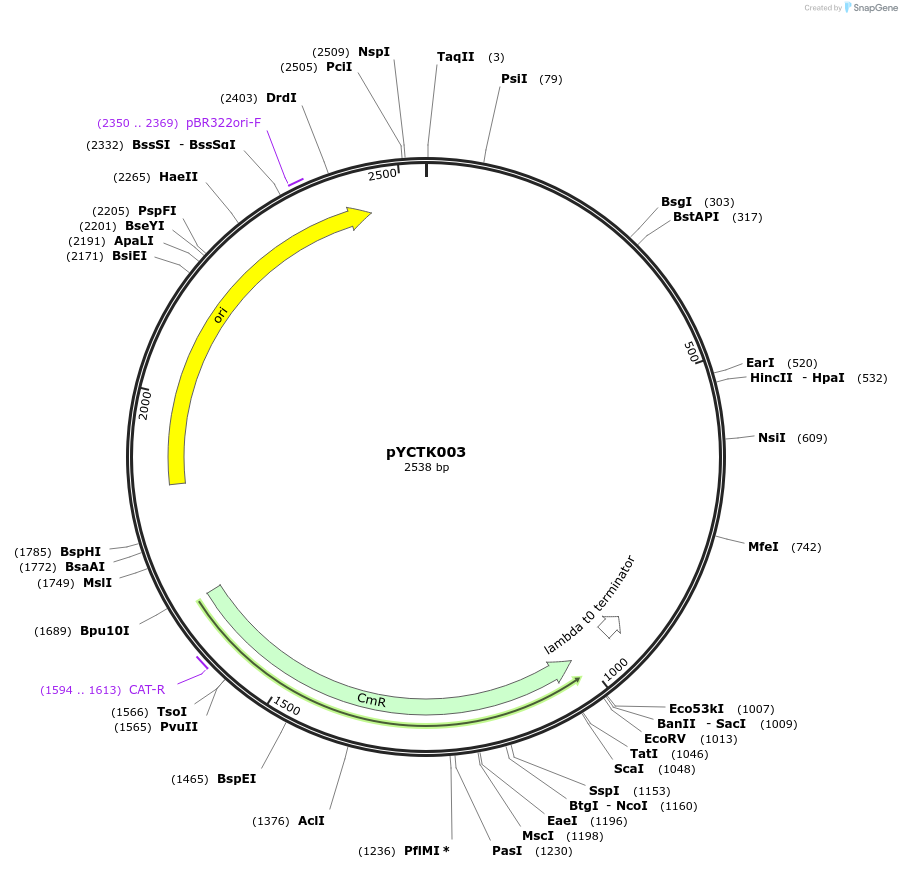
pBad-HPII TAG206
Plasmid#105846Purposeexpresses E. coli HPII catalase with TAG stop codon at site 206 and N-terminal 6x his tagDepositorArticleInserthydroperoxidase II catalase
Tags6x his tagExpressionBacterialMutationTAG stop codon at site 206PromoterpBad/arabinoseAvailable SinceMarch 14, 2018AvailabilityAcademic Institutions and Nonprofits only -
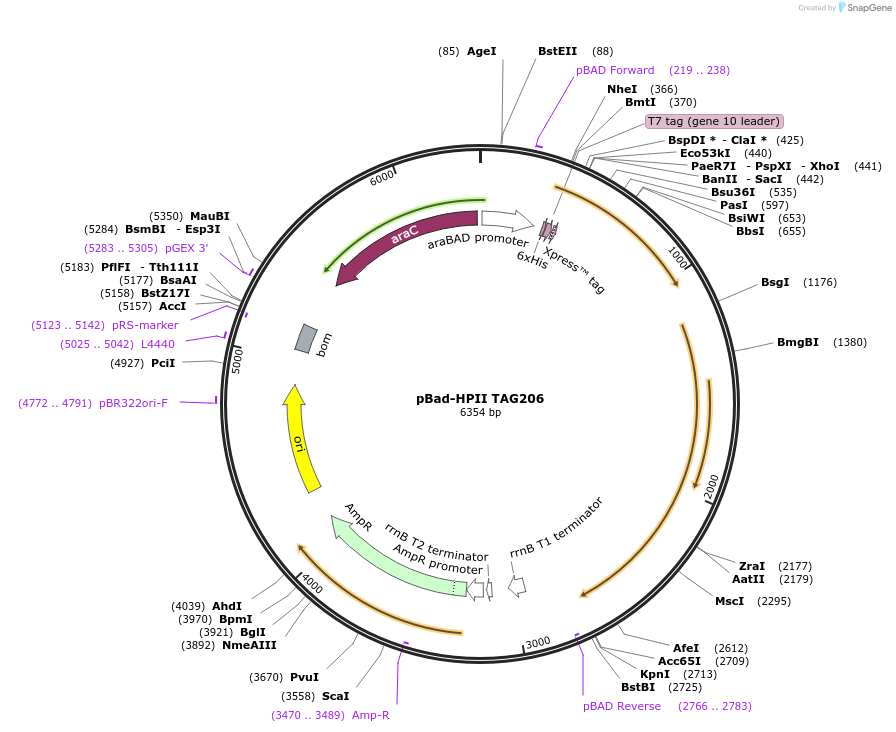
pBad-HPII TAG568
Plasmid#105845Purposeexpresses E. coli HPII catalase with TAG stop codon at site 568 and N-terminal 6x his tagDepositorArticleInserthydroperoxidase II catalase
Tags6x his tagExpressionBacterialMutationTAG stop codon at site 568PromoterpBad/arabinoseAvailable SinceMarch 14, 2018AvailabilityAcademic Institutions and Nonprofits only -
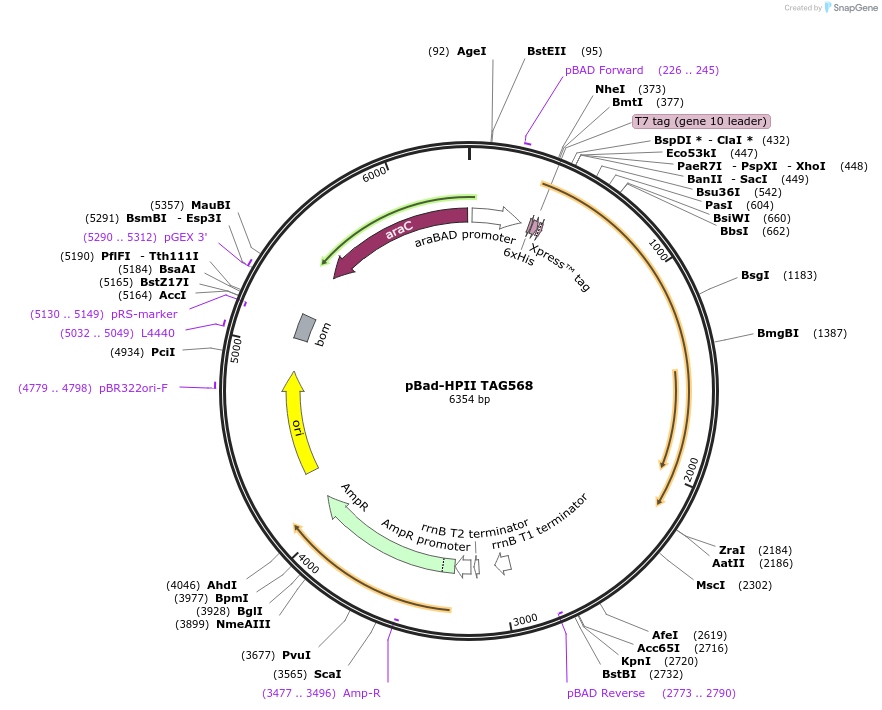
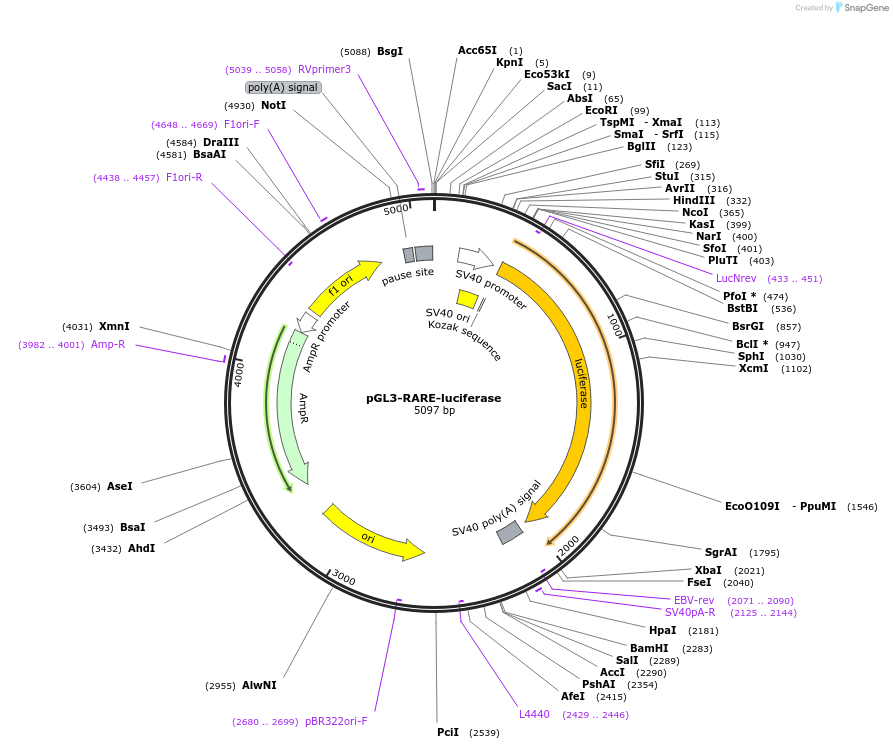
pGL3-RARE-luciferase
Plasmid#13458DepositorInsertRetinoic Acid Receptor Response Element
UseLuciferaseAvailable SinceNov. 17, 2006AvailabilityAcademic Institutions and Nonprofits only -
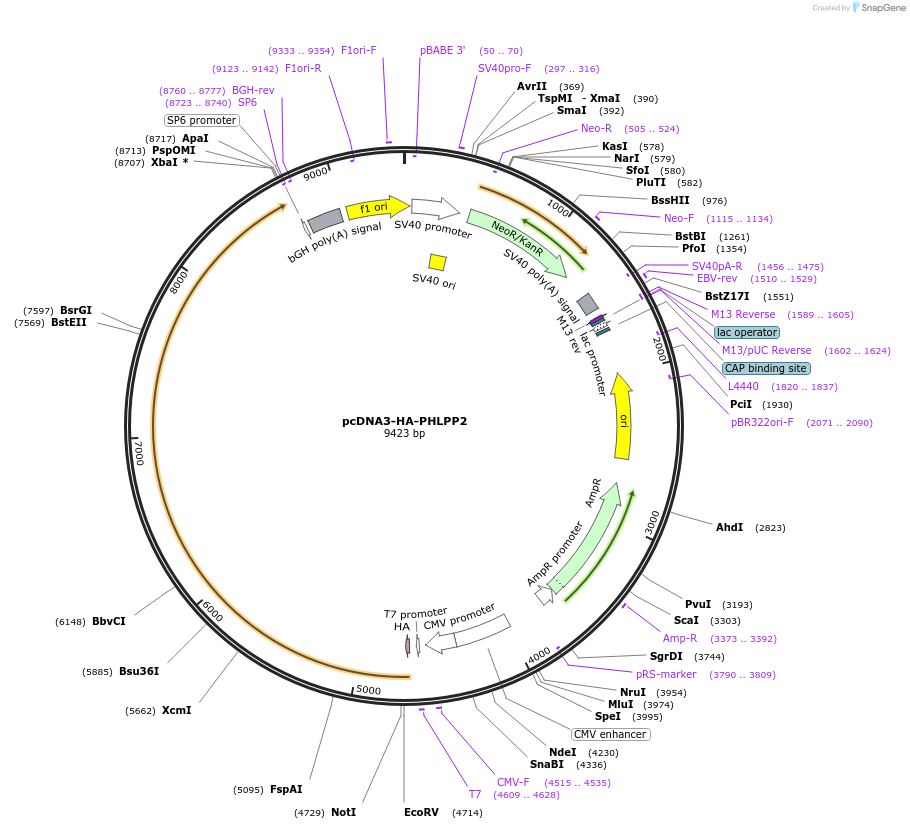
pcDNA3-HA-PHLPP2
Plasmid#22403DepositorAvailable SinceJan. 29, 2010AvailabilityAcademic Institutions and Nonprofits only -
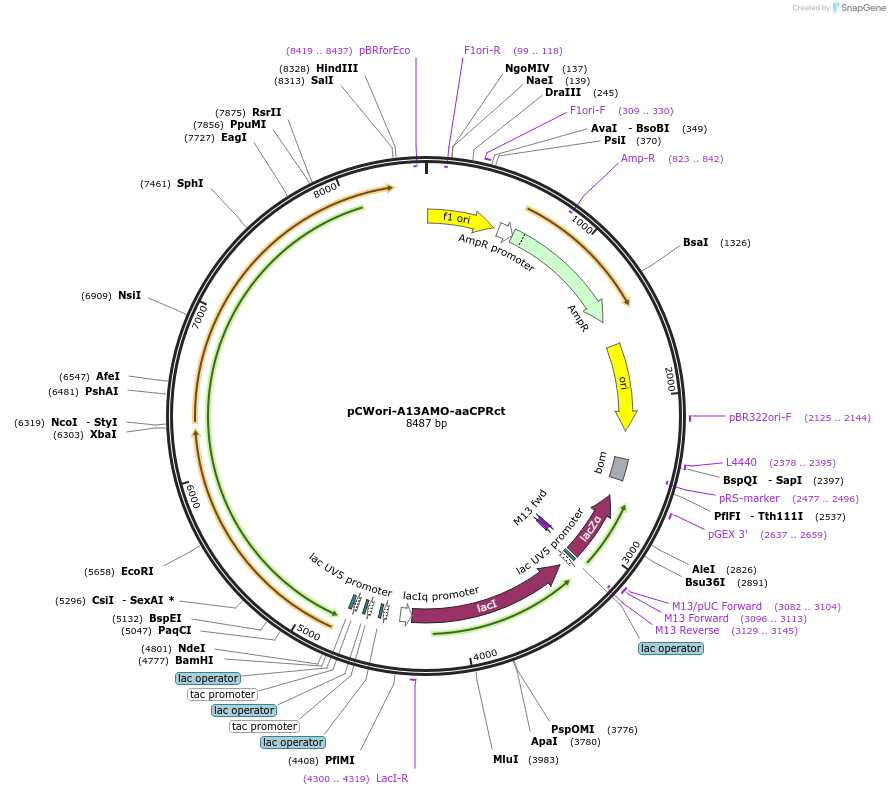
pCWori-A13AMO-aaCPRct
Plasmid#20117DepositorInsertAmorphadiene oxidase and p450 reductase
UseSynthetic BiologyExpressionBacterialAvailable SinceFeb. 27, 2009AvailabilityAcademic Institutions and Nonprofits only -
pJG/ Inducible ALPHA MHC
Plasmid#55792Purposetransgene expression driven by inducible ALPHA MHC promoterDepositorTypeEmpty backboneExpressionMammalianPromoterInducible ALPHA MHCAvailable SinceJuly 2, 2014AvailabilityAcademic Institutions and Nonprofits only -
pDUET-ctCPR-A17AMO
Plasmid#20115DepositorInsertp450 reductase and amorphadiene oxidase
UseSynthetic BiologyExpressionBacterialAvailable SinceFeb. 27, 2009AvailabilityAcademic Institutions and Nonprofits only -
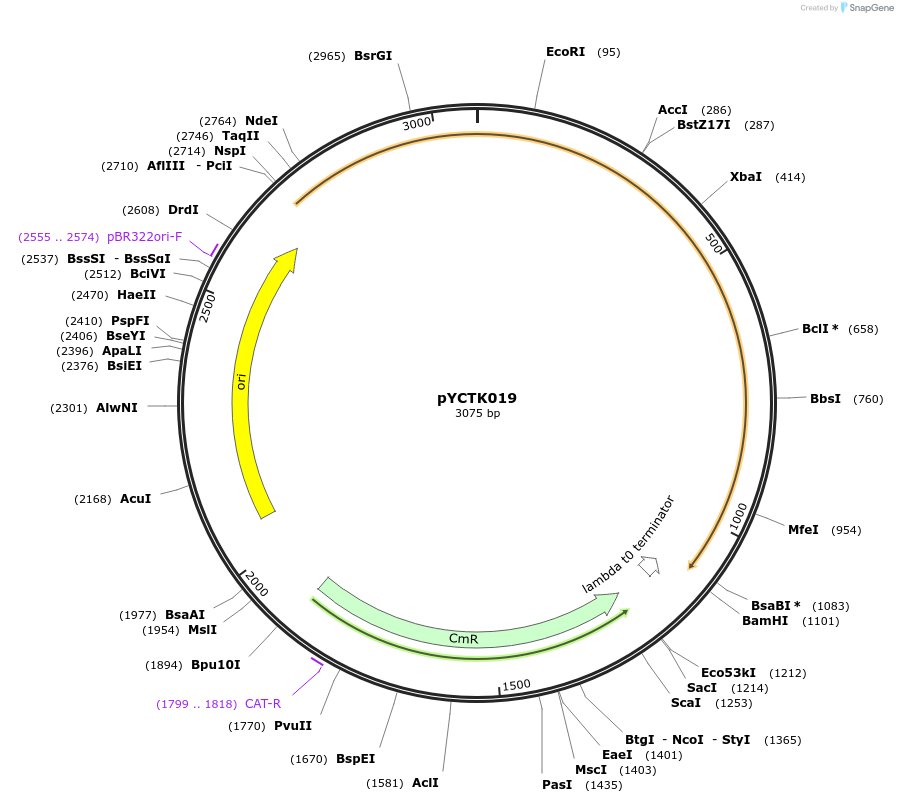
pYCTK019
Plasmid#176723PurposeThe plasmid is part of a GG toolkit for cell-cell communication in S. cerevisiae. This plasmid is an L0 part plasmid and contains the Ste2 gene of Candida albicans (receiver part).DepositorArticleInsertste2Ca
UseSynthetic BiologyMutationCodon-optimized for expression in S. cerevisiaeAvailable SinceJan. 6, 2022AvailabilityAcademic Institutions and Nonprofits only -
pDUET-ctCPR-BovAMO
Plasmid#20113DepositorInsertp450 reductase, and amorphadiene oxidase
UseSynthetic BiologyExpressionBacterialAvailable SinceFeb. 27, 2009AvailabilityAcademic Institutions and Nonprofits only -
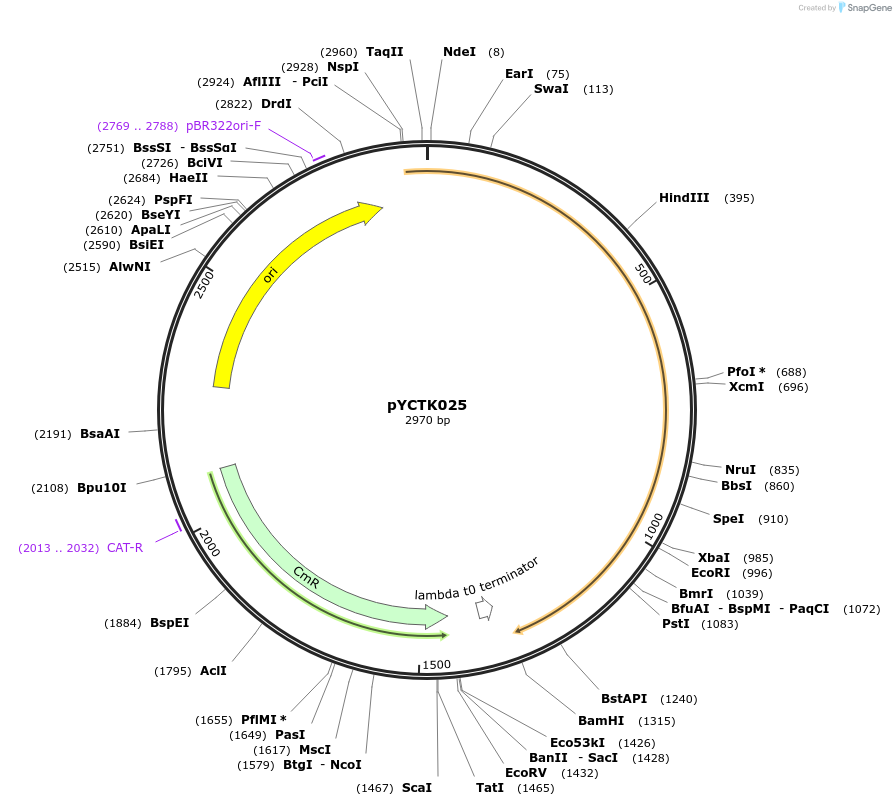
pYCTK025
Plasmid#176729PurposeThe plasmid is part of a GG toolkit for cell-cell communication in S. cerevisiae. This plasmid is an L0 part plasmid and contains the Ste2 gene of Lachancea mirantina (receiver part).DepositorArticleInsertste2Lm
UseSynthetic BiologyMutationCodon-optimized for expression in S. cerevisiaeAvailable SinceJan. 6, 2022AvailabilityAcademic Institutions and Nonprofits only