user-defined upper limit for the number of target sequences returned
Alignment
region of similarity between target and query sequences
E-value
a BLAST statistic representing the significance of an alignment, values close to zero
indicate high sequence similarity with low probability of the similarity occurring by chance
Identities
the number of exact nucleotide or amino acid matches over the alignment, expressed as a fraction
and a percentage
Query Coverage
the length of the query sequence that matches the target sequence in the
alignment
Bit Score
a BLAST statistic measuring the quality of an alignment, higher values indicate a
more significant match
Span
the length of the alignment, including gaps
About Search by Sequence
Search by Sequence performs a nucleotide-nucleotide or protein-translated nucleotide BLAST search against
Addgene’s plasmid sequence database.
BLAST returns plasmids with similarity to the query sequence.
Results are sorted by E-value, a statistic from BLAST that describes the significance of a match.
Lower values are considered better matches.
FASTA headers and numbers at the beginning of each line will be removed.
The query should only contain DNA characters.
Tips for Success
Enter a distinct sequence that is an important, differentiating feature. For example, the coding region of
a gene, instead of the plasmid origin of replication.
Inspect the percent identity, query coverage, and alignment details to determine if a result match is satisfactory.
Visit the corresponding plasmid webpage to view additional details about a matching plasmid.
If no results are returned:
Try a different isoform or region of the desired sequence.
Choose a different BLAST database. Try the general “All Addgene Plasmids” (default selection),
instead of a specific database, such as “Plant Expression Plasmids”
Try selecting a different BLAST algorithm:
megablast: Designed for comparing sequences within the same, or closely related, species.
Default selection.
blastn: Designed for comparing sequences from different species. May return additional results,
if exact species match is not required.
blastn-short: Optimized for searching with shorter sequences (<= 30 nucleotides)
but can still be effective with slightly larger sequences.
tblastn: Designed for comparing protein sequences against a translated nucleotide sequence database.
Helpful for finding plasmids with codon-optimized sequences.
tblastn-fast: A faster version of tblastn that may return results more quickly, but is less sensitive
There may not be a match in our database.
You can adjust the Max Results setting on the results page from 25 to 500. If many sequences share the same top E-value,
only a truncated set of equally high-scoring matches will be shown. Set the Max Results to 500 to see more matches.
Holiday Schedule: Addgene will be closed December 24th - January 1st. Order processing will resume on January 2, 2026. For questions about estimated ship dates, please feel free to track your order status or contact [email protected].
This website uses cookies to ensure you get the best experience. By continuing to use this site, you agree to the use of cookies.
Please note: Your browser does not support the features used on Addgene's website. You may not be able to create an account or request plasmids through this website until you upgrade your browser.
Learn more
Please note: Your browser does not fully support some of the features used on Addgene's website. If you run into any problems registering, depositing, or ordering please contact us at [email protected].
Learn more
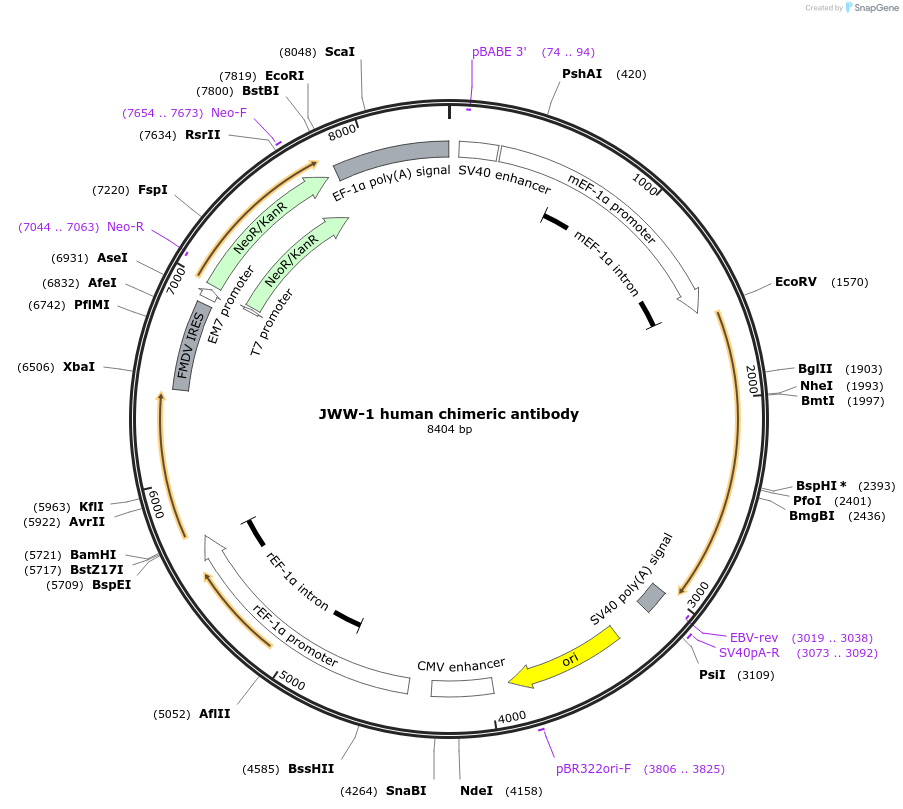
Expresses a rat/human chimeric IgG1 HPV16 L2-specific neutralizing antibody that recognizes HPV16 L2 amino acid region 17-36. JWW-1 works in ELISA/WB/HPV Neutralization assay.
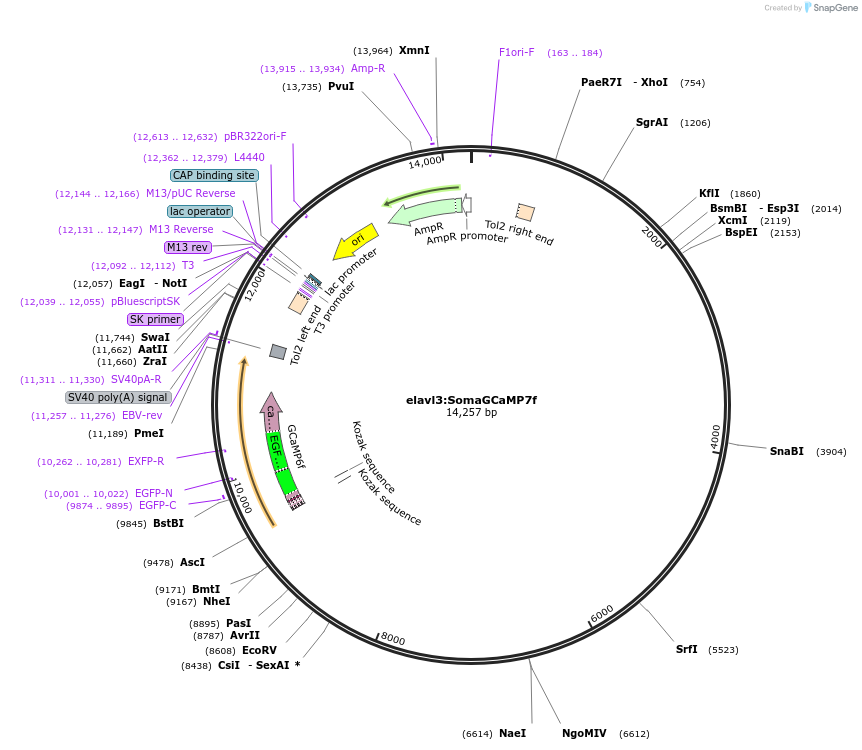
Cell body-targeted GCaMP7f, under HuC promoter: GCaMP7f followed by a linker, and the EE-RR coiled coil motif (GCaMP7f-27-EE-RR). As bright as conventional GCaMP7f.
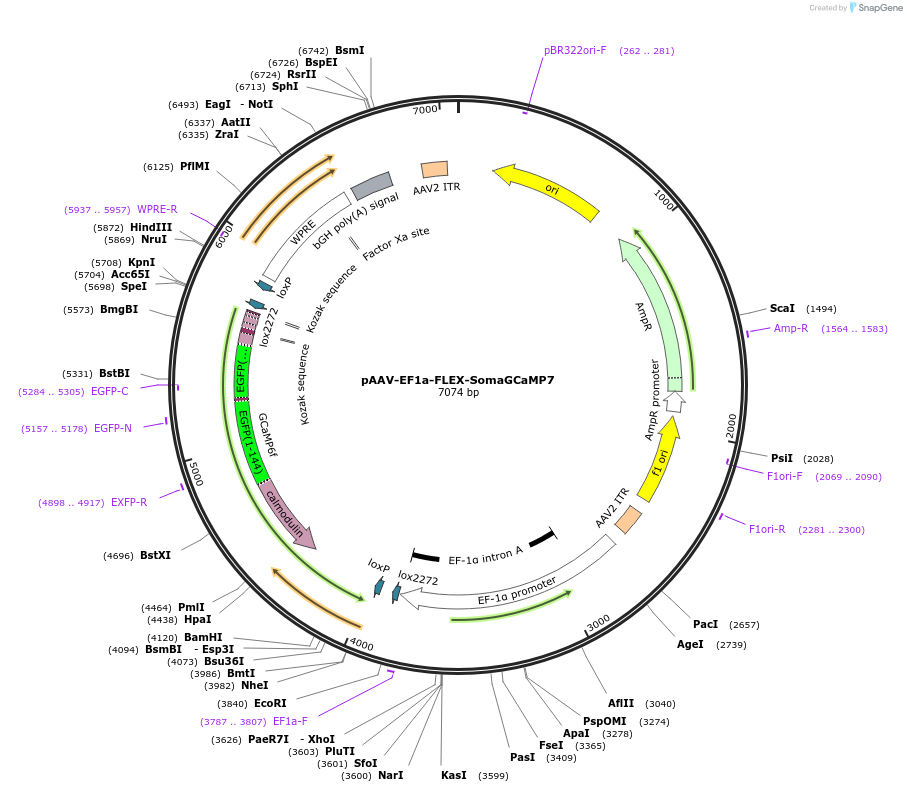
Cell body-targeted GCaMP7f, under synapsin promoter: GCaMP7f followed by a linker, and the EE-RR coiled coil motif (GCaMP7f-27-EE-RR). As bright as conventional GCaMP7f.
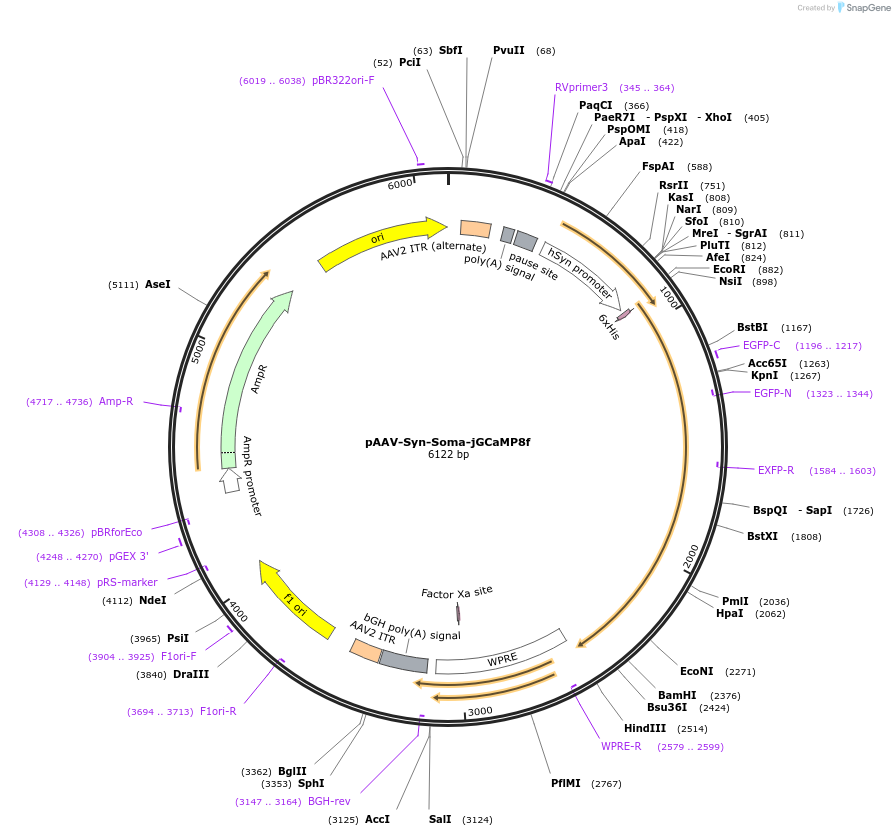
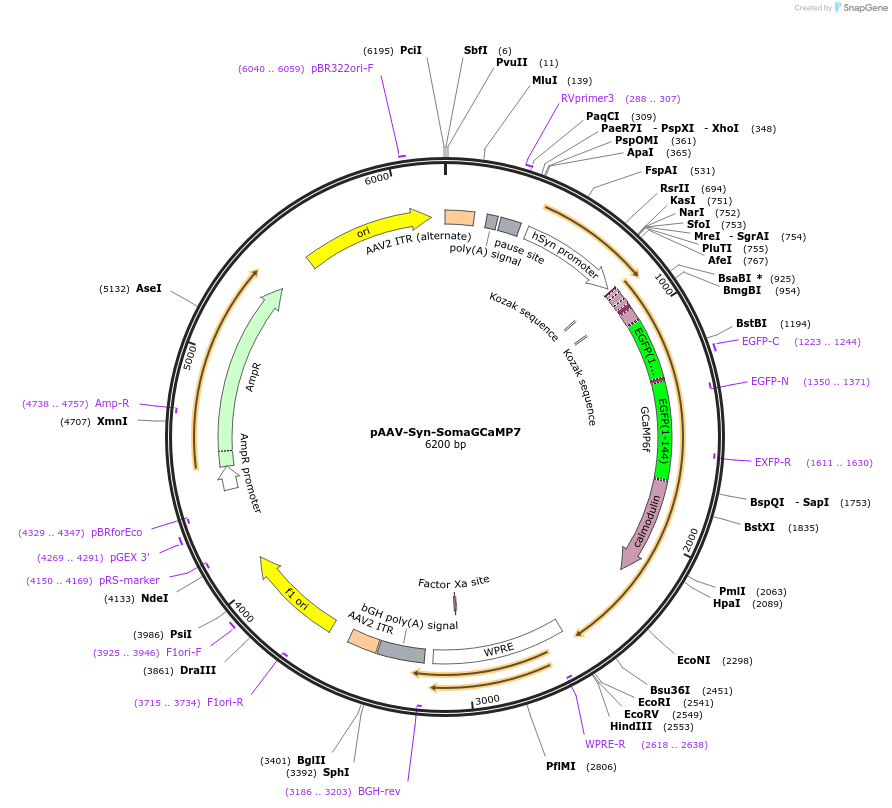
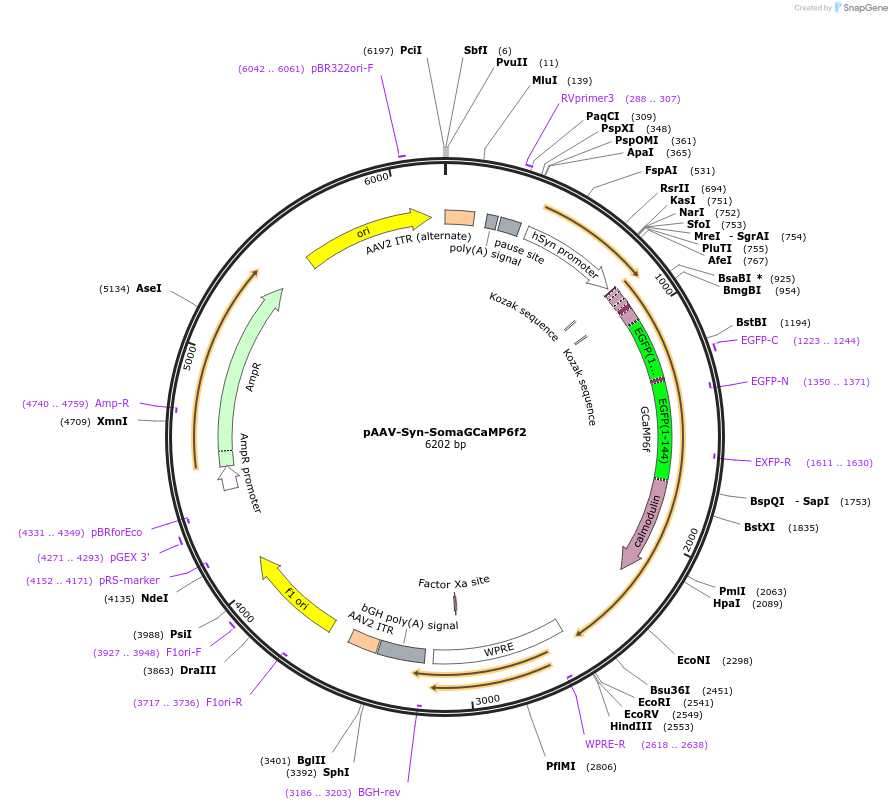
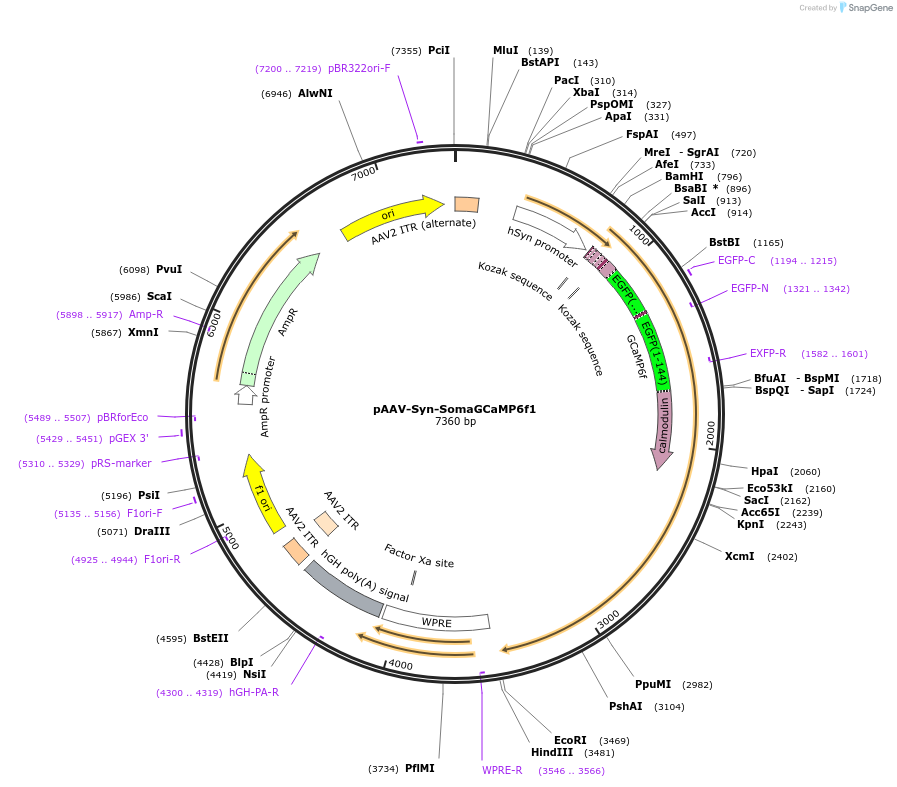
Cell body-targeted GCaMP6f, under synapsin promoter: GCaMP6f followed by a linker, and the EE-RR coiled-coil motif (GCaMP6f-27-EE-RR). As bright as conventional GCaMP6f.
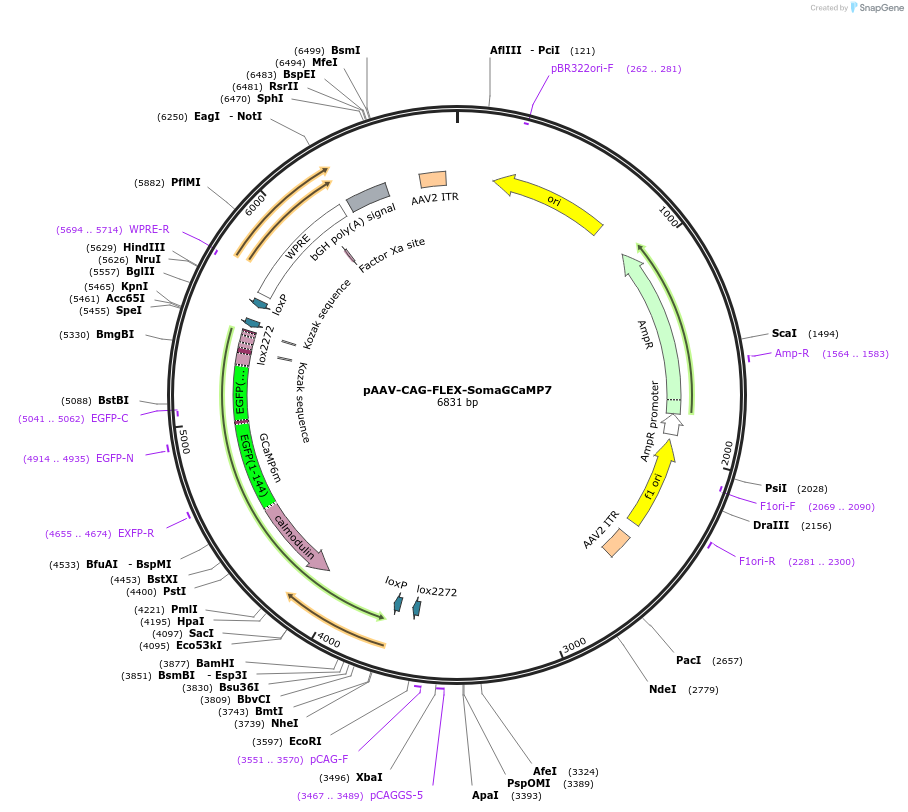
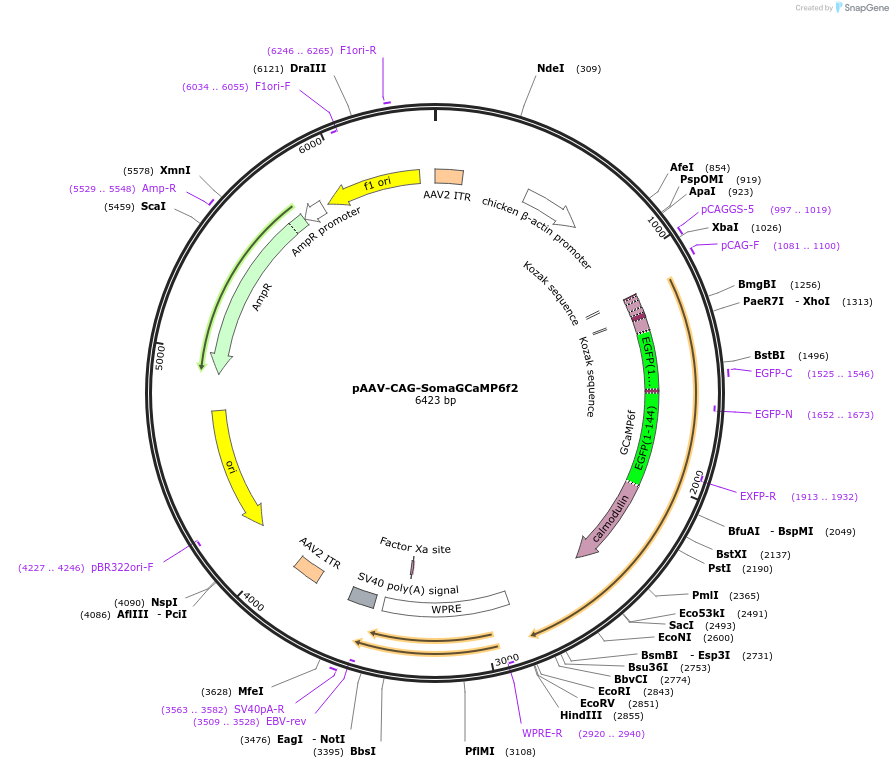
Cell body-targeted GCaMP6f, under CAG promoter: GCaMP6f followed by a linker, and the EE-RR coiled coil motif (GCaMP6f-27-EE-RR). As bright as conventional GCaMP6f.
Cell body-targeted GCaMP6f under synapsin promoter: GCaMP6f followed by a linker, the tail region of AnkyrinG, and an ER export motif (GCaMP6f-27-AnkTail-motif-ER2). Not as bright as SomaGCaMP6f2.
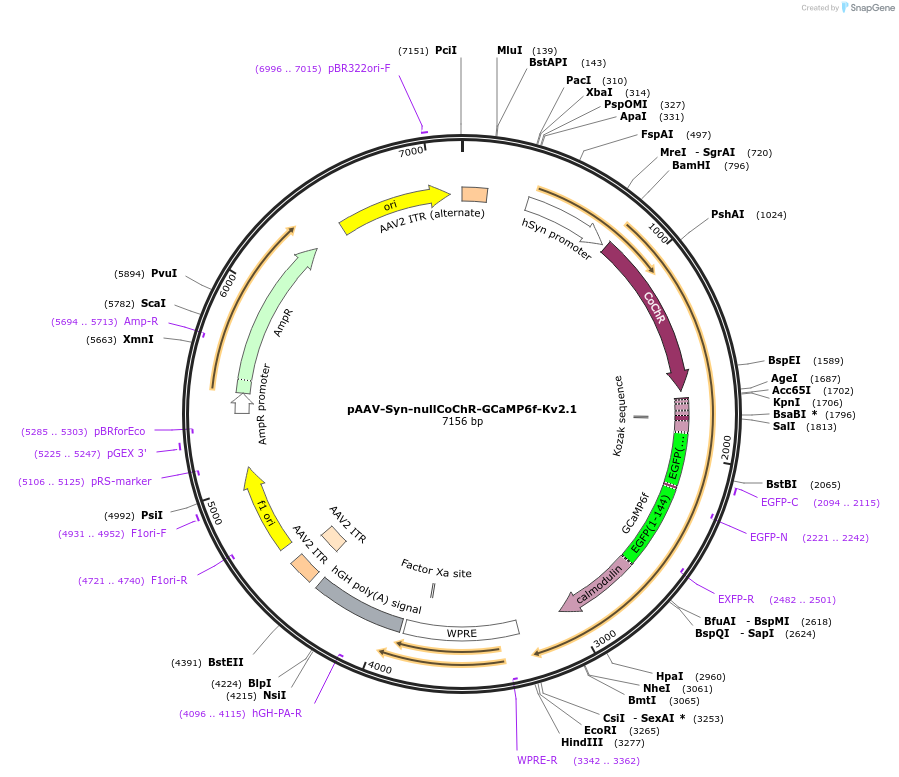
Cell body-targeted GCaMP6f, under synapsin promoter: nullCoChR (the optogenetic protein CoChR mutated to have 0 current), followed by GCaMP6f and the KV2.1 motif (nullCoChR-GCaMP6f-Kv2.1).
This engineered E. coli S17-1 λpir strain, featuring a mutation in the gyrA gene (462Arg→Cys), was designed to confer resistance to the CcdB toxin, allowing it to survive with a ccdB-carrying plasmid.