
We narrowed to 2,644 results for: RNAi
-
Plasmid#59997PurposeExpresses a hybrid dsRNA corresponding to the Caenorhabditis elegans dhc-3/him-8 genes in bacteria; ingestion of the bacteria by C elegans produces an RNAi response & leads to more male progenyDepositorAvailable sinceApril 28, 2015AvailabilityAcademic Institutions and Nonprofits only
-
pPRIME-TET-GFP-recipient
Plasmid#11655Purpose3rd generation lentiviral transfer vector. pPRIME-mating recipient plasmid with a tetracycline-responsive promoter (TET) controlling GFP expressionDepositorTypeEmpty backboneUseLentiviralTagsGFPExpressionMammalianAvailable sinceMarch 1, 2007AvailabilityAcademic Institutions and Nonprofits only -
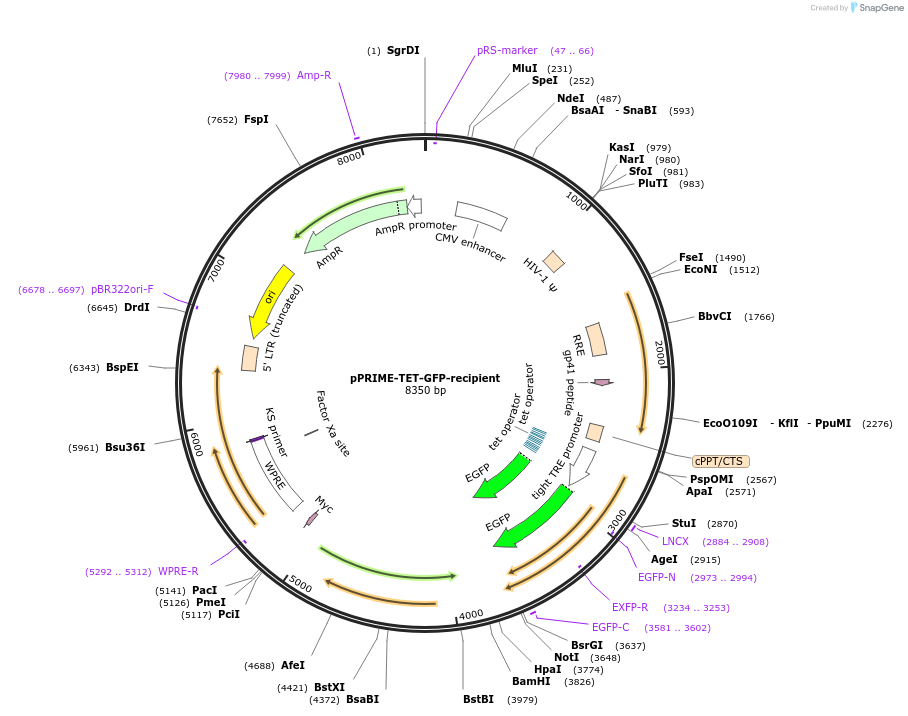
pPRIME-TET-GFP-recipient
Plasmid#11655Purpose3rd generation lentiviral transfer vector. pPRIME-mating recipient plasmid with a tetracycline-responsive promoter (TET) controlling GFP expressionDepositorTypeEmpty backboneUseLentiviralTagsGFPExpressionMammalianAvailable sinceMarch 1, 2007AvailabilityAcademic Institutions and Nonprofits only -
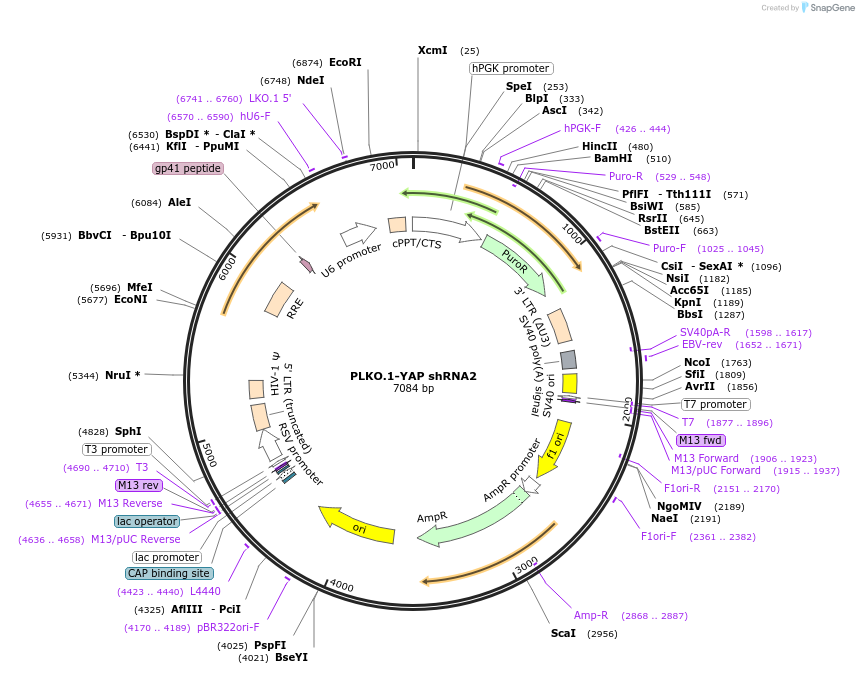
PLKO.1-YAP shRNA2
Plasmid#166485PurposeHuman YAP RNAiDepositorInsertshRNA for human YAP (YAP1 Human)
UseLentiviralAvailable sinceMay 13, 2021AvailabilityAcademic Institutions and Nonprofits onlyCited by -
pEN_hUmiRc2
Plasmid#25747PurposeEntry vector for cloning miR30-based shRNA driven by human U6 promoter.DepositorTypeEmpty backboneUseGateway CloningAvailable sinceJuly 13, 2010AvailabilityAcademic Institutions and Nonprofits only -
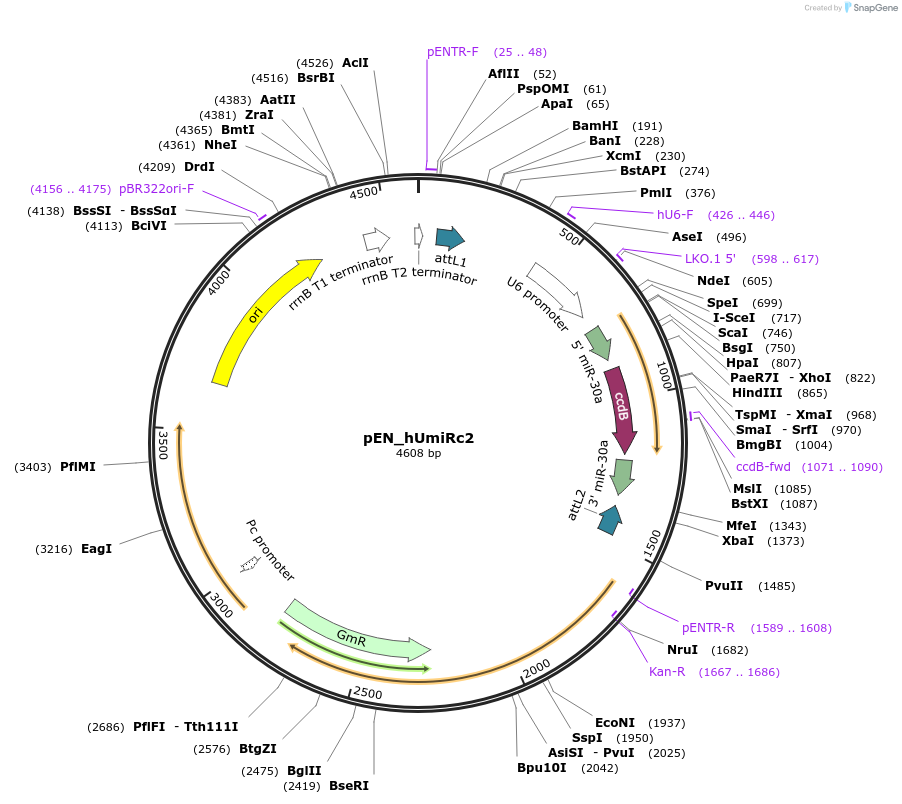
pEN_hUmiRc2
Plasmid#25747PurposeEntry vector for cloning miR30-based shRNA driven by human U6 promoter.DepositorTypeEmpty backboneUseGateway CloningAvailable sinceJuly 13, 2010AvailabilityAcademic Institutions and Nonprofits only -
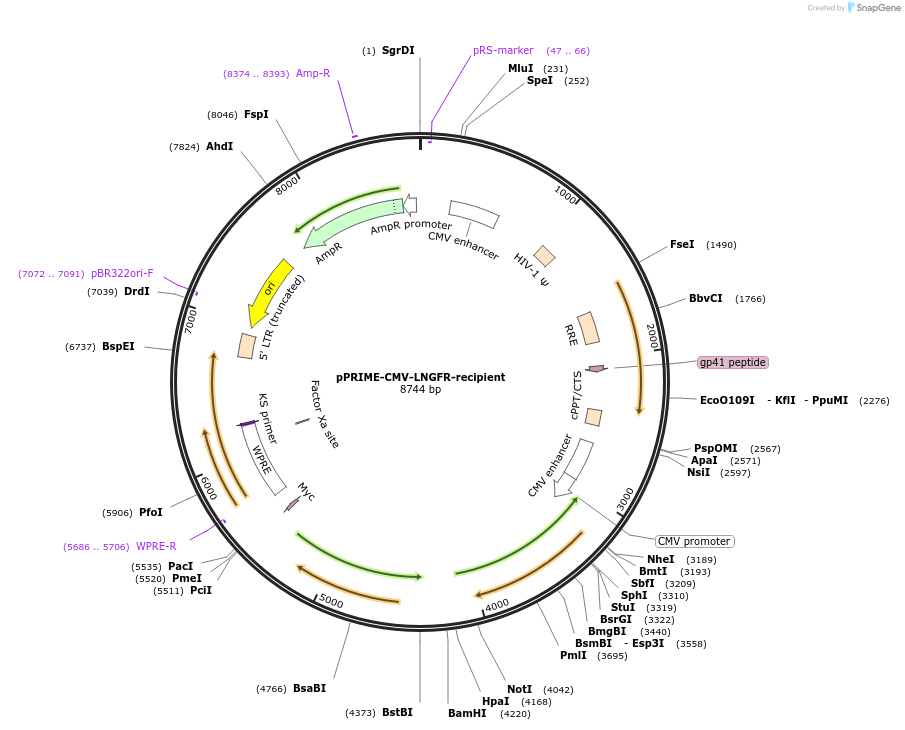
pPRIME-CMV-LNGFR-recipient
Plasmid#11660Purpose3rd generation lentiviral transfer vector. pPRIME-mating recipient plasmid with CMV promoter controlling low-affinity nerve growth factor receptor (LNGFR) expressionDepositorTypeEmpty backboneUseLentiviralTagsLNGFRExpressionMammalianAvailable sinceMarch 1, 2007AvailabilityAcademic Institutions and Nonprofits only -
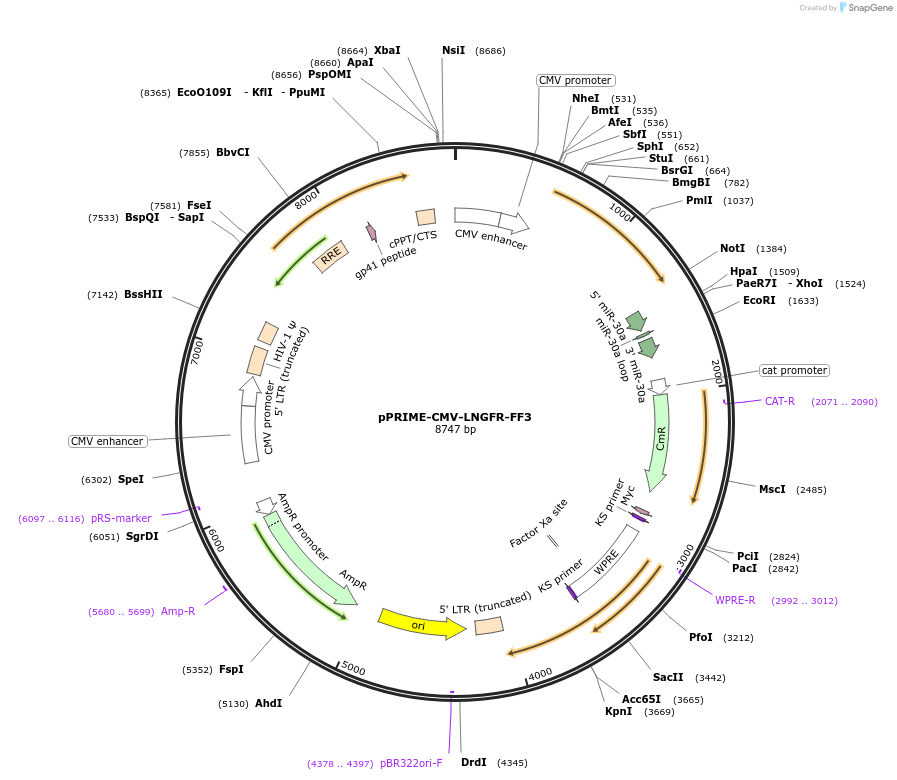
pPRIME-CMV-LNGFR-FF3
Plasmid#11666Purpose3rd generation lentiviral transfer vector. pPRIME cloning plasmid with a CMV promoter controlling expression of LNGFR and miR30-based shRNA targeting firefly luciferaseDepositorInsertFF3
UseLentiviralTagsLNGFRExpressionMammalianAvailable sinceMarch 1, 2007AvailabilityAcademic Institutions and Nonprofits only -
pPRIME-CMV-LNGFR-recipient
Plasmid#11660Purpose3rd generation lentiviral transfer vector. pPRIME-mating recipient plasmid with CMV promoter controlling low-affinity nerve growth factor receptor (LNGFR) expressionDepositorTypeEmpty backboneUseLentiviralTagsLNGFRExpressionMammalianAvailable sinceMarch 1, 2007AvailabilityAcademic Institutions and Nonprofits only -
pPRIME-CMV-LNGFR-FF3
Plasmid#11666Purpose3rd generation lentiviral transfer vector. pPRIME cloning plasmid with a CMV promoter controlling expression of LNGFR and miR30-based shRNA targeting firefly luciferaseDepositorInsertFF3
UseLentiviralTagsLNGFRExpressionMammalianAvailable sinceMarch 1, 2007AvailabilityAcademic Institutions and Nonprofits only -
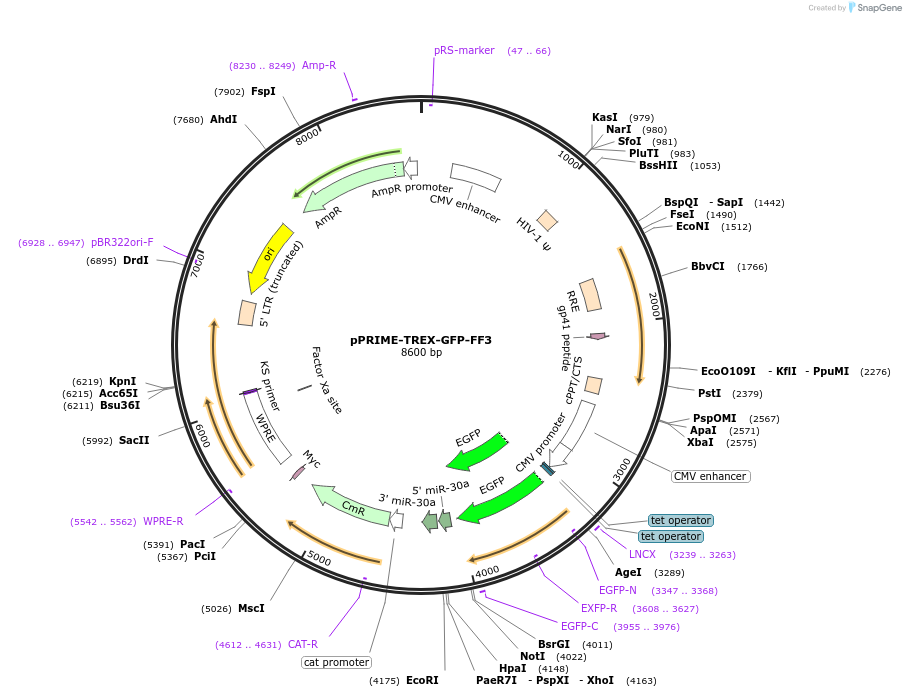
pPRIME-TREX-GFP-FF3
Plasmid#11667Purpose3rd generation lentiviral transfer vector. pPRIME cloning plasmid with a Tet-responsive promoter (TREX) controlling expression of GFP and miR30-based shRNA targeting firefly luciferaseDepositorInsertFF3
UseLentiviralTagsGFPExpressionMammalianAvailable sinceMarch 1, 2007AvailabilityAcademic Institutions and Nonprofits only -
pPRIME-TREX-GFP-FF3
Plasmid#11667Purpose3rd generation lentiviral transfer vector. pPRIME cloning plasmid with a Tet-responsive promoter (TREX) controlling expression of GFP and miR30-based shRNA targeting firefly luciferaseDepositorInsertFF3
UseLentiviralTagsGFPExpressionMammalianAvailable sinceMarch 1, 2007AvailabilityAcademic Institutions and Nonprofits only -
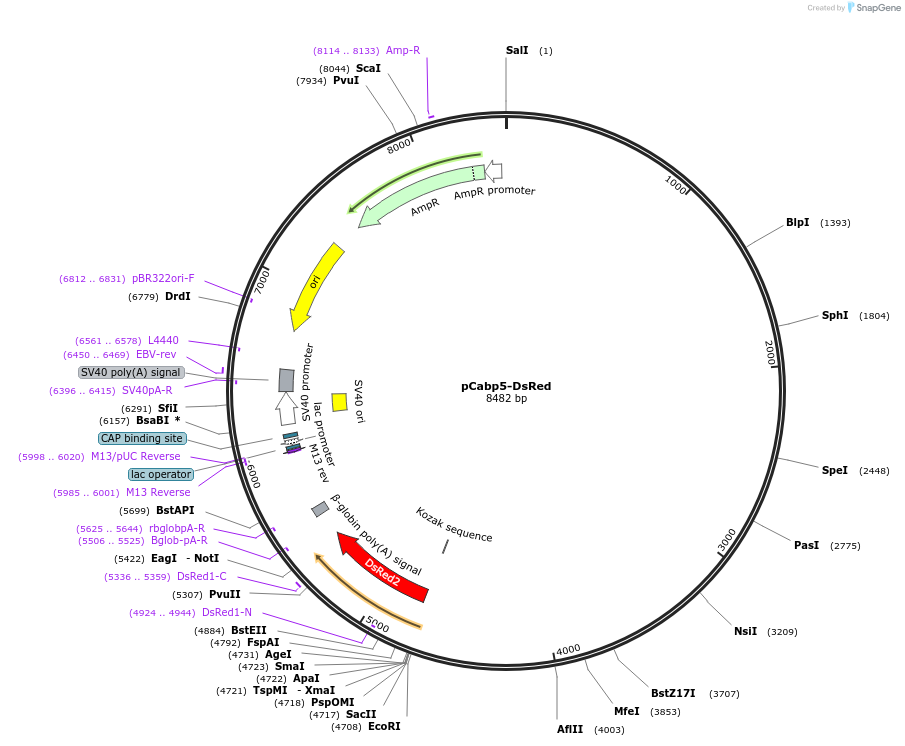
pCabp5-DsRed
Plasmid#11157DepositorHas service50 µg Transfection-Ready DNA and 100 µg Transfection-Ready DNAInsertCabp5 promoter (Cabp5 Mouse)
TagsDsRed2ExpressionMammalianAvailable sinceApril 13, 2006AvailabilityAcademic Institutions and Nonprofits onlyCited by -
pCabp5-DsRed
Plasmid#11157DepositorHas service50 µg Transfection-Ready DNA and 100 µg Transfection-Ready DNAInsertCabp5 promoter (Cabp5 Mouse)
TagsDsRed2ExpressionMammalianAvailable sinceApril 13, 2006AvailabilityAcademic Institutions and Nonprofits onlyCited by -
pCAG-hHIF1 alpha-IGd2
Plasmid#22535PurposeTo be used for the RNAi screening purposes (not for HDAC4 expression); see paperDepositorPublicationInserthypoxia inducible factor 1 alpha (HIF1A Human)
ExpressionMammalianAvailable sinceNov. 9, 2009AvailabilityAcademic Institutions and Nonprofits only -
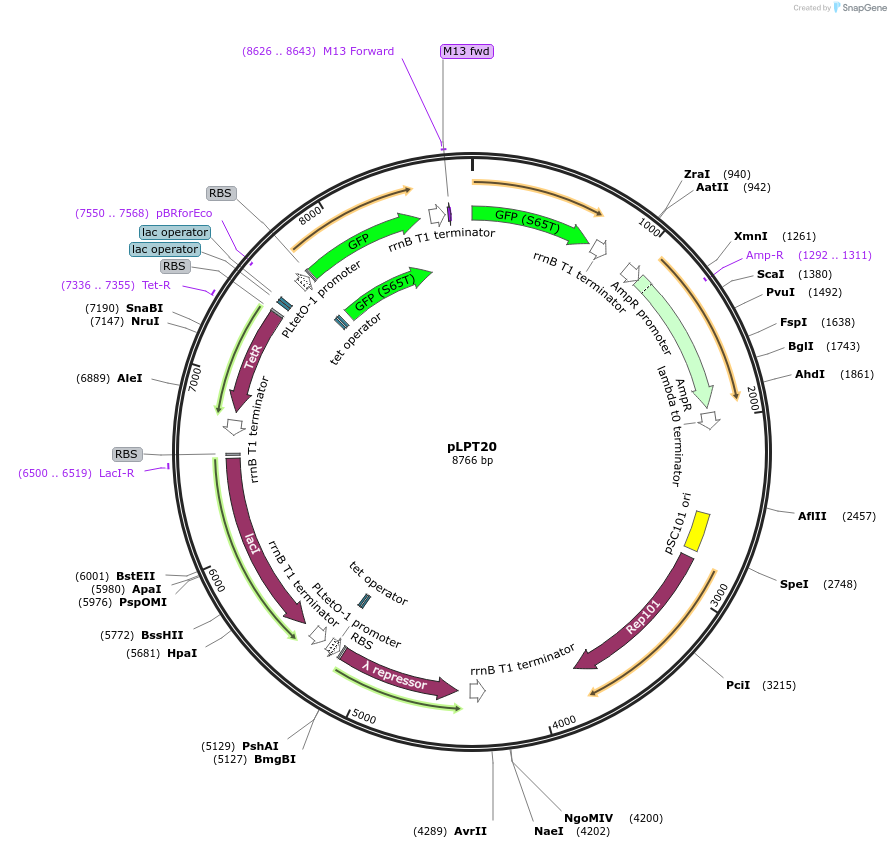
pLPT20
Plasmid#85460PurposeRepressilator with integrated reporterDepositorInsertsmCfp
mVenus
tetR
lacI
cI
UseSynthetic BiologyTagsssrAExpressionBacterialPromoterPLlac, PLtet, PR, and PRNAIAvailable sinceMay 30, 2017AvailabilityAcademic Institutions and Nonprofits only -
pCAG-HDAC4-IGd2
Plasmid#22536PurposeTo be used for the RNAi screening purposes (not for HDAC4 expression); see paperDepositorPublicationAvailable sinceNov. 9, 2009AvailabilityAcademic Institutions and Nonprofits only -
pKAR1
Plasmid#23104PurposeAllows expression of shRNA from U6 promoter and a rescue cDNA from a doxycycline (Tet) inducible promoter in the same plasmidDepositorPublicationTypeEmpty backboneUseRNAiTagsFlagExpressionMammalianPromoterTRE for cDNA; U6 for shRNAAvailable sinceMay 27, 2011AvailabilityAcademic Institutions and Nonprofits only -
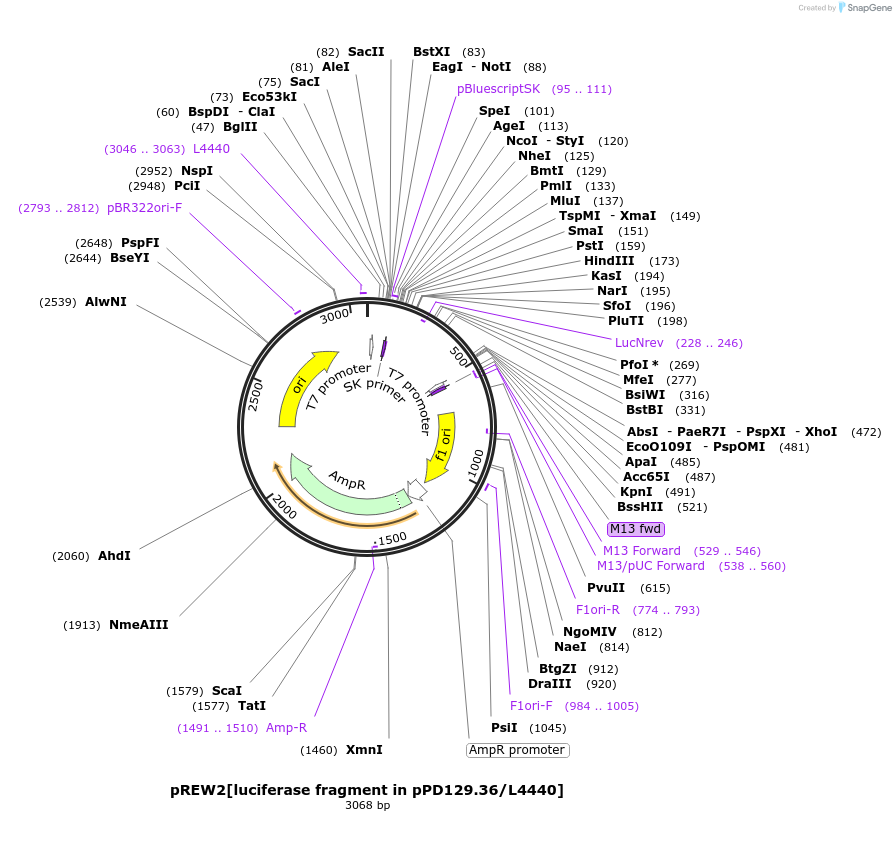
pREW2[luciferase fragment in pPD129.36/L4440]
Plasmid#253297PurposeIn HT115 host, expresses dsRNA corresponding to a luciferase sequence with no matches in the C. elegans genome. Excellent for negative control bacterially mediated RNAiDepositorInsertluciferase fragment
ExpressionBacterialPromoterTwin T7 promotersAvailable sinceApril 23, 2026AvailabilityAcademic Institutions and Nonprofits only -
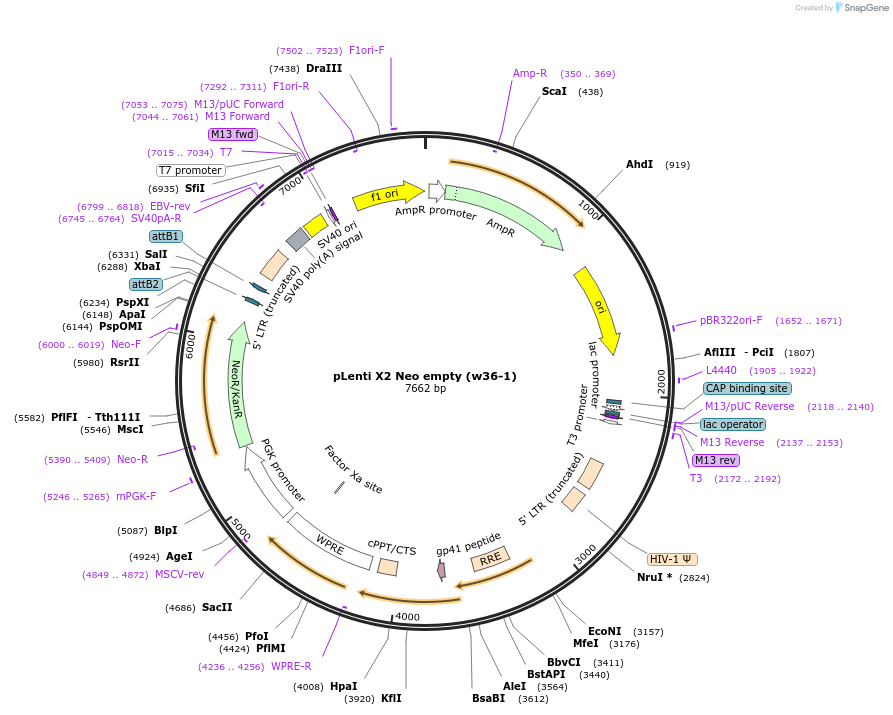
pLenti X2 Neo empty (w36-1)
Plasmid#17478Purpose3rd gen lentiviral RNAi empty control vector, 3’LTR insertion, NeoDepositorPublicationTypeEmpty backboneUseLentiviral and RNAiExpressionMammalianAvailable sinceAug. 12, 2009AvailabilityAcademic Institutions and Nonprofits onlyCited by