user-defined upper limit for the number of target sequences returned
Alignment
region of similarity between target and query sequences
E-value
a BLAST statistic representing the significance of an alignment, values close to zero
indicate high sequence similarity with low probability of the similarity occurring by chance
Identities
the number of exact nucleotide or amino acid matches over the alignment, expressed as a fraction
and a percentage
Query Coverage
the length of the query sequence that matches the target sequence in the
alignment
Bit Score
a BLAST statistic measuring the quality of an alignment, higher values indicate a
more significant match
Span
the length of the alignment, including gaps
About Search by Sequence
Search by Sequence performs a nucleotide-nucleotide or protein-translated nucleotide BLAST search against
Addgene’s plasmid sequence database.
BLAST returns plasmids with similarity to the query sequence.
Results are sorted by E-value, a statistic from BLAST that describes the significance of a match.
Lower values are considered better matches.
FASTA headers and numbers at the beginning of each line will be removed.
The query should only contain DNA characters.
Tips for Success
Enter a distinct sequence that is an important, differentiating feature. For example, the coding region of
a gene, instead of the plasmid origin of replication.
Inspect the percent identity, query coverage, and alignment details to determine if a result match is satisfactory.
Visit the corresponding plasmid webpage to view additional details about a matching plasmid.
If no results are returned:
Try a different isoform or region of the desired sequence.
Choose a different BLAST database. Try the general “All Addgene Plasmids” (default selection),
instead of a specific database, such as “Plant Expression Plasmids”
Try selecting a different BLAST algorithm:
megablast: Designed for comparing sequences within the same, or closely related, species.
Default selection.
blastn: Designed for comparing sequences from different species. May return additional results,
if exact species match is not required.
blastn-short: Optimized for searching with shorter sequences (<= 30 nucleotides)
but can still be effective with slightly larger sequences.
tblastn: Designed for comparing protein sequences against a translated nucleotide sequence database.
Helpful for finding plasmids with codon-optimized sequences.
tblastn-fast: A faster version of tblastn that may return results more quickly, but is less sensitive
There may not be a match in our database.
You can adjust the Max Results setting on the results page from 25 to 500. If many sequences share the same top E-value,
only a truncated set of equally high-scoring matches will be shown. Set the Max Results to 500 to see more matches.
This website uses cookies to ensure you get the best experience. By continuing to use this site, you agree to the use of cookies.
Please note: Your browser does not support the features used on Addgene's website. You may not be able to create an account or request plasmids through this website until you upgrade your browser.
Learn more
Please note: Your browser does not fully support some of the features used on Addgene's website. If you run into any problems registering, depositing, or ordering please contact us at [email protected].
Learn more
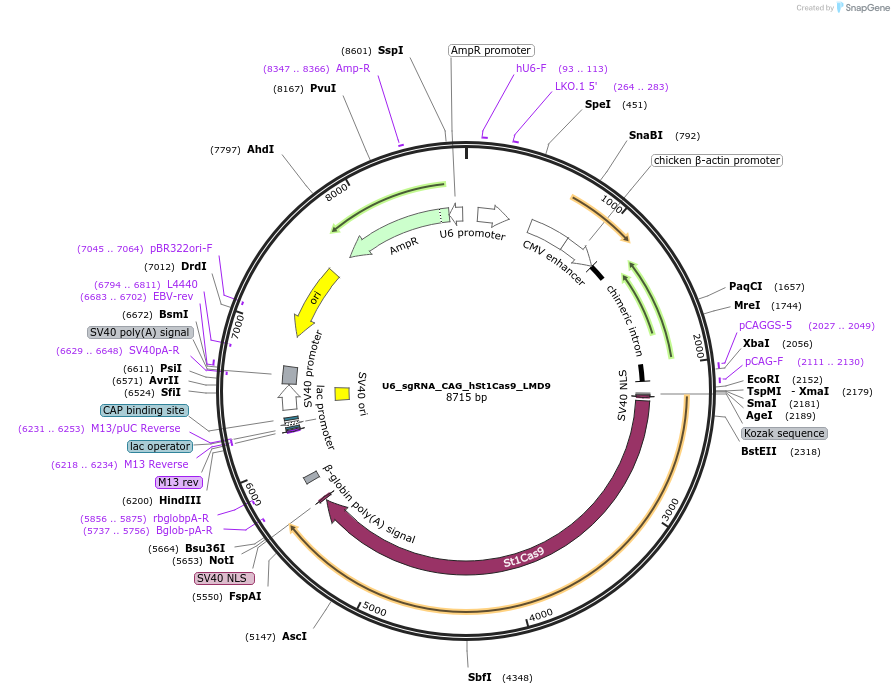
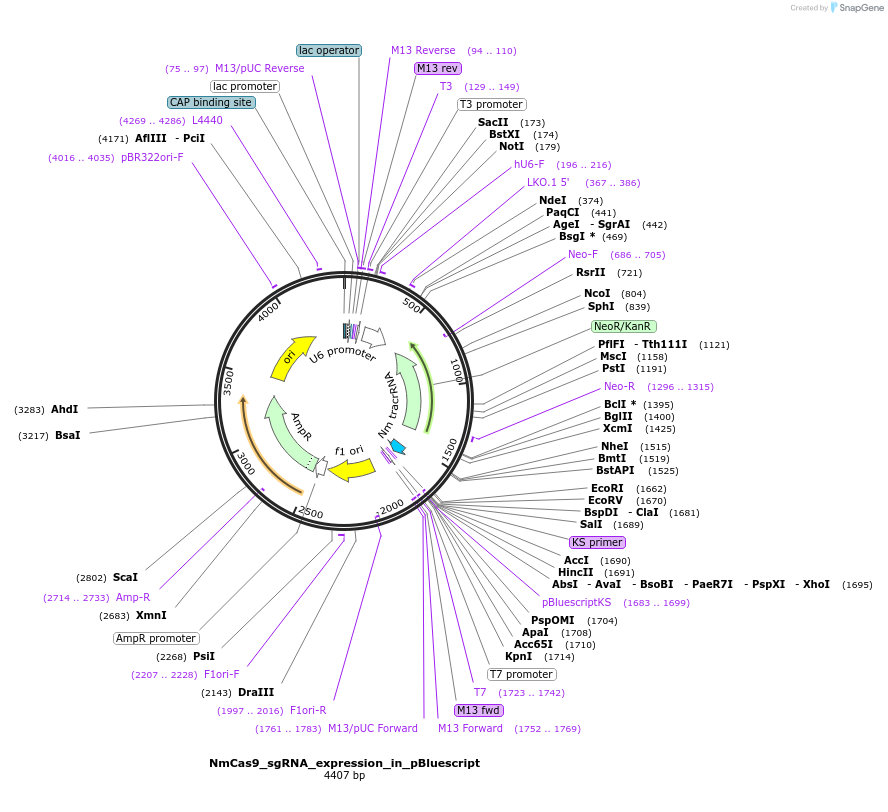
A single vector mammalian expression system containing a CAG promoter with Cas9 from Streptococcus thermophilus CRISPR1 (St1Cas9 LMD-9) and its U6-driven sgRNA.
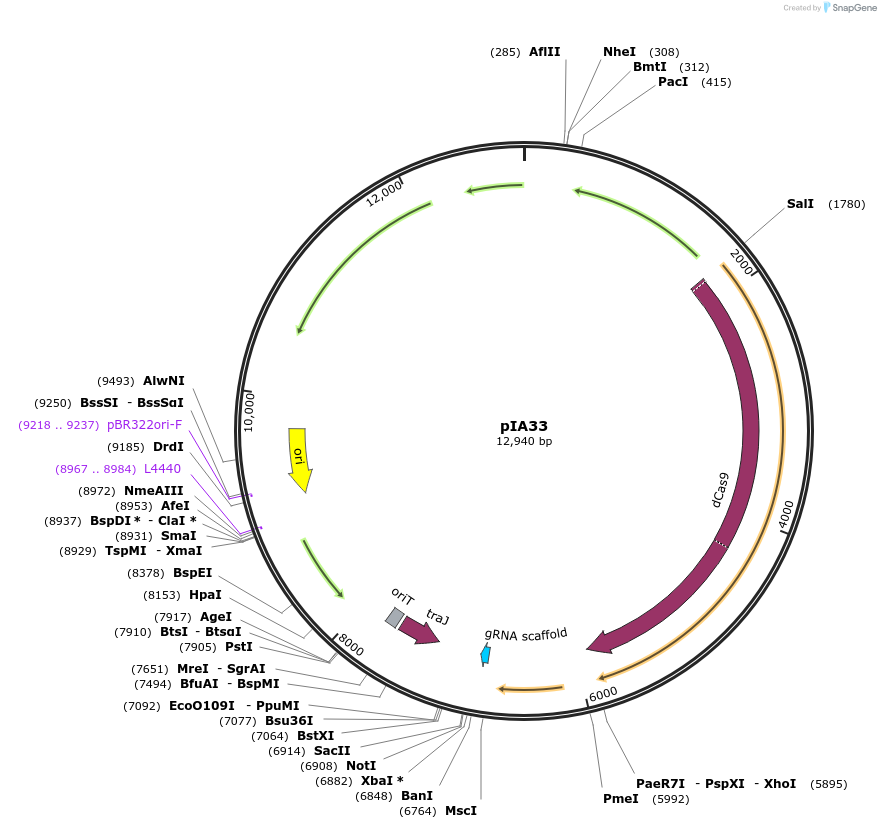
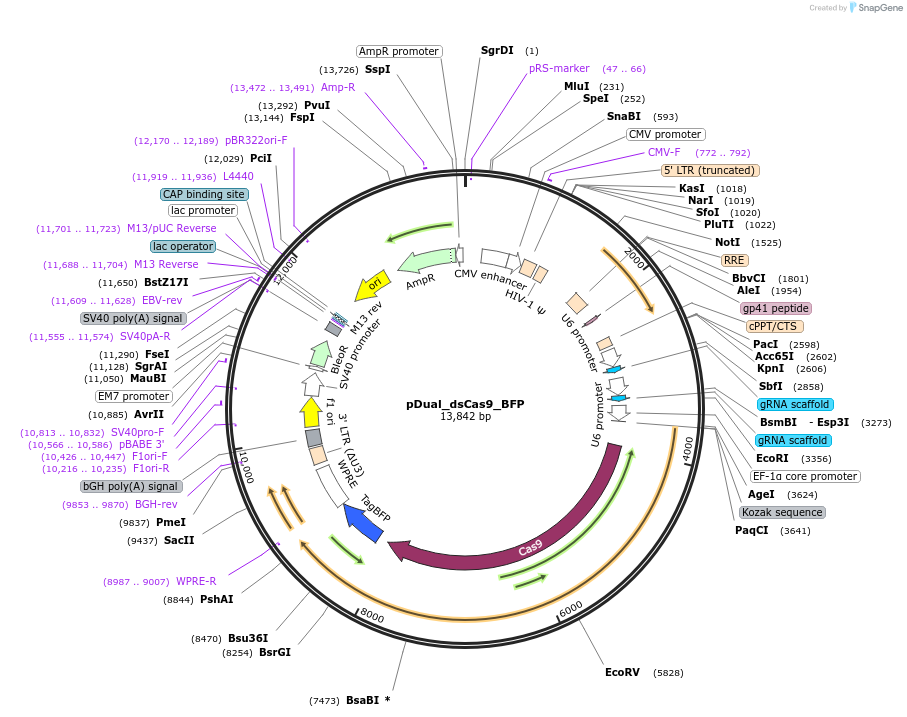
Lentiviral transfer vector that carries U6-driven non-targeting sgRNA using a modified scaffold (Chen et al. Cell 2013) and CMV-driven PIN-dCas9. Derived from LentiCRISPR v2 (Zhang lab)
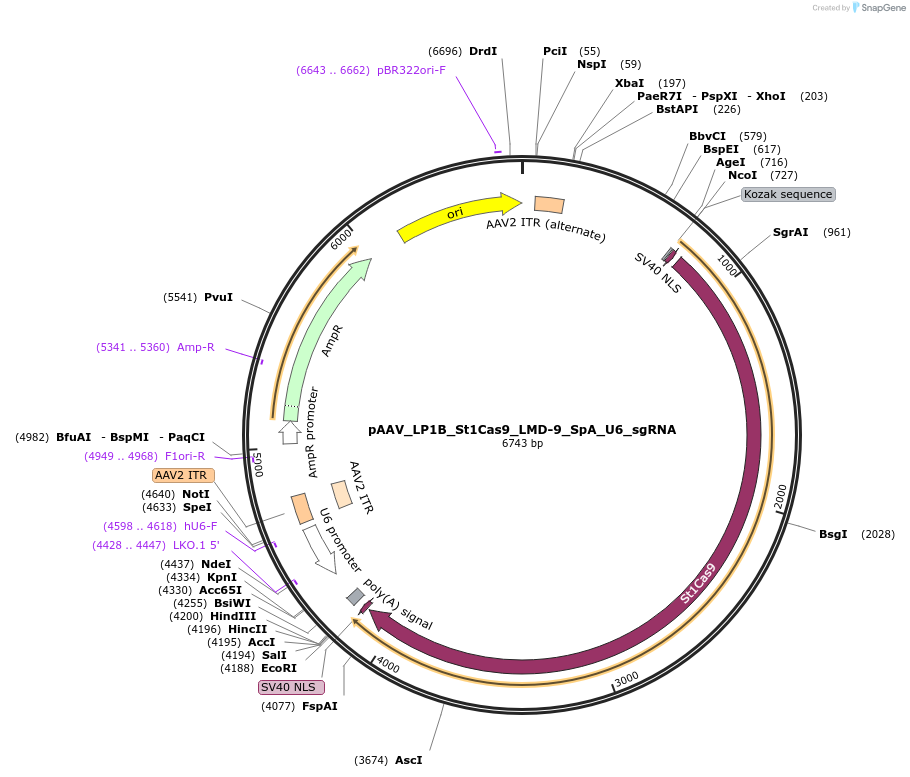
A single vector AAV-Cas9 system containing a liver-specific promoter with Cas9 from Streptococcus thermophilus CRISPR1 (St1Cas9 LMD-9) and its U6-driven sgRNA
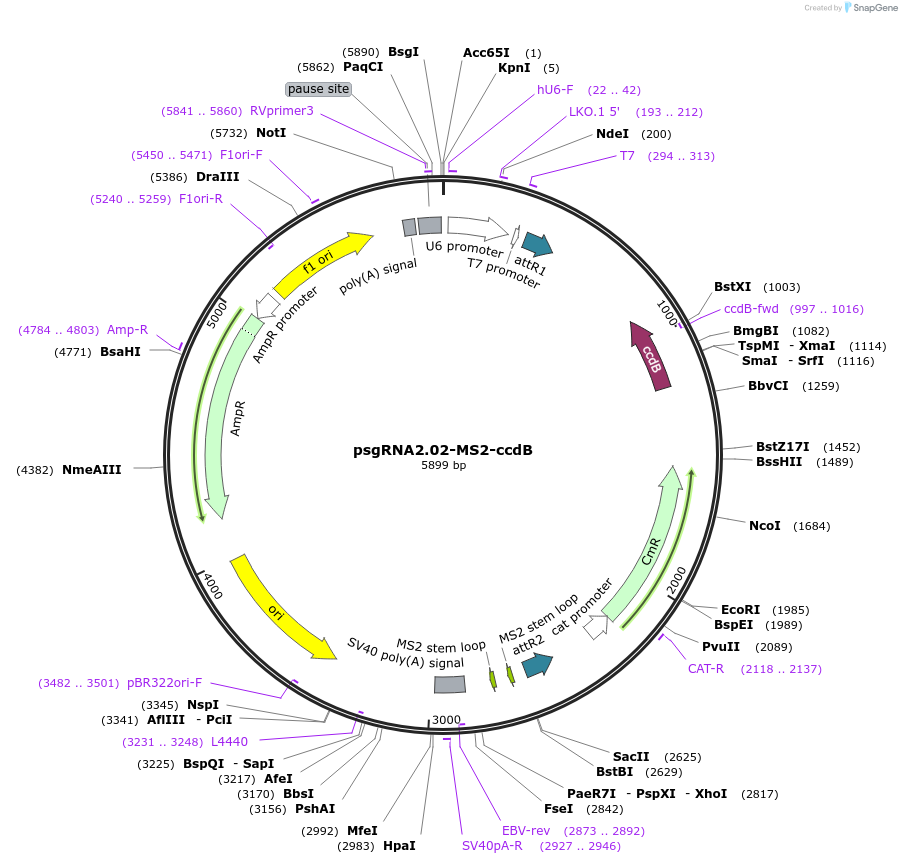
This vector is designed for efficient cloning of sgRNAs by Golden Gate assembly. The sgRNA insertion leads to replacement of mCherry, resulting in loss of red color of E. coli colony.
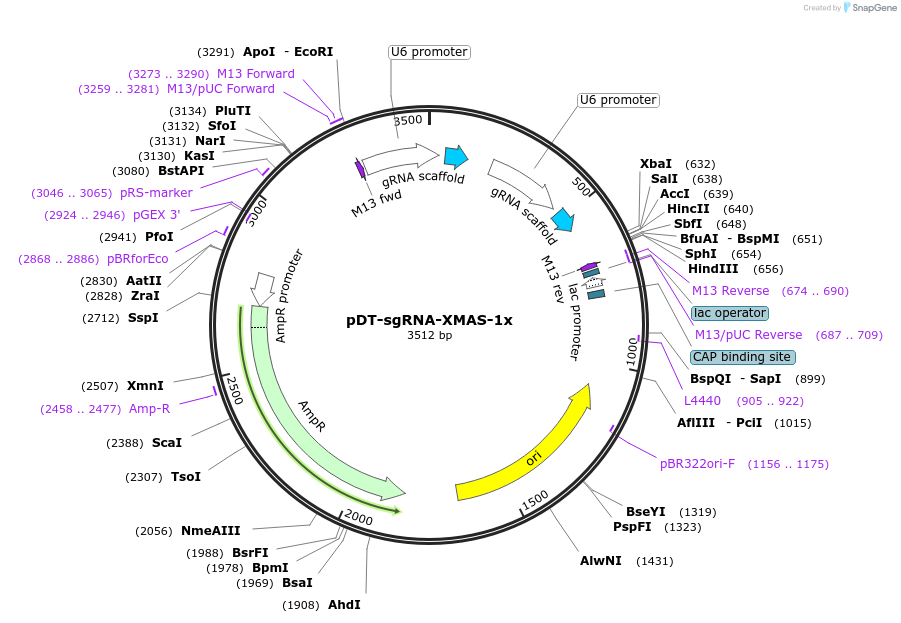
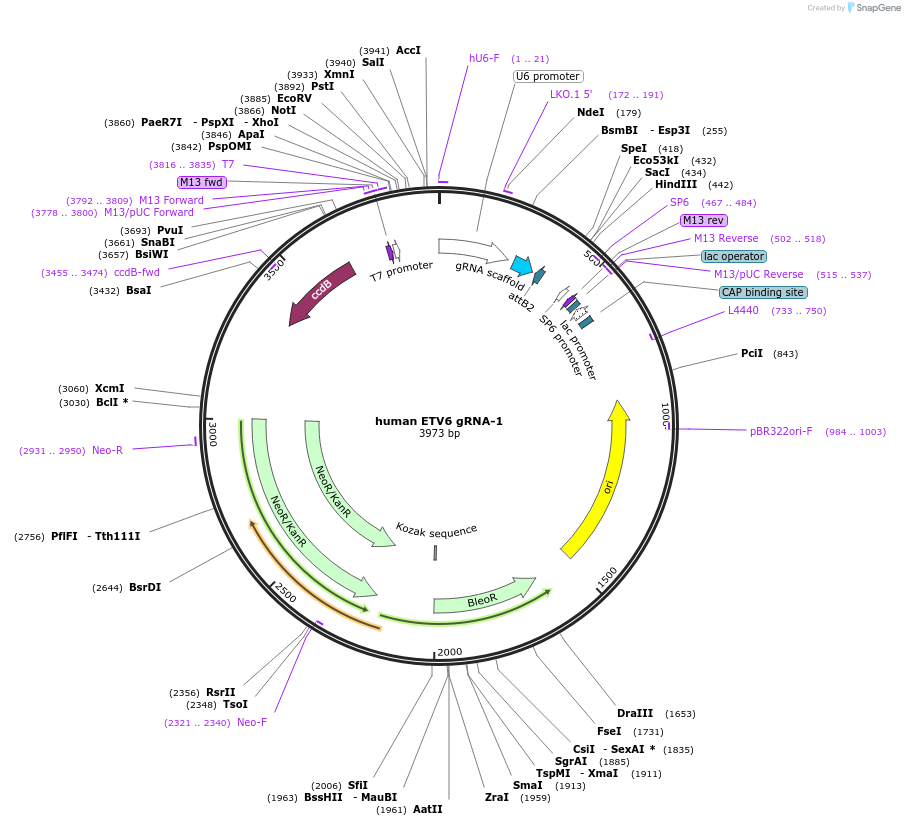
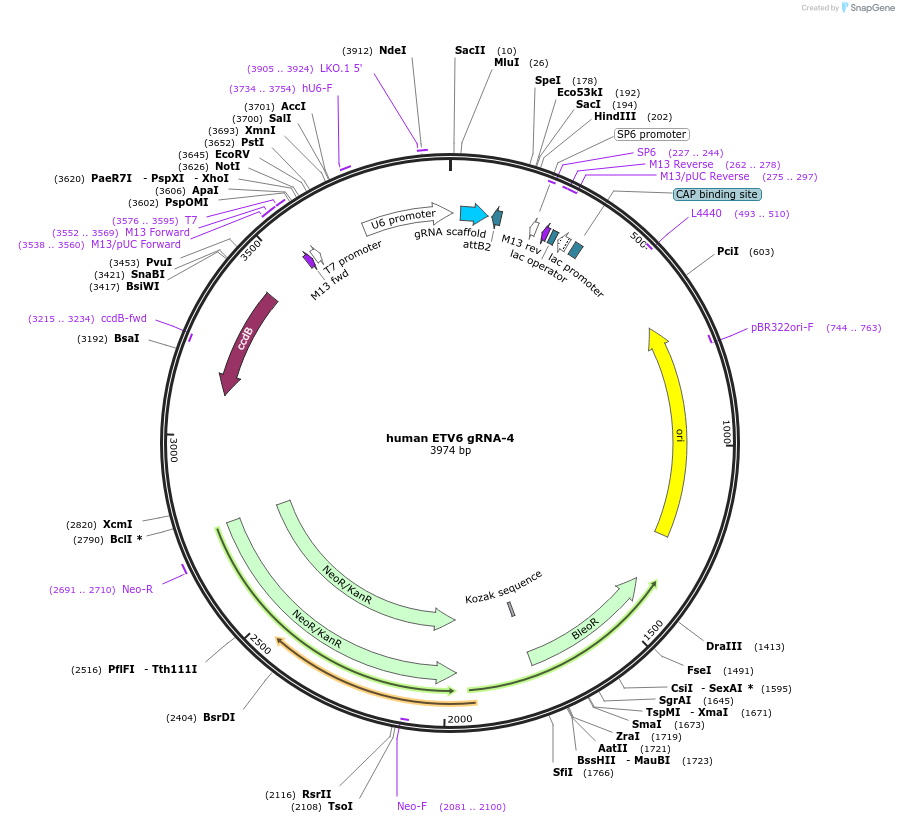
human ETV6 gRNA-3 and 4 is a pair of gRNAs. Four ETV6 gRNA plasmids used the same backbone(Addgene plasmid#41824). ETV6 gRNA-4 target the second ETV6 exon.
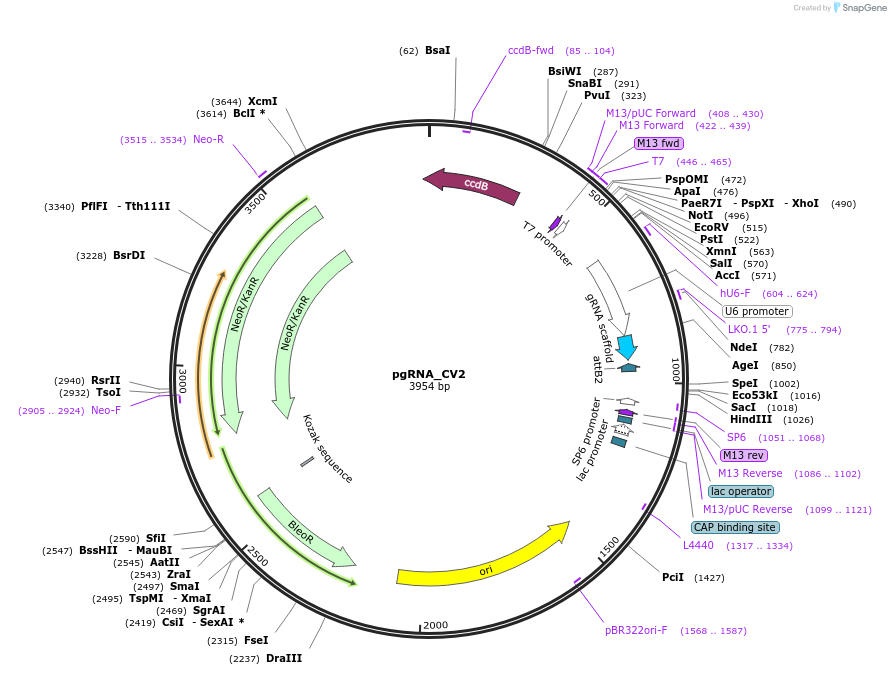
pgRNA_CV2 is derived from gRNA_cloning vector (Addgene plasmid ID: 41824) by adding about 80 bps from the sgRNA sequence as well as an AgeI site. In the literature, sgRNA_AL is used as an alias.
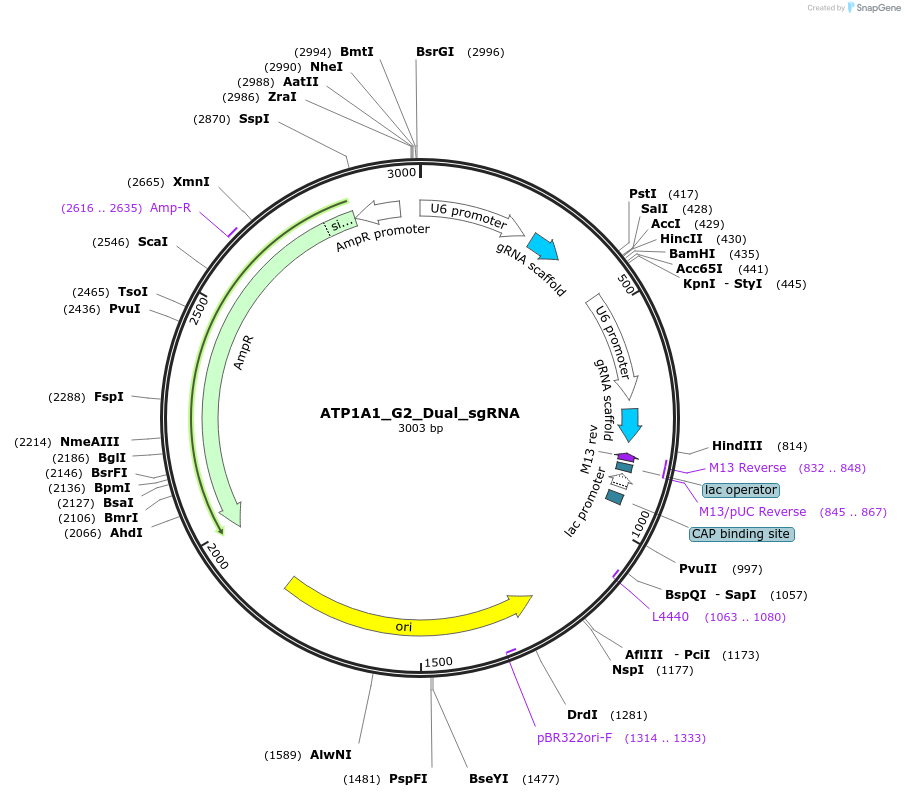
Coselection for ABE or NHEJ in human cells. Vector for tandem expression of ATP1A1 G2 sgRNA with a user-specified sgRNA from two independent U6 promoters. Cloning of oligos using BbsI sites.
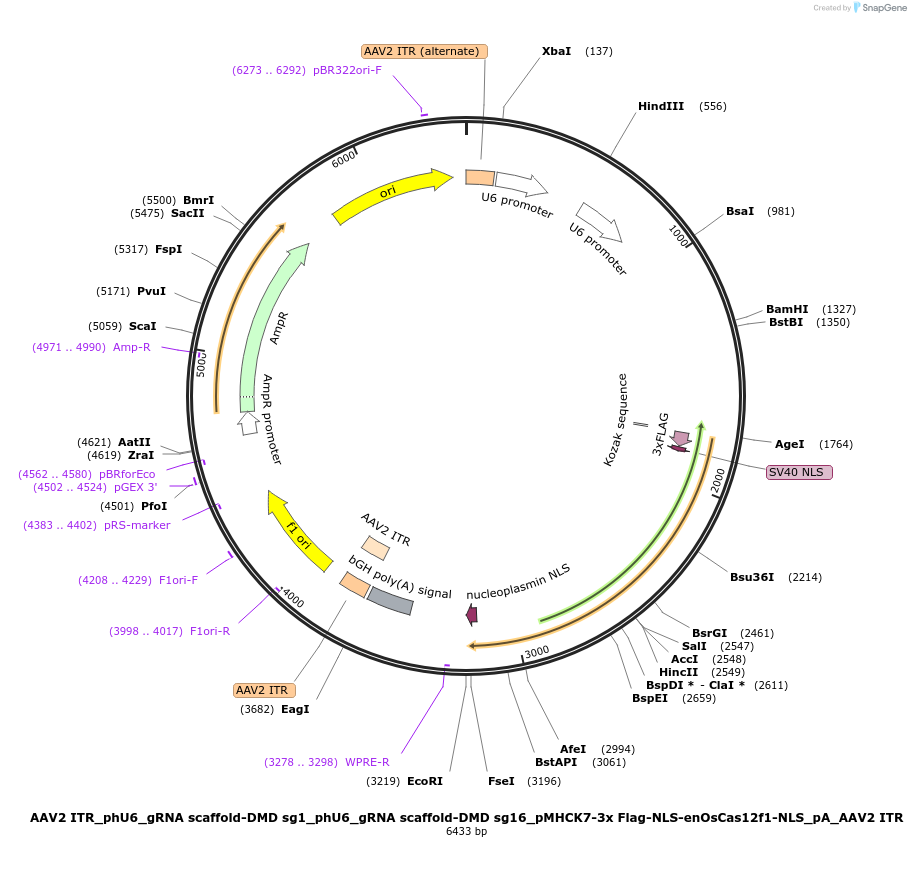
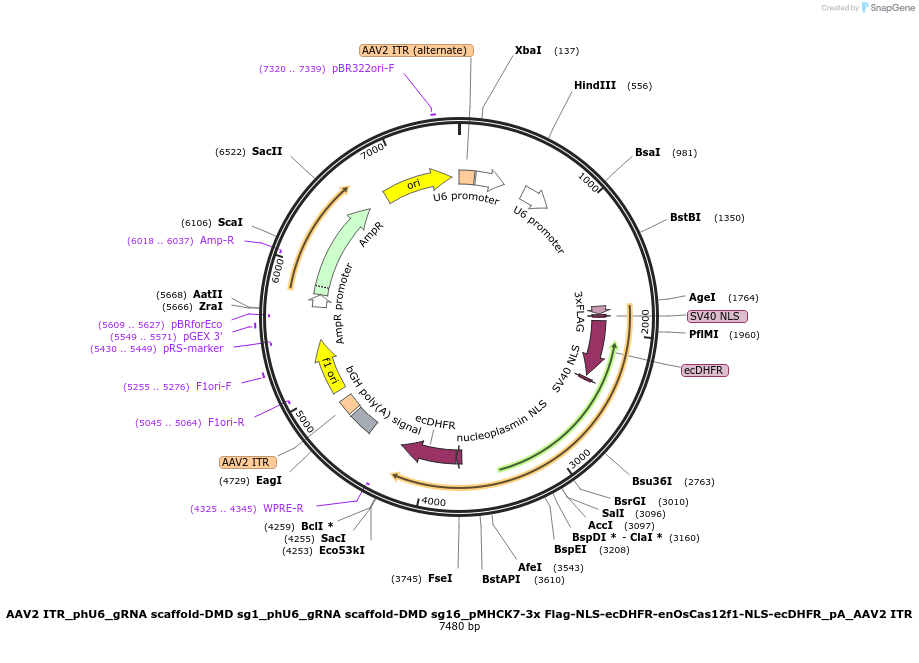
AAV vector encoding a human codon-optimized ecDHFR-enOsCas12f1-ecDHFR driven by MHCK7 promoter, DMD-targeting guide RNAs compatible with enOsCas12f1 driven by hU6
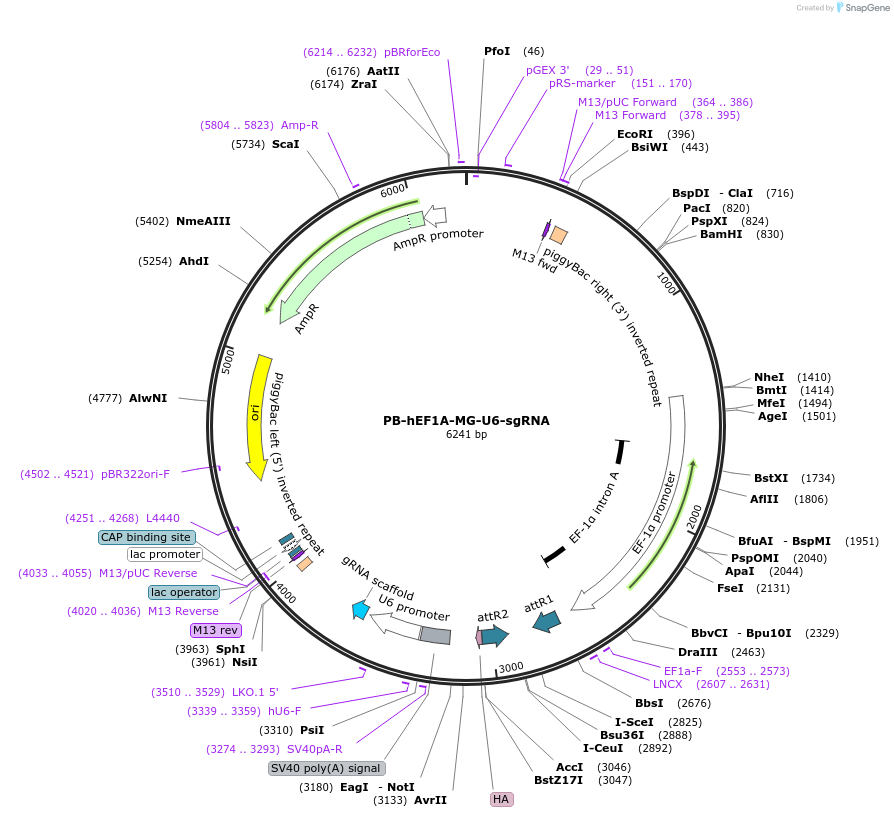
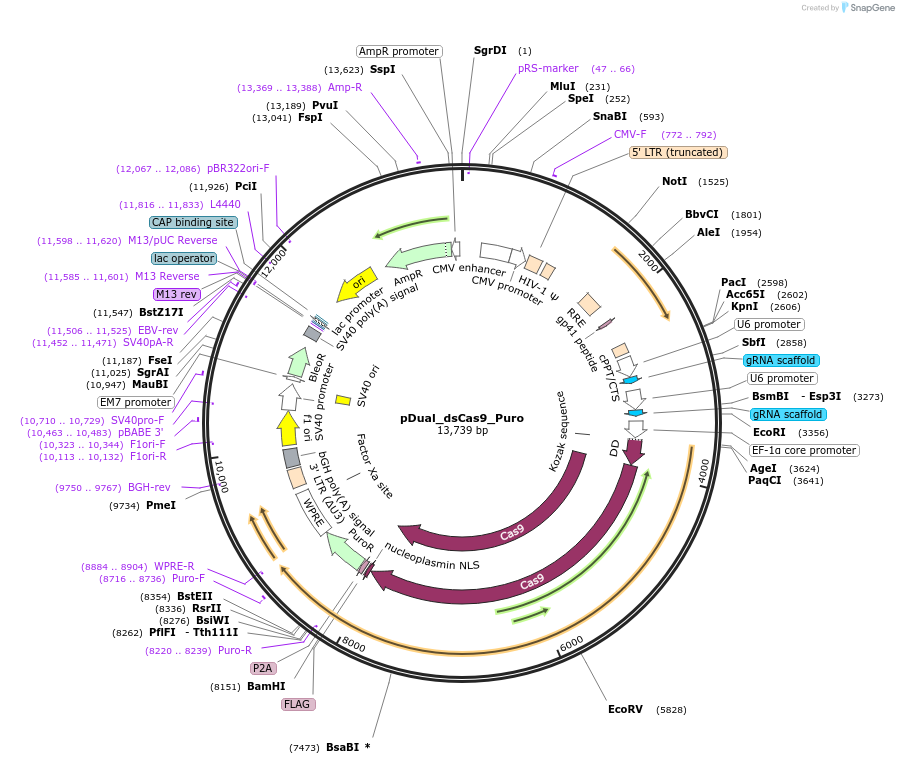
All-in-one piggyBac transposon destination vector for hEF1a expression of Mega Gate cloned elements and hU6 expression of Golden Gate cloned guide RNAs
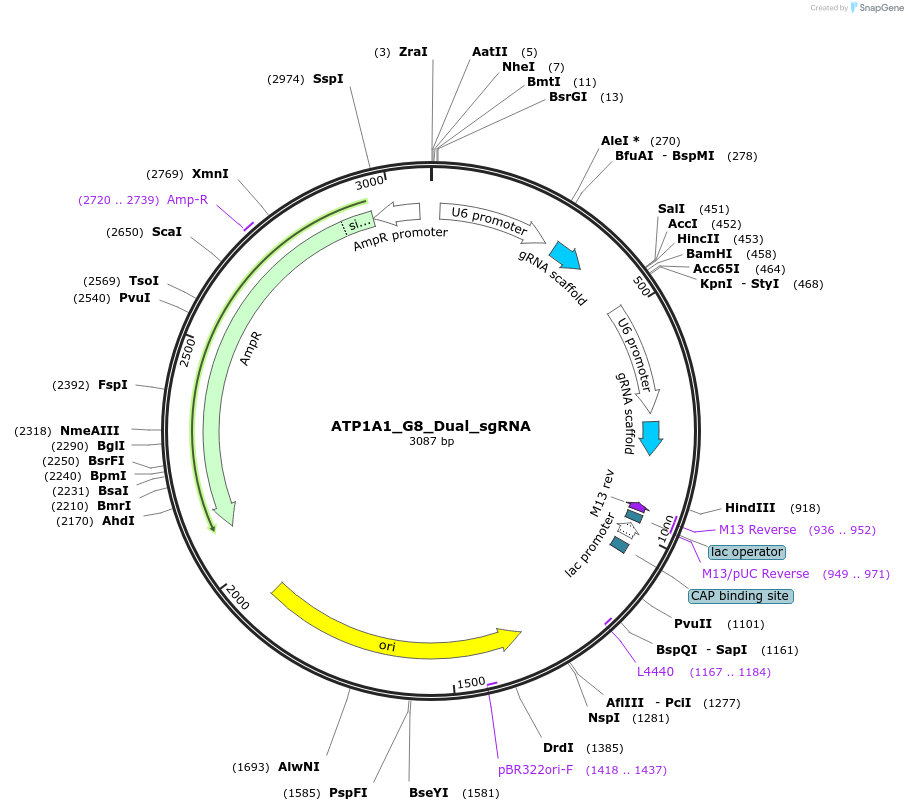
Coselection for PE3 in human cells. Vector for tandem expression of ATP1A1 G8 sgRNA with a user-specified PE3 nick sgRNA from two independent U6 promoters. Cloning of oligos using BbsI sites.
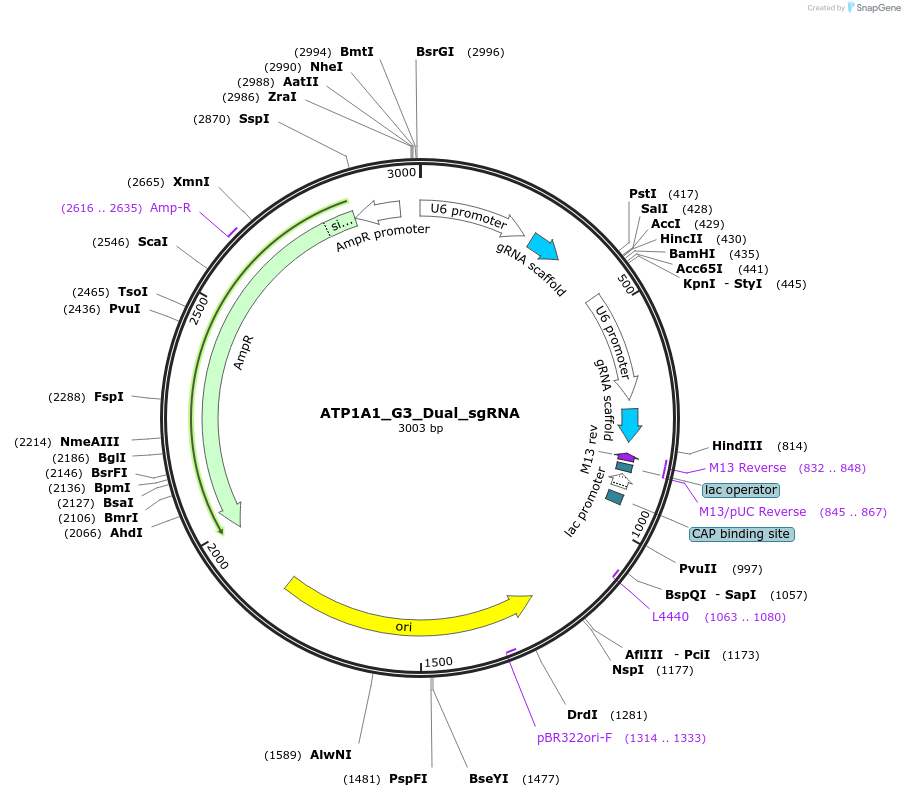
Coselection for PE3 or HDR in human cells. Vector for tandem expression of ATP1A1 G3 sgRNA with a user-specified PE3 nick sgRNA from two independent U6 promoters. Cloning of oligos using BbsI sites.